
2025 Nobel Prize in Physiology or Medicine
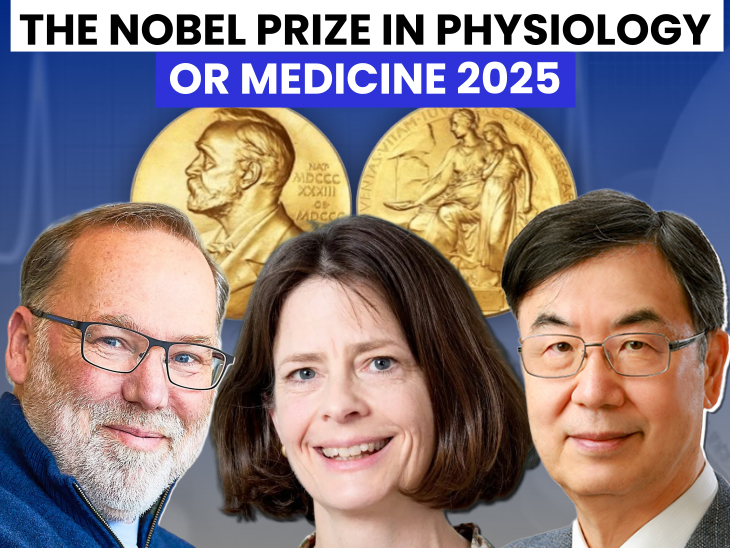
Awardees
Shimon Sakaguchi (74) — Osaka University, Japan
Mary E. Brunkow (64) — Institute for Systems Biology, Seattle, USA
Frederick J. Ramsdell (64) — Sonoma Biotherapeutics, San Francisco, USA
Discovery
Peripheral Immune Tolerance — Understanding how the immune system distinguishes between foreign pathogens and the body’s own cells, preventing self-destruction.
This discovery is key to treating autoimmune diseases and cancers.
Background
Question: How does the immune system destroy viruses, bacteria, and microbes without attacking the body’s own cells?
Problem: Earlier immunological research could not explain why the immune system sometimes turns against itself (autoimmunity).
Tolerance Concept:
By the 1980s, scientists knew that immune tolerance prevents the body’s immune cells (T cells) from attacking its own proteins.
But how this tolerance was maintained remained unclear.
Shimon Sakaguchi’s Contribution
In 1995, Sakaguchi identified a new class of T cells that suppress the immune system’s attack on self-cells.
These were termed “Regulatory T cells (Tregs)” or “police T cells.”
They act as immune moderators — preventing overactivation of the immune system.
The concept he proposed was called peripheral tolerance, meaning tolerance maintained outside the thymus (in peripheral tissues).
Experiment:
Sakaguchi surgically removed the thymus (where T cells mature) in mice.
Mice developed autoimmune diseases, implying the thymus was vital for immune regulation.
When he transferred T cells from healthy mice to thymus-removed mice, autoimmunity reduced — proving a specific subset of T cells suppressed immune attack.
Brunkow and Ramsdell’s Contribution
Worked with Celltech Chiroscience (biotech company) in the 1990s.
They studied “scurfy mice,” which had severe autoimmune diseases due to lack of immune regulation.
These mice had scaly, flaky skin and died young from uncontrolled immune activation.
Breakthrough:
They discovered that mutation in a gene called FOXP3 caused the autoimmune disorder.
The FOXP3 gene was responsible for developing and regulating regulatory T cells (Tregs).
In humans, FOXP3 mutation causes the IPEX syndrome (Immune dysregulation, Polyendocrinopathy, Enteropathy, X-linked) — a fatal autoimmune disorder in infants.
Collaboration Outcome:
By 2001, Brunkow and Ramsdell’s findings confirmed Sakaguchi’s theory and established that FOXP3 controls the development of regulatory T cells.
Significance of the Discovery
1. Understanding Immune Balance
The findings explain how the immune system maintains a balance between attack and tolerance — attacking pathogens but sparing self-cells.
Disruption in Tregs leads to autoimmune disorders such as Type 1 diabetes, rheumatoid arthritis, and multiple sclerosis.
2. Relevance to Cancer
Tumours can exploit Tregs to protect themselves from immune attacks.
When cancerous tumours have high Treg concentrations, they prevent other T cells from killing tumour cells.
This poses a major challenge to CAR-T cell therapy and immunotherapies, which aim to boost immune attack against cancer cells.
3. Clinical Implications
For Cancer:
New therapies aim to reduce Treg activity near tumours, enabling stronger immune response.
For Autoimmune Diseases:
Research is underway to increase Treg numbers in patients to suppress overactive immunity.
For Transplants:
Scientists are studying ways to modify Tregs to prevent organ rejection post-transplantation.
4. Emerging Research
Clinical trials aim to generate or inject regulatory T cells to restore immune balance in autoimmune conditions.
Conversely, suppressing Tregs could enhance cancer immunotherapies.
| Feature | Details |
|---|---|
| Award Year | 2025 |
| Category | Nobel Prize in Physiology or Medicine |
| Awardees | Shimon Sakaguchi (Japan), Mary E. Brunkow (USA), Frederick J. Ramsdell (USA) |
| Discovery | Mechanism of peripheral immune tolerance via Regulatory T cells (Tregs) |
| Key Gene Identified | FOXP3 |
| Significance | Foundation for understanding autoimmune diseases and improving cancer immunotherapies |
| Applications | Autoimmune disease control, cancer therapy modulation, organ transplant tolerance |