
Ayush and Allopathy: Complementary Healthcare Approach
Context:
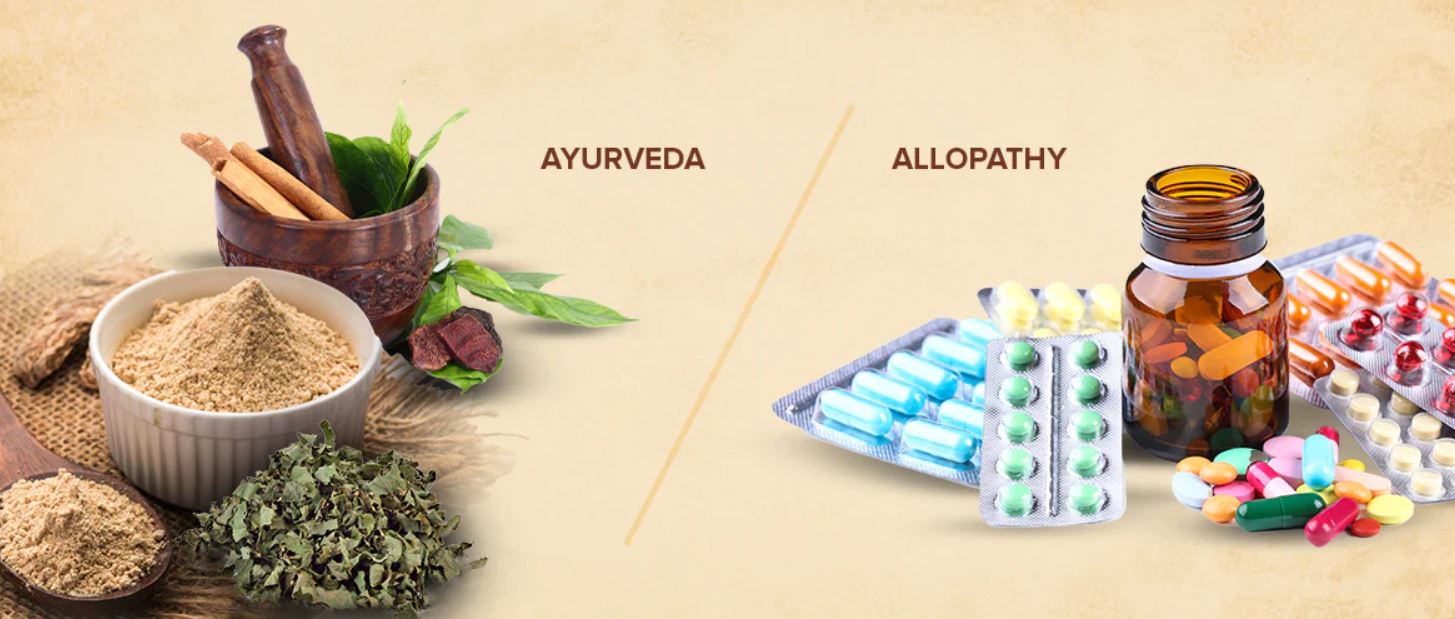
Union Minister of State for Ayush, Prataprao Ganpatrao Jadhav, highlighted India’s efforts to integrate Ayurveda and modern medicine to strengthen healthcare.
Key Points
Integrated Healthcare Model
Allopathy and Ayush systems are complementary, not competitors.
National Ayush Mission (NAM) and Ayush Grid aim to integrate strengths of both systems for comprehensive healthcare delivery.
Institutional and Regulatory Framework
Establishment of:
NCISM (National Commission for Indian Systems of Medicine).
NCH (National Commission for Homoeopathy).
Ensures standardisation of course content, faculty, infrastructure, and research.
Expansion of Infrastructure
Ayush Health Centres and Medicinal Gardens developed under NAM.
Ayush doctors deployed at Health and Wellness Centres to strengthen primary healthcare access in rural and remote areas.
Global Collaboration
WHO-Global Centre for Traditional Medicine, Gujarat:
First such centre in the world.
Focus on standardisation, research, and global outreach of traditional systems.
Quality Control & Regulation
Measures to tackle counterfeit and poor-quality medicines:
Modern labs and testing protocols.
Digital tracking systems.
Good Manufacturing Practices (GMP) encouraged.
Education and Awareness
Efforts to integrate Yoga and Ayurveda education into school and college curricula.
Vision 2047: Global Health Leadership
Focus areas:
Evidence-based research.
Digitisation.
Ayush education.
Start-up ecosystem in Ayush sector.
National Commission for Indian Systems of Medicine (NCISM) and National Commission for Homoeopathy (NCH)
To modernise regulation, ensure quality education, and strengthen traditional systems of medicine, the Government of India established NCISM and NCH under the NCISM Act, 2020 and NCH Act, 2020.
These replaced the earlier Central Council of Indian Medicine (CCIM) and Central Council of Homoeopathy (CCH).
Establishment & Mandate
NCISM: Regulates Ayurveda, Unani, Siddha, and Sowa-Rigpa (AUS&SR).
NCH: Regulates Homoeopathy.
Aim: To update standards in education, research, practice, and ethics; maintain a uniform regulatory framework.
Operates under Ministry of Ayush.
Key Aspects
Regulatory Framework
Lays down minimum standards for infrastructure, faculty, curriculum, and training in medical institutions.
Enforces professional ethics, disciplinary mechanisms, and accreditation norms.
Scope of Work
NCISM: Ayurveda, Unani, Siddha, Sowa-Rigpa.
NCH: Homoeopathy.
Core Functions
Assessment of Institutions: Regular inspection and recognition/withdrawal of recognition.
National Medical Register: Compiles and updates registers of qualified practitioners for each system.
Curriculum Development: Standardisation and updating of syllabi in line with modern research and global standards.
Promotion of Research: Encourages evidence-based research, collaboration, and innovation in traditional medicine.
Ethical Standards: Frames codes of conduct for practitioners, ensuring accountability.
Grievance Redressal: Provides mechanisms for students, practitioners, and institutions to resolve disputes.
National Ayush Mission (NAM) and Ayush Grid
National Ayush Mission (NAM)
Background:
Launched in 2014 as a Centrally Sponsored Scheme.
Implemented through State and UT governments with financial assistance from the Ministry of Ayush.
Objectives:
Promote Ayush medical systems and integrate them into public healthcare.
Strengthen Ayush education and health infrastructure.
Enhance availability of Ayush services and trained manpower.
Key Activities:
Healthcare Infrastructure:
Establishing/upgrading Ayush hospitals, dispensaries, and pharmacies.
Ayush Health & Wellness Centres (AHWCs) for comprehensive primary healthcare.
Co-location of Ayush facilities at PHCs, CHCs, and District Hospitals.
Education & Training:
Upgrading Ayush educational institutions.
Ensuring trained personnel for Ayush facilities.
Medicinal Plants & Drugs:
Support for medicinal plant cultivation.
Ensuring availability of quality Ayush drugs.
Community Outreach:
Mainstreaming Ayush in public health programmes.
Deployment of Ayush doctors in rural/remote areas.
Ayush Grid
Purpose:
A comprehensive digital platform to modernize, digitize, and integrate Ayush healthcare, education, and research.
Components:
ELMS (e-Learning Management System): For Ayush education — digital classrooms, interaction between students, teachers, regulators.
Healthcare IT systems: Patient records, telemedicine, Ayush hospitals management.
Regulatory Digitisation: Streamlined licensing, accreditation, and monitoring of Ayush colleges and practitioners.