
Before Legislation Becomes Litigation
Context
-
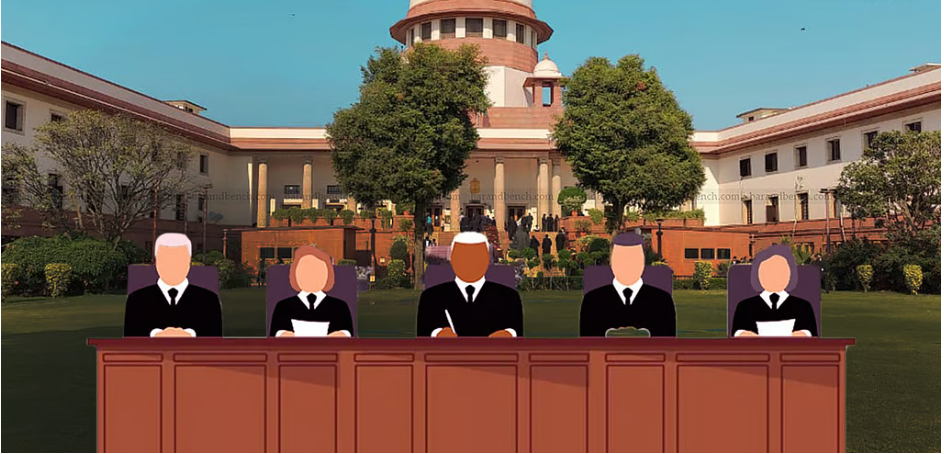
Growing judicial scrutiny of legislation in India.
-
Example: Waqf (Amendment) Act, 2025 challenged in Supreme Court within days of enactment.
-
Reflects tension between Parliament’s law-making and judiciary’s constitutional review.
Judicial Scrutiny of Legislation
Judicial review operates at three stages:
-
Pre-enactment scrutiny – through parliamentary committees, Law Commission recommendations, or public debate, which courts encourage but rarely intervene in.
-
Post-enactment scrutiny – once a law is challenged, courts assess its constitutional validity.
-
During implementation – courts examine executive action under a law, ensuring it is not arbitrary or ultra vires.
Key Issues Identified
-
Judiciary as Parallel Legislator
-
Framers of Constitution: Parliament’s power is subordinate to Constitution.
-
Judicial review was meant to be exceptional, but frequent litigation has made it common.
-
-
Reasons for Litigation against Laws
-
Constitutional scrutiny: Provisions contradict fundamental rights or federal principles.
-
Political theatre: MPs/parties using courts to challenge opponents’ laws.
-
Flawed drafting:
-
Vague definitions.
-
Contradictory clauses.
-
Failure to harmonise with existing laws.
-
Constitutional inconsistencies.
-
Example: Section 18(d) of Transgender Persons (Protection of Rights) Act, 2019 – punishment for sexual abuse (max. 2 yrs) far lower than provisions for women under Bharatiya Nyaya Sanhita, 2023 (up to life imprisonment).
-
-
Breakdown of Parliamentary Procedure
-
Though Manual of Parliamentary Procedure prescribes multiple stages (policy proposal → ministry consultation → law ministry → cabinet → readings & committees), in practice:
-
Bills often introduced without adequate notice.
-
Committees bypassed.
-
Clause-by-clause debate rushed.
-
-
MPs left voting on dense legalese without adequate scrutiny.
-
-
Democratic Deficit in Law-Making
-
Legislators from diverse walks of life expected to do complex constitutional analysis without expert help.
-
Leads to party-line voting instead of informed deliberation.
-
Suggested Reform
-
Use of Attorney General (AG) under Article 88:
-
AG has the right to participate in Parliamentary proceedings (rarely used).
-
A retainer-AG or constitutional review within Parliament could:
-
Flag constitutional & legal inconsistencies during debates.
-
Provide non-partisan expert guidance to lawmakers.
-
-
-
Benefits:
-
Prevent constitutionally flawed laws from reaching courts.
-
Reduce unnecessary judicial intervention.
-
Strengthen Parliament’s credibility & autonomy.
-
Allow courts to interpret rather than invalidate laws.
Constitutional Provisions Enabling Judicial Review
-
Article 13 – Any law inconsistent with Fundamental Rights is void.
-
Article 32 – Right to move the Supreme Court for enforcement of Fundamental Rights.
-
Article 226 – High Courts’ power to issue writs, broader in scope than Article 32.
-
Article 131 – Original jurisdiction of SC in Centre–State disputes; often invoked when States challenge Union laws.
-
Article 136 – Special Leave Petition enabling scrutiny of legislative or executive actions.
-
Article 141 – Law declared by SC binding on all courts; judicial scrutiny shapes future interpretation.
-
Article 368 – Parliament’s power to amend the Constitution, but subject to judicial review under the basic structure doctrine.
Judicial Doctrines Shaping Pre-Litigation Scrutiny
-
Basic Structure Doctrine (Kesavananda Bharati, 1973): Courts examine whether new laws or amendments violate the core principles of the Constitution.
-
Doctrine of Colorable Legislation (K.C. Gajapati Narayan Deo v. State of Orissa, 1953): Courts test whether legislature has exceeded its authority indirectly.
-
Doctrine of Pith and Substance: Used in Centre–State conflicts to check legislative competence.
-
Doctrine of Eclipse (Bhikaji Narain Dhakras v. State of M.P., 1955): A law inconsistent with FRs becomes dormant until inconsistency is removed.
-
Doctrine of Severability: Only unconstitutional parts of a statute can be struck down, saving the rest.
Key Cases Where Judicial Scrutiny Pre-empted or Curbed Litigation
-
Kesavananda Bharati v. State of Kerala (1973)
– Established basic structure doctrine; ensured Parliament cannot pass amendments destroying democracy, rule of law, or FRs. -
Indira Nehru Gandhi v. Raj Narain (1975)
– Struck down Clause 4 of 39th Amendment; ensured judicial review over elections cannot be ousted by legislation. -
Maneka Gandhi v. Union of India (1978)
– Expanded Article 21; any law affecting life and liberty must pass the test of fairness and reasonableness. -
Minerva Mills v. Union of India (1980)
– Reaffirmed balance between FRs and DPSPs; judicial scrutiny ensured that unlimited amending power was unconstitutional. -
S.R. Bommai v. Union of India (1994)
– Judicial review allowed for scrutiny of Article 356 proclamations (President’s Rule), preventing misuse of legislative power. -
I.R. Coelho v. State of Tamil Nadu (2007)
– Judicial scrutiny extended to 9th Schedule laws if they violated basic structure. -
Justice K.S. Puttaswamy v. Union of India (2017)
– Recognised Right to Privacy; struck down provisions in laws and policies that disproportionately infringed FRs. -
Joseph Shine v. Union of India (2018)
– Judicial scrutiny struck down Section 497 IPC (Adultery) as violative of Articles 14, 15, 21. -
Navtej Singh Johar v. Union of India (2018)
– Decriminalised homosexuality; SC scrutinised legislative intent of Section 377 IPC against constitutional morality. -
Recent Example – Farm Laws (2021)
– SC stayed implementation after nationwide protests; judicial intervention ensured pre-legislative consultation was valued.
Significance of Judicial Scrutiny Before Litigation Escalates
-
Ensures Parliamentary supremacy is balanced by Constitutional supremacy.
-
Acts as a safety valve by striking down laws before they cause prolonged litigation or unrest.
-
Promotes consultative law-making: Legislature often revisits provisions when courts indicate constitutional infirmities.