
Bela Gram: India’s First Net-Zero Panchayat
Context
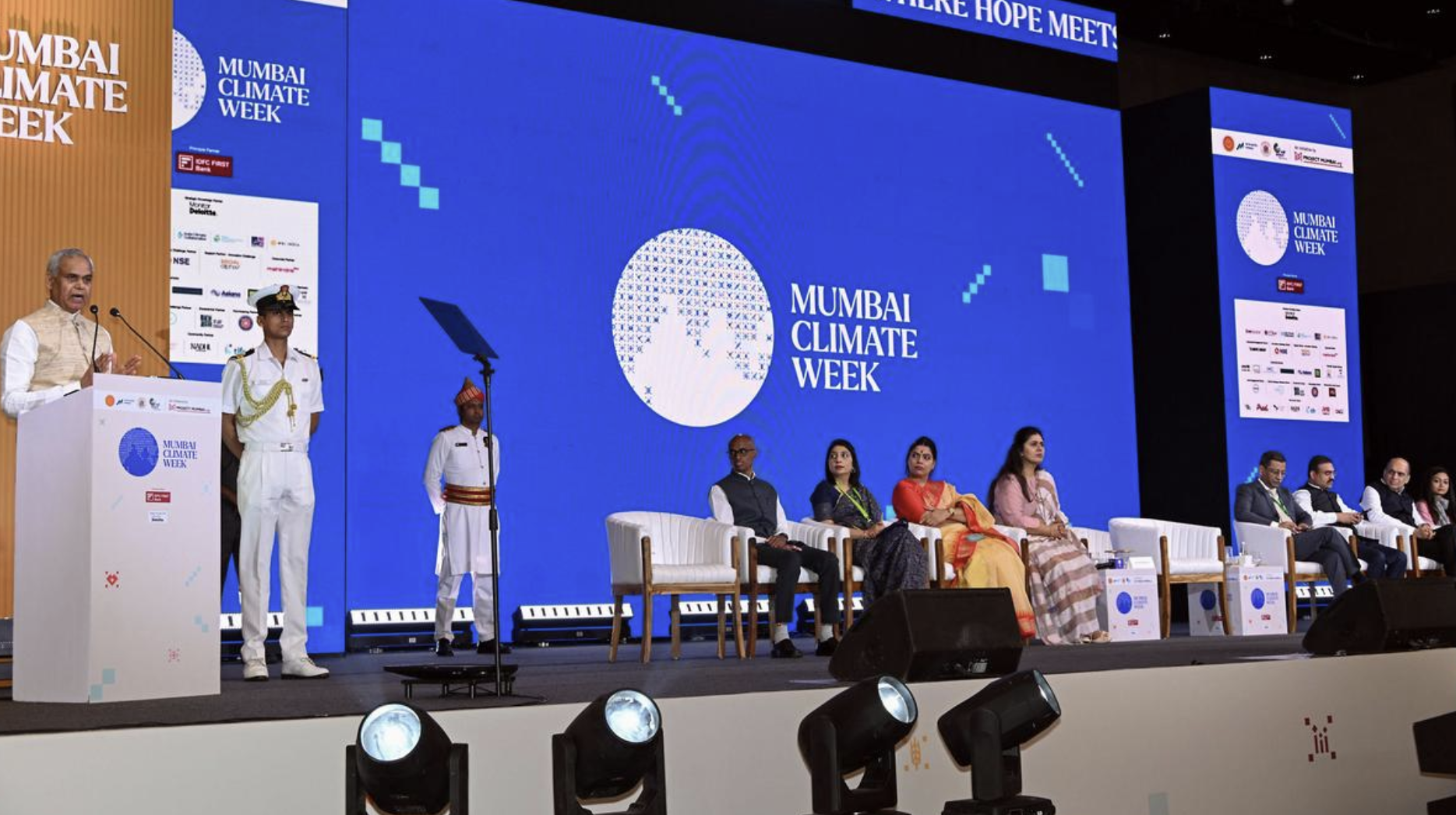
At the Mumbai Climate Week 2026, Maharashtra Governor Acharya Devvrat highlighted Bela Gram (Bhandara district, Vidarbha region) as India’s first net-zero panchayat, demonstrating the importance of grassroots climate leadership.
Leadership of Sharada Gaydhane
Sarpanch: Sharada Gaydhane (twice elected)
Recipient of Vasundhara Award (climate protection)
Awarded 2024 Rashtriya Panchayat Puraskar
What Does Net-Zero Panchayat Mean?
A net-zero panchayat is a local self-government body that balances:
Greenhouse gas emissions produced, with
Carbon sequestration and clean energy transitions,
so that overall emissions = Zero.
Key Climate Interventions in Bela Gram
1. Afforestation and Carbon Sequestration
Planted 90,000+ trees
Tree plantation linked to weddings and festivals (community participation model)
2. Clean Energy Transition
Shift from smoky chulhas to LPG
Installation of solar panels in:
Homes
Anganwadis
Panchayat offices
3. Waste Management
Doorstep waste segregation
Elimination of single-use plastics
Promotion of “Waste to Wealth” concept
Other Panchayat Climate Success Stories
Perinjanam – Solar Gramam Model
850 households became rooftop solar prosumers
Electricity bills reduced by 80%
Won:
2019 Akshaya Oorja Award
MediaOne Maha Panchayat Award
Key message: Make solar rooftops compulsory for new buildings.
Siyari – Tribal Water and Energy Resilience
Belongs to Birhor Tanda tribal group
Used District Mineral Fund (DMF) resources
Installed:
72 solar streetlights
Solar school systems
Solar lift irrigation
Revived lakes and planted:
2,880 mango saplings
800 fruit/shade trees
About DMF
Established under MMDR Amendment Act, 2015
Non-profit trust for mining-affected districts
Garhi Forests, Bihar – Community Water Conservation
Built:
45 mud check dams
90 boulder dams
3 ponds
Addressed:
Flash floods
Soil erosion
Water scarcity
Human-wildlife conflict
Kolar, Karnataka – Sustainable Agriculture and Water Revival
Lake and groundwater revival
Reduced chemical fertilizer usage
Localized climate mitigation strategies
Governance Lessons
1. Decentralised Climate Action
Panchayats as frontline climate institutions.
Aligns with 73rd Constitutional Amendment (local self-governance).
2. Community Participation Model
Climate policy must integrate:
Culture (tree plantation at weddings)
Livelihoods (fruit plantations)
Energy transition
3. Convergence of Schemes
DMF funds
Renewable energy subsidies
Panchayat awards as incentive mechanisms
4. People-Centric Climate Governance
Climate change first affects:
Water
Food security
Health
Prelims Practice MCQs
Q. Which of the following measures contribute directly to achieving a “net-zero” status at the village level?
Afforestation drives
Rooftop solar panel installations
Increased use of diesel pump sets
Elimination of single-use plastics
Select the correct answer using the code below:
A. 1 and 2 only
B. 1, 2 and 4 only
C. 2, 3 and 4 only
D. 1, 2, 3 and 4
Answer: B
Explanation:
Afforestation increases carbon sequestration.
Solar panels reduce fossil-fuel-based electricity use.
Single-use plastic elimination reduces environmental degradation.
Diesel pump sets increase emissions, so Statement 3 is incorrect.
Q. With reference to the District Mineral Foundation (DMF), consider the following statements:
It was established under the MMDR Amendment Act, 2015.
It operates as a non-profit trust in mining-affected districts.
It is administered directly by the Ministry of Environment, Forest and Climate Change.
Which of the statements given above is/are correct?
A. 1 and 2 only
B. 2 only
C. 1 and 3 only
D. 1, 2 and 3
Answer: A
Explanation:
Statement 1 is correct — DMF was created under the Mines and Minerals (Development and Regulation) Amendment Act, 2015.
Statement 2 is correct — It functions as a non-profit trust in mining-affected districts.
Statement 3 is incorrect — It is managed at the district level, not directly by MoEFCC.