
Chandrabhaga/Bhima River and Pandharpur's Religious Significance
Pandharpur, a major pilgrimage town in Maharashtra, is often called Dakshin Kashi (South Kashi).
-
It is famous for the Lord Vitthala temple situated on the banks of the Chandrabhaga River, also known as the Bhima River.
-
The river gets the name Chandrabhaga because it curves like a crescent moon near Pandharpur.
Religious and Cultural Significance
-
The Warkari sect undertakes four annual pilgrimages (Vaari/Yatras) to Pandharpur: Chaitri, Ashadhi, Kartiki, and Maghi—with Ashadhi and Kartiki being the most significant.
-
Devotees bathe in the Chandrabhaga river, seeking spiritual purification.
River Characteristics
-
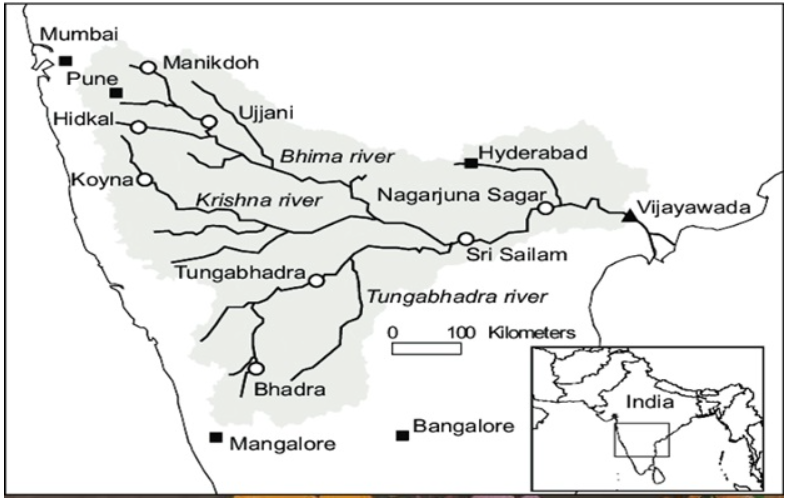
The Bhima River is a major tributary of the Krishna River, originating near the Bhimashankar Temple in the Western Ghats (Pune district, Maharashtra).
-
Total length: 861 km; it joins the Krishna River near Raichur on the Karnataka-Telangana border.
-
Major tributaries: Indrayani, Mula-Mutha, Ghod, Nira, Sina, Man, Chandani, Moshi, Bori, Bhogavati, etc.
Ecological and Hydrological Importance
-
The Bhima River flows through several dams and reservoirs, such as Chas Kaman Dam, Kalmodi Reservoir, and irrigates large areas across Pune, Solapur, and Ahmednagar districts.
-
It swells in the monsoon and shrinks in summer; it's crucial for agriculture and drinking water in the region.
Notable Places Along Its Course
-
Tulapur (confluence of Bhima and Indrayani)
-
Daund, Rajgurunagar, and Ranjangaon Sandas (confluence with Mula-Mutha)
-
Nira Narsingpur (confluence with Nira River)