
Clean Energy in India
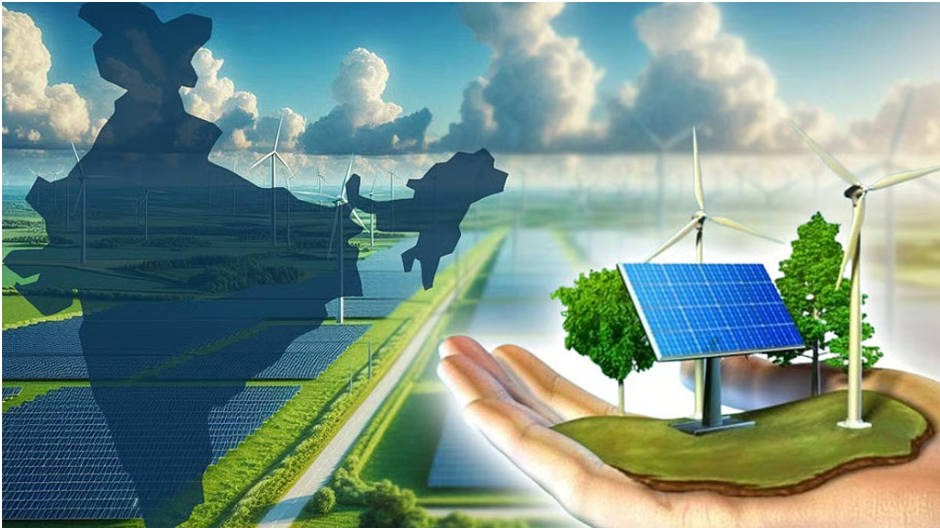
India has achieved 50% of its installed electricity capacity from non-fossil fuel sources (as of June 30, 2025), meeting its Paris Agreement NDC target five years early. However, actual electricity generation from clean energy remains under 30%.
Installed Capacity vs. Actual Generation:
India has achieved 50% non-fossil fuel capacity (solar, wind, hydro, nuclear, biomass) in its total installed power capacity (484 GW), five years ahead of its Paris Agreement NDC target.
However, actual electricity generation from clean sources remains below 30% (up from 17% in 2014-15 to 28% in April 2024-May 2025).
Reason for the Gap – Capacity Utilisation Factor (CUF):
Solar (20% CUF) and wind (25-30% CUF) have lower efficiency compared to coal (60%) and nuclear (80%), limiting their contribution despite high installed capacity.
CUF refers to the actual output of a power plant over a period of time as a percentage of its maximum possible output (installed capacity) during that same period.
Energy Source Typical CUF Coal 60% – 70% Nuclear 80% – 90% Solar 15% – 25% Wind 25% – 30% Hydro 30% – 50%
Coal Dominance & Challenges:
75% of India’s electricity still comes from coal, which provides base load power (24/7 supply).
Grid Inflexibility: Power demand is continuous, but solar/wind are intermittent.
-
Storage Limitations: Lack of large-scale battery storage.
-
Flat Tariffs: No incentive to use power during peak solar generation (daytime).
Solutions for Clean Energy Integration:
Battery Storage & Hybrid Projects: Combining solar, wind, hydro, and storage can ensure round-the-clock clean power.
Smart Grids & Differential Tariffs: Incentivizing daytime power use (like cheaper night calls in telecom) can optimize solar utilization.
Policy Support: The Institute for Energy Economics and Financial Analysis recommends hybrid projects with storage to meet peak demand.
While India has made significant progress in renewable capacity, actual clean energy share in generation remains low due to intermittency issues. Storage solutions, flexible grids, and policy reforms are critical to bridge the gap and ensure sustainable energy transition.