
Cloudburst
What is it?
A cloudburst is a sudden and intense rainfall event that can transform weather conditions within minutes. Unlike the steady and large-scale downpour typical of monsoon rains, a cloudburst is localised, often drenching a small area with an extraordinary amount of water.
IMD Definition
The India Meteorological Department (IMD) defines a cloudburst as rainfall of more than 100 mm in one hour over an area of about 20–30 sq. km. This threshold is used in India to identify events that can lead to flash floods and landslides, especially in mountainous areas.
WMO Definition
The World Meteorological Organisation (WMO) defines cloudbursts as rain pouring down at a rate of 100 mm per hour or more. The WMO also refers to the Swedish term ‘skyfall’, described as 1 mm per minute (60 mm per hour) for short bursts and 50 mm per hour when sustained for longer periods.
Scientific Process
Other references describe cloudbursts by their physical process rather than just rainfall numbers:
-
Cloudbursts often occur when strong updrafts in thunderstorms hold large amounts of water high in the atmosphere.
-
When the updraft collapses, the water is suddenly released, resulting in an intense downpour.
-
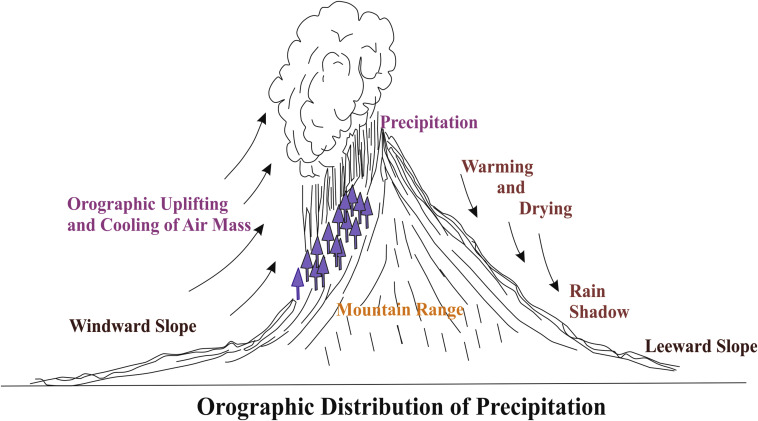
Orographic lifting also plays a role, where moist air is forced upwards by mountains, leading to rapid condensation and heavy rain.
Features
-
Short-lived but extremely intense.
-
Can cause flash floods, landslides, and severe damage.
-
While highly localised, the area of effect may expand depending on where the water flows.