Coral Reef Decline in Lakshadweep – 24-Year Study Findings
Context: India’s smallest union territory, just 1-2 metres above sea level on average – and where every seventh person is a fisherman – is losing its coral reefs and facing the impact of climate change at multiple levels
Key Findings:
-
Drastic Decline in Coral Cover:
-
Coral cover reduced from 37.24% (1998) to 19.6% (2022)
-
Reflects a 50% decline over 24 years.
-
-
Primary Cause:
-
Repeated marine heatwaves driven by climate change
-
Especially during El Niño Southern Oscillation (ENSO) years:
-
Major bleaching events: 1998, 2010, 2016
-
-
-
Local Environmental Factors (Filtering):
-
Wave exposure and depth significantly affect:
-
Vulnerability to bleaching
-
Resilience and recovery potential
-
-
-
Reduced Recovery Rate:
-
Coral mortality has decreased with each event
-
But recovery rate has slowed, leading to net decline
-
Six-year bleaching-free window needed for effective regeneration
-
Study Area:
-
Three Atolls Monitored in Lakshadweep:
-
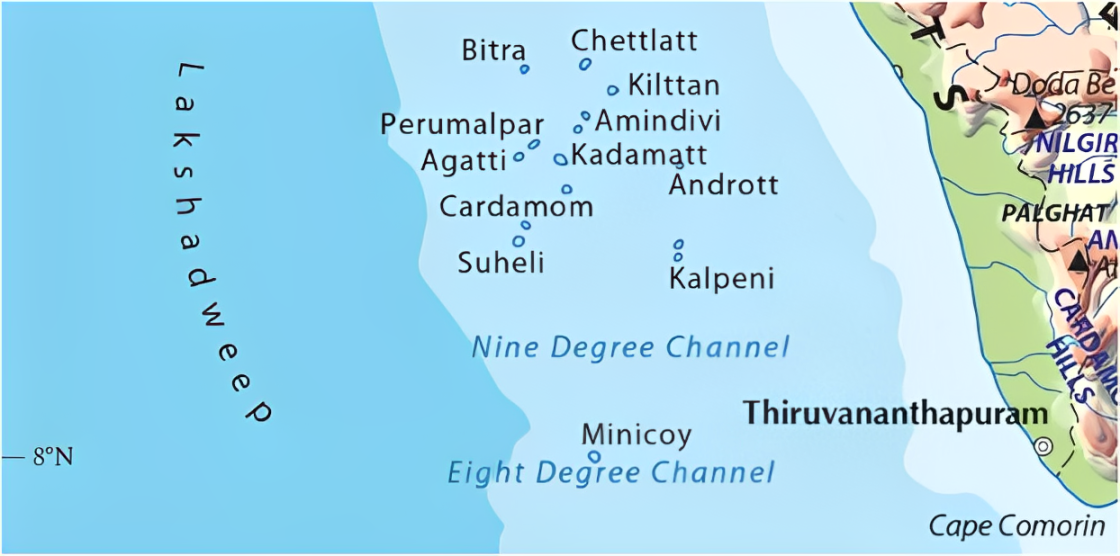
Agatti, Kadmat, and Kavaratti
-
Significance of Study:
-
One of the longest reef monitoring projects in the Indian Ocean
-
Introduces a predictive framework to:
-
Identify vulnerable reef zones
-
Spot reefs with potential for recovery
-
Conservation Implications:
-
Highlights need for:
-
Early warning systems
-
Local reef management
-
Reduction in anthropogenic stressors
-
Climate action to prevent frequent marine heatwaves