
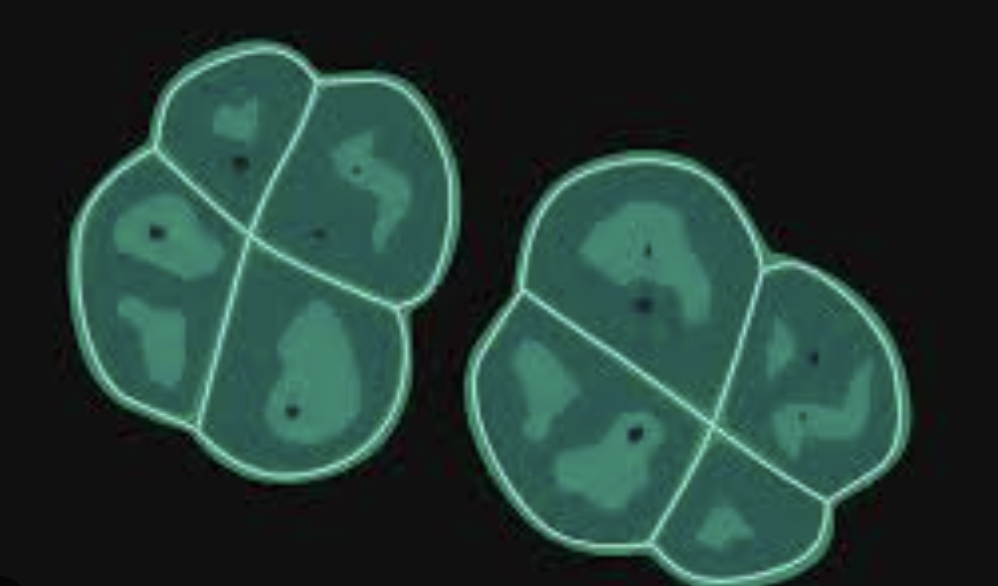
Deinococcus radiodurans
Context
Scientists found that the bacterium Deinococcus radiodurans can survive extreme pressures of 14,000–24,000 Earth atmospheres.
Such pressures are similar to those experienced when rocks are blasted off a planet’s surface during asteroid impacts.
Characteristics of Deinococcus radiodurans
Known as a “supertough” extremophile bacterium.
Can survive:
Extreme radiation
Severe dehydration
Vacuum-like conditions
Often called “Conan the Bacterium” due to its extraordinary resilience.
Mechanism of survival
Genetic analysis showed that surviving bacteria activated systems for:
DNA repair
Rapid repair of damaged DNA strands caused by shock and radiation.
Iron transport regulation
Helps maintain cellular stability and prevents oxidative damage after trauma.
Scientific significance
The results support the hypothesis of Panspermia.
According to this hypothesis:
Microbial life could travel between planets embedded in rocks ejected by impacts.
Life on Earth or elsewhere might have interplanetary origins.
Implications for space exploration
Strengthens the possibility that microbial life can survive planetary ejection and space travel.
Expands the search for extraterrestrial life to include:
Meteorites
Planetary debris
Subsurface environments on other planets or moons.
Prelims Practice MCQ
Q. Consider the following statements about Deinococcus radiodurans:
It is known for its ability to survive extreme radiation.
It can withstand pressures similar to those generated during asteroid impacts.
Its survival is partly due to efficient DNA repair mechanisms.
Which of the above statements are correct?
A. 1 and 2 only
B. 2 and 3 only
C. 1, 2 and 3
D. 1 and 3 only
Answer: C
Explanation:
All statements are correct. The bacterium Deinococcus radiodurans is highly resistant to radiation and extreme pressure, and its advanced DNA repair mechanisms enable survival under extreme conditions.