
Dugong Conservation in India – The Tamil Nadu Model
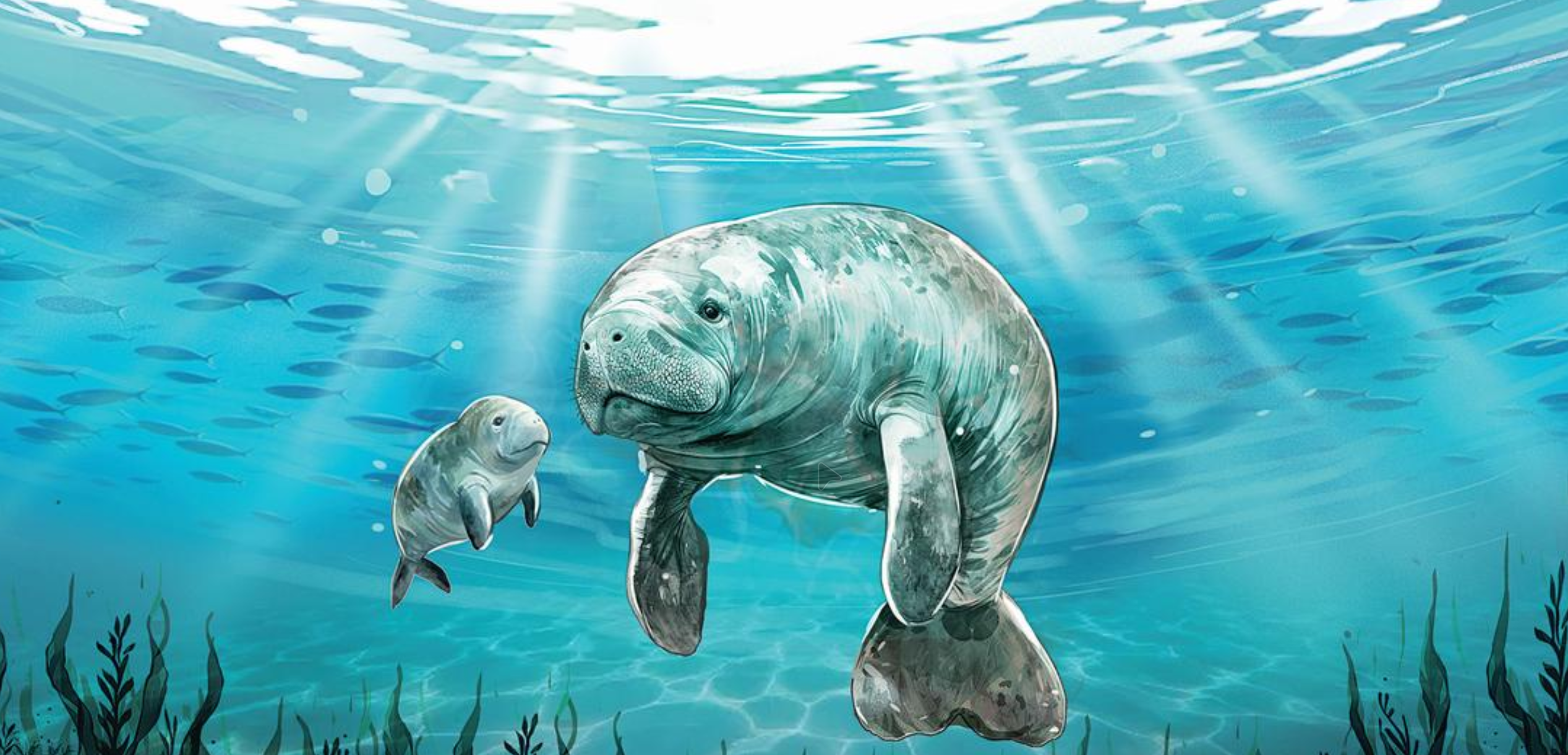
Species Profile
Common name: Dugong (Sea Cow).
Scientific name: Dugong dugon.
Habitat: Warm coastal waters, confined to seagrass beds in bays & lagoons.
Distribution in India:
Gulf of Mannar
Palk Bay
Gulf of Kutch
Andaman & Nicobar Islands
Ecological role: “Farmers of the sea” – graze on seagrass (30–40 kg/day), aid seagrass regeneration, enhance fish productivity.
Conservation status:
IUCN Red List – Vulnerable
Wild Life (Protection) Act, 1972 – Schedule I (highest protection)
Threats
Historical hunting for meat (major decline till 1970s).
Bycatch mortality – accidental entanglement in fishing nets, drowning.
Habitat degradation – seagrass loss due to trawling, boat movement, coastal development.
Very low reproductive rate.
Tamil Nadu Conservation
Legal Protection:
Dugong Conservation Reserve (2022) – 448.34 sq. km in northern Palk Bay (Thanjavur & Pudukkottai districts).
Contains 12,250 hectares of seagrass meadows.
IUCN Recognition (2025):
IUCN motion adopted at World Conservation Congress (Abu Dhabi).
The motion, proposed by the OMCAR (Organisation for Marine Conservation, Awareness and Research) Foundation, a non-profit involved in the conservation efforts.
Recognised as a global model for dugong conservation.
Population Recovery:
2012–13: ~250 dugongs across India.
2025: >200 dugongs in PB–GoM region alone (WII drone survey).
Multi-stakeholder Approach:
Government: Tamil Nadu Forest Department, MoEFCC (CAMPA funding), TN Coastal Restoration Mission (TN-SHORE).
Research bodies: WII, NCSCM, Suganthi Devadason Marine Research Institute.
NGOs: OMCAR Foundation.
International Support: JICA projects.
Community Involvement:
Fisherfolk trained as first responders in rescue efforts.
150+ awareness programmes; 9 rescues in last 2 years.
Compensation for nets cut during rescues; reward programmes for fishers.
“Dugong Ambassadors” – scholarships for fisherfolk children to reduce dropouts & spread awareness.
- Biodegradable materials were used to ensure sustainable restoration without causing any harm to the natural environment below the sea, said the official.
- Involving local fisherfolk, healthy seagrass sprigs of Syringodium isoetifolium, Cymodocea serrulata and Halodule pinifolia were transplanted carefully in the designated area in the sea.