
Foreigners’ Tribunals in Assam
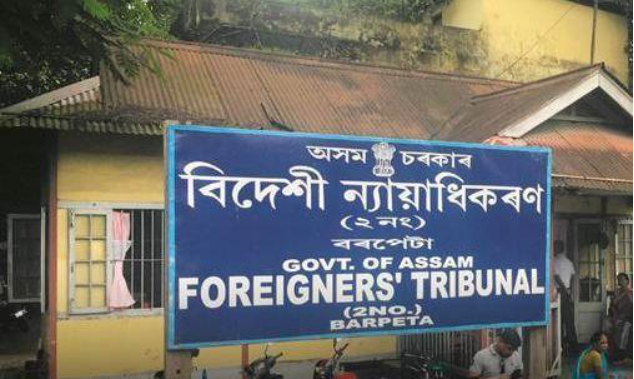
Context : Foreigners’ Tribunals in Assam disregard constitutional safeguards, says NLSIU report
Background
-
Foreigners' Tribunals (FTs) are quasi-judicial bodies established to determine the nationality of individuals suspected of being illegal immigrants under the Foreigners (Tribunals) Order, 1964 issued by the Central Government under its powers conferred by Section 3 of the Foreigners Act, 1946.
-
FTs in Assam gained prominence post the National Register of Citizens (NRC) update initiated under Supreme Court directions in 2013.
-
As of 2025, Assam has 100 FTs (36 permanent, 54 temporary requiring periodic extension by the Ministry of Home Affairs).
Major Findings
-
166,000 people declared as 'foreigners' since inception.
-
85,000+ pending cases and potential 1 million+ appeals post NRC exclusion.
-
Lack of due process: Rejection of oral/documentary evidence, arbitrary decision-making.
-
Poor legal foundation: Executive interference, unqualified adjudicators.
-
Violation of Rights: Breach of right to effective remedy under domestic and international law.
Constitutional and Legal Provisions
A. Foreigners Act, 1946
-
Empowers the government to identify and deport foreigners.
-
Burden of proof lies on the accused person to prove Indian citizenship.
-
Provides for the establishment of Foreigners’ Tribunals under the Foreigners (Tribunals) Order, 1964.
B. Citizenship Act, 1955
-
Governs acquisition and loss of Indian citizenship.
-
Amendments over the years include:
-
2003 Amendment: Introduced provisions for National Register of Citizens (NRC).
-
2019 Amendment (CAA): Fast-tracks citizenship for non-Muslim immigrants from Pakistan, Bangladesh, Afghanistan (highly controversial).
-
C. Illegal Migrants (Determination by Tribunals) Act, 1983
-
Applied only to Assam.
-
Struck down in 2005 by the Supreme Court (Sarbananda Sonowal v. Union of India) for being ineffective and violating Article 355 (duty of the Union to protect states).
Constitutional Issues Involved
-
Article 14 – Equality before law: Arbitrary FT functioning violates this.
-
Article 21 – Protection of life and personal liberty: Risk of statelessness threatens core rights.
-
Article 32 & 226 – Right to constitutional remedies: Often inaccessible or ineffective for poor litigants.
-
Article 355 – Duty of Union to protect state from external aggression: Basis for Centre’s intervention in Assam’s illegal migration issues.
Key Judicial Pronouncements
-
Sarbananda Sonowal v. Union of India (2005):
-
Struck down
Illegal Migrants (Determination by Tribunals) Act, 1983 IMDT Act.
-
Called large-scale illegal immigration an “external aggression”.
-
-
Gauhati High Court Orders (1200+ analyzed in report):
-
Documented systemic rejection of valid evidence and procedural violations.
-
-
Supreme Court on NRC & FTs (2014–2019):
-
Mandated NRC update but did not establish safeguards against exclusion errors.
-
Institutional Challenges
-
No independent oversight of FTs.
-
Appointment, tenure, and removal of FT members under executive discretion.
-
Lack of legal training among members.
-
No provision for legal aid to the accused in many cases.
-
Appeals to High Court/Supreme Court are costly and time-consuming.
Implications
-
Risk of statelessness for those wrongly declared as foreigners.
-
Violation of India’s obligations under international conventions, including:
-
Universal Declaration of Human Rights (Article 15) – Right to nationality.
-
International Covenant on Civil and Political Rights (ICCPR) – Due process and fair trial rights.
-
Recommendations from the Report
-
Overhaul citizenship adjudication framework to ensure independence, impartiality, and legality.
-
Create legally constituted and professionally staffed bodies.
-
Provide free legal aid and ensure access to remedies.
-
Suspend coercive actions until fair procedures are institutionalized.
| Feature | National Register of Citizens (NRC) | Foreigners’ Tribunals (FTs) |
|---|---|---|
| Meaning | An official register of Indian citizens maintained to identify illegal immigrants. | Quasi-judicial bodies established to determine whether a person is a foreigner or not. |
| Legal Basis | Citizenship Act, 1955 (amended in 2003) and NRC Rules, 2003. | Foreigners Act, 1946 and Foreigners (Tribunals) Order, 1964. |
| Purpose | Identify citizens of India and exclude illegal migrants (mainly from Bangladesh in Assam context). | Legally determine whether a person is a foreigner under Indian law. |
| Nature | Administrative and demographic exercise carried out by civil authorities. | Judicial/quasi-judicial body with powers similar to a civil court. |
| Burden of Proof | Applicant must prove citizenship through documents during verification. | Burden lies on the accused person to prove that they are not a foreigner. |
| Outcome | Inclusion or exclusion from the citizenship register. | Declaration of a person as Indian or "foreigner". |
| Scope | Implemented only in Assam (as of now). Nationwide NRC has been proposed but not implemented. | Operational only in Assam, but applicable under law across India if needed. |
| Authority Involved | Office of the Registrar General of India (RGI) under Ministry of Home Affairs. | Ministry of Home Affairs supervises; judges or retired civil servants act as members. |
| Appeal | People excluded from NRC can file appeal before FTs. | Decisions of FT can be appealed in Gauhati High Court and then the Supreme Court. |
| Linkage | FT is the forum where NRC-excluded people can appeal. | FT adjudicates the final status of citizenship when challenged. |