
Gig workers and social security:
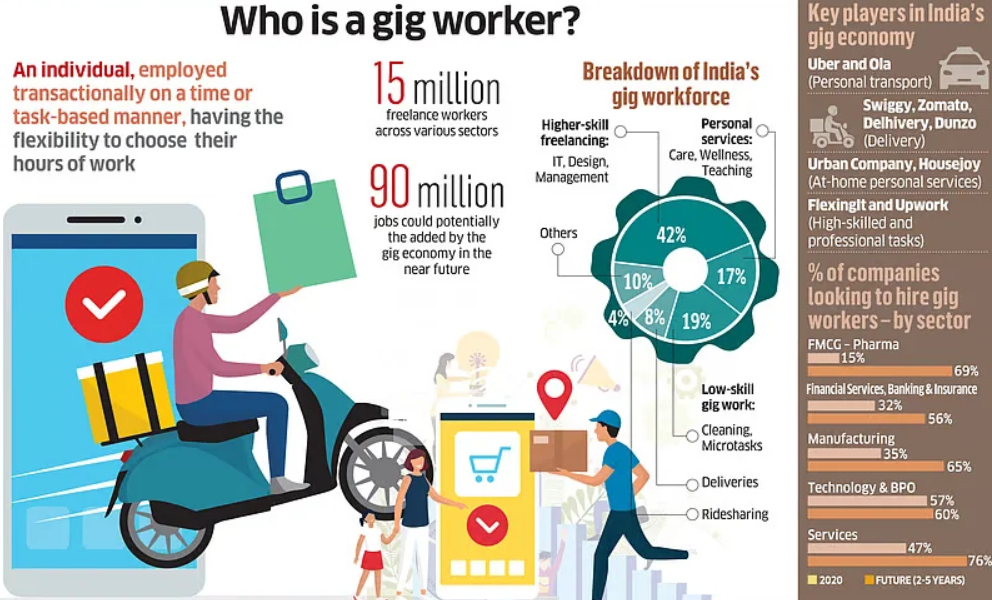
Context
A nationwide strike by gig workers (December 31) highlighted deep insecurity in app-based work.
Comes amid draft Central Rules to operationalise the new labour codes, released for public consultation.
Gig workers are partially included in the new framework.
Position of gig workers under labour codes
1. Code on Wages
Applies across sectors but excludes gig workers from the employer–employee relationship.
Platforms are not legally bound to ensure:
Minimum wages
Fair pay revisions
Transparency in incentives
Result: Issues like algorithmic rate cuts and opaque incentive structures remain outside legal scrutiny.
2. OSH&WC (Occupational Safety, Health and Working Conditions) Rules
Built on traditional employer compliance models (Shram Suvidha Portal).
Poor fit for app-mediated, algorithm-driven work.
Does not address:
Platform control through algorithms
Unilateral changes in work allocation
Digital surveillance and ratings-based penalties
Social security provisions for gig workers
Key features
Gig workers brought under social security framework only.
Mandatory registration on a portal by workers.
Aggregators must:
Upload worker details
Update records quarterly
Eligibility conditions
Minimum engagement:
90 days with a single aggregator in a financial year, or
120 cumulative days across aggregators
One calendar day can count as multiple days if earnings are made via multiple platforms.
Critical concerns with the draft Rules
1. Fragile eligibility thresholds
No protection for:
Illness
Maternity
Care-giving responsibilities
Demand slumps beyond workers’ control
A “bad quarter” can erase eligibility, reinforcing insecurity.
2. Platform-centric design
Rules do not constrain how platforms:
Organise work
Allocate tasks
Modify algorithms
Benefits depend indirectly on platform data and compliance.
3. Lack of clarity on benefits
Draft Rules do not specify:
Nature and minimum level of benefits
Dispute resolution mechanisms
Time-bound claims and appeals process
Recommendations
Making social security accessible and secure
Eligibility safeguards
Explicit exemptions for illness, maternity, and demand collapse.
Continuity of coverage despite temporary work interruptions.
Defined benefits
Clear specification of benefits supported by the Social Security Fund.
Minimum guaranteed benefits.
Transparent grievance redressal
Independent, time-bound claims and appeals process.
Not dependent on aggregator goodwill.
Data transparency
Mandatory periodic statements to workers covering:
Jobs performed
Hours logged
Earnings and deductions
Legal right to contest incorrect or irregular data.
Prelims practice MCQs
Q. With reference to gig workers under India’s new labour codes, consider the following statements:
Gig workers are fully covered under the Code on Wages.
Aggregators are legally required to ensure minimum wages for gig workers.
Gig workers are included only under the social security framework.
Which of the statements given above is/are correct?
(a) 1 and 2 only
(b) 3 only
(c) 1 and 3 only
(d) 2 and 3 only
Answer: (b)
Explanation:
Gig workers are excluded from an employment relationship under the Code on Wages.
Platforms are not obligated to ensure minimum wages.
Inclusion is limited to social security provisions.