
Green Chemistry AND Green Pharmacy
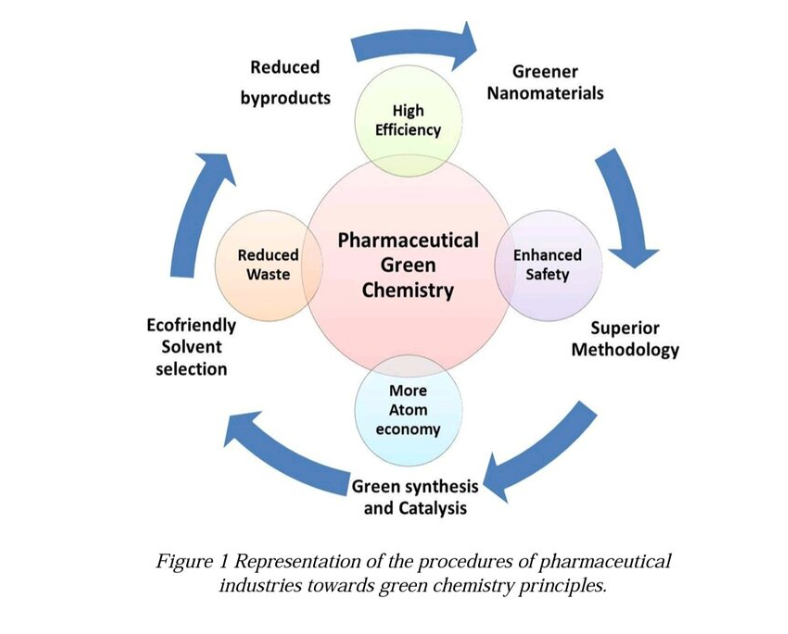
Context: With rising concerns over climate change and environmental degradation, the chemical industry is undergoing a transformation through green chemistry — a field focused on reducing or eliminating hazardous substances in the design, manufacture, and application of chemical products.
Introduced in 1998 by Paul Anastas and John Warner, the 12 Principles of Green Chemistry promote:
-
Use of safer solvents and reagents
-
Energy-efficient processes
-
Non-toxic and biodegradable products
-
Waste prevention rather than cleanup
-
Maximizing atom economy — ensuring that input materials are efficiently converted to final products
Examples of Green Chemistry in Action:
-
Biodiesel Production:
-
Indian Oil produces biodiesel from non-edible Jatropha seeds through transesterification using methanol.
-
Traditional catalyst sodium hydroxide creates wastewater; calcium oxide is a greener, recoverable alternative.
-
The process achieves ~90% atom economy, with glycerol (by-product) being reused in cosmetics and polymer industries.
-
-
Pharmaceutical Industry:
-
Harmful solvents like toluene (a neurotoxin) are common in drug production (e.g., paracetamol).
-
Green chemistry promotes replacing such volatile organic compounds with biodegradable, biomass-derived alternatives.
-
Birla Institute of Science–Pilani (Hyderabad campus) developed a green method for synthesizing Tamoxifen, an anti-cancer drug, with 100% atom economy, showing green chemistry can also be cost-effective and scalable.
-
What is Green Chemistry?
Green Chemistry refers to the design of chemical products and processes that:
-
Minimize environmental impact
-
Reduce toxicity and energy use
-
Promote renewable inputs and sustainable practices
What is Green Pharmacy?
Green Pharmacy extends the principles of green chemistry to the pharmaceutical sector:
-
Focuses on eco-friendly drug synthesis
-
Minimizes use of hazardous reagents and solvents
-
Emphasizes biodegradable drugs and waste minimization
-
Aims to make medicines that are safe for both humans and ecosystems