
Groundwater Contamination in India
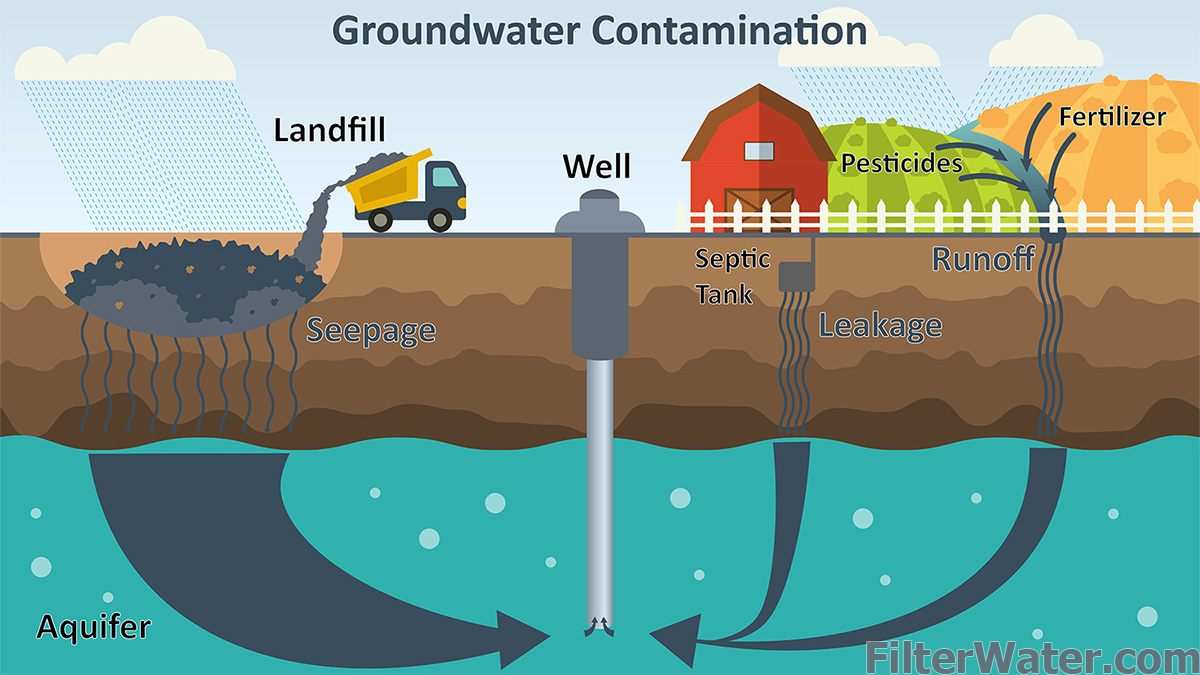
Importance of Groundwater
-
85% of rural drinking water, 65% of irrigation water from underground sources.
-
Previously considered pure, now polluted with:
-
Nitrates
-
Fluoride
-
Arsenic
-
Uranium
-
Heavy metals
-
Pathogenic microbes
-
| Contaminant | Extent | Sources | Health Impacts | Hotspots |
|---|---|---|---|---|
| Nitrates | >20% samples in 440 districts | Fertilizer overuse, septic leaching | Blue Baby Syndrome (methemoglobinemia), GI issues | Punjab, Haryana, Karnataka |
| Fluoride | 9% samples >1.5 mg/L (WHO limit) | Geogenic + irrigation | Dental & skeletal fluorosis (66M affected nationally) | Rajasthan, Andhra Pradesh, Telangana, MP (Shivpuri 2.92 mg/L) |
| Arsenic | High in Gangetic belt | Geogenic + over-extraction, mining | Skin lesions, gangrene, cancers | West Bengal, Bihar, UP, Jharkhand, Assam (Ballia 200 µg/L) |
| Uranium | Punjab, Andhra Pradesh, Rajasthan | Fertilizers, over-withdrawal | Nephrotoxicity, organ damage Anything above 30 ppb unsafe. | Malwa region, Rajasthan & Punjab (>100 ppb in several samples) |
| Iron | >13% unsafe | Geological + industrial | Developmental delays, GI issues | Various districts |
| Heavy metals (lead, cadmium, chromium, mercury) | Industrial discharge | Factories, tanneries, electroplating | Neuro damage, anaemia, immune disorders | Kanpur (UP), Vapi (Gujarat) |
| Pathogens | Sewage leaks, septic tank failures | Urban & peri-urban sewage | Cholera, hepatitis A & E | Paikarapur (Bhubaneswar) |
Budhpur, UP: 13 deaths in 2 weeks from kidney failure – linked to mill discharges.
-
Jalaun, UP: Petroleum-like fluid from handpumps – suspected underground leaks.
-
Paikarapur, Odisha: 500+ fell ill – sewage-contaminated groundwater.
Institutional fragmentation – CGWB, CPCB, SPCBs, Ministry of Jal Shakti work in silos.
-
Weak enforcement – Water Act, 1974 barely covers groundwater discharge.
-
Lack of real-time public data – No early warning or health surveillance integration.
-
Over-extraction – Lowers water tables, concentrates pollutants.
-
Sanitation gaps – Especially in rural & peri-urban areas.
National Groundwater Pollution Control Framework.
-
Modern monitoring (real-time sensors, public dashboards).
-
Targeted remediation (defluoridation, arsenic removal tech).
-
Integrated health + water surveillance.
-
Waste management reforms to curb industrial discharge.
-
Citizen-led groundwater governance & awareness.
Groundwater Level Measurement in India
Agency Involved
-
Central Ground Water Board (CGWB) – Nodal agency monitoring groundwater quantity and quality.
Monitoring Network
-
About 26,000 groundwater observation wells across the country.
-
Historically dependent on manual measurements by trained technicians.
Traditional Method
-
Technicians physically check the depth to groundwater using measuring tapes or electric water level indicators.
-
Data recorded periodically (often four times a year: pre-monsoon, monsoon, post-monsoon, and winter).
Digital Upgradation (since 2023)
-
16,000–17,000 Digital Water Level Recorders (DWLRs) installed and integrated with piezometers in observation wells.
-
Piezometers: Specialized instruments for measuring the pressure head of groundwater, which is converted into depth from the ground surface.
-
Function: Automatically record water levels at regular intervals and transmit data digitally to a centralized server in real time.
Advantages of Digital Monitoring
-
Higher accuracy and reduced human error.
-
Real-time monitoring enables early warning for declining water tables.
-
Facilitates data-driven groundwater management policies.
India’s water crisis is now more about quality than quantity.
The contamination is silent, invisible, and irreversible — and the cost will be measured in lives and lost futures, not just rupees.