
Himalayan red fox (Vulpes vulpes montana)
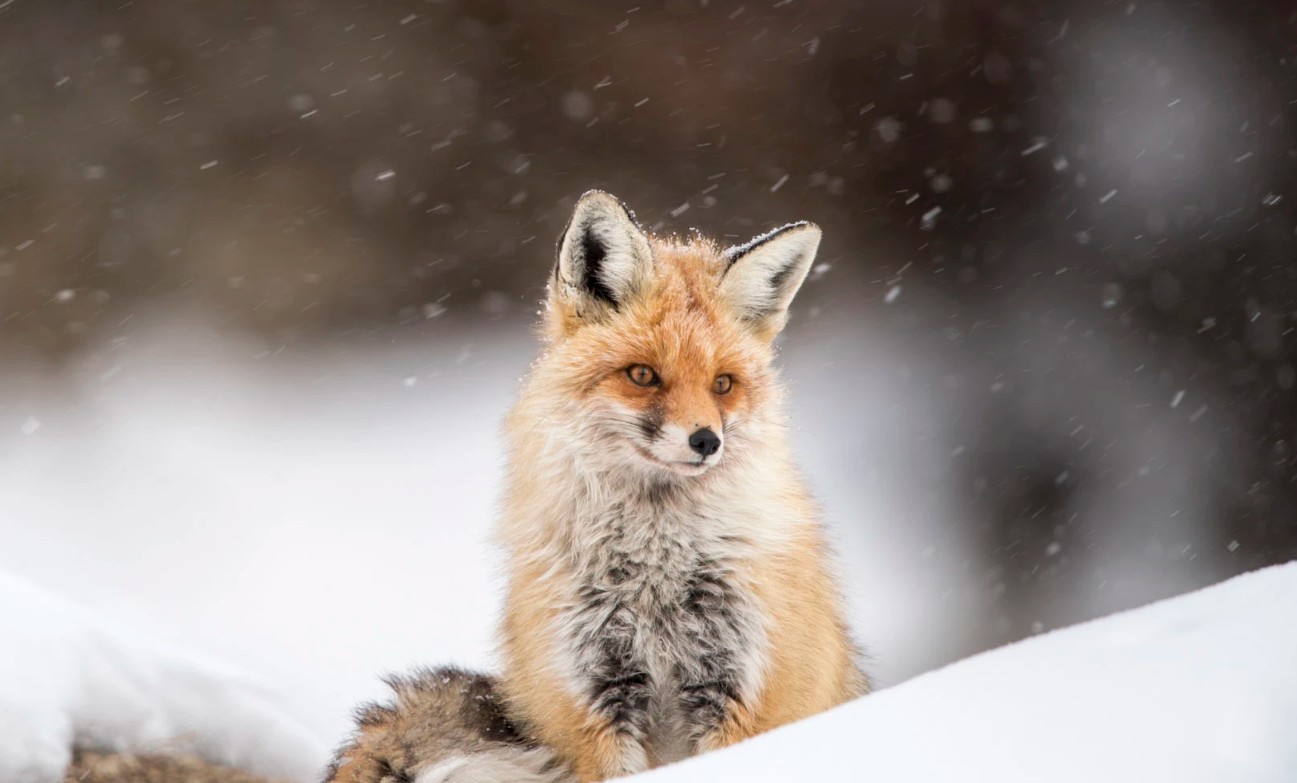
Why in news
• A Himalayan Red Fox has been sighted in the high-altitude meadows of the Parashar Hills near Parashar Lake, Mandi district, Himachal Pradesh.
• Environmentalists link its movement to lower elevations with ecological stress and changing snow patterns in the higher Himalayas.
Species profile
• Common name: Himalayan Red Fox / Hill Fox
• Local name (Ladakh): Watse
• Scientific name: Vulpes vulpes montana
• Type: High-altitude subspecies of the red fox
• Altitude range: ~3,000–5,000+ metres
IUCN Status - Least Concern
Habitat and distribution
• Cold deserts, alpine grasslands, rocky slopes
• Indian range includes Ladakh, Himachal Pradesh, and Jammu & Kashmir
• Also extends across parts of the greater Himalayan and Karakoram ranges
Physical characteristics
• Thick, dense, ashy-orange to reddish-brown fur
• Bushy tail with a white tip
• Fur density provides insulation against sub-zero temperatures and high-altitude winds
• Clearly distinguishable from plain-dwelling foxes by much thicker coat
Behaviour and ecology
• Primarily nocturnal and crepuscular (primarily active during twilight—specifically dawn and dusk)
• Solitary, shy, highly alert and intelligent
• Classified as a mesocarnivore (diet is roughly 30-70% meat, supplemented by insects, fruits, or fungi)
– Weighs less than 15 kg
– Diet consists of 30–70 per cent meat, supplemented by insects, fruits, or berries
Diet
• Opportunistic omnivore
• Preys on rodents (including voles, marmots), birds and insects
• Also feeds on berries and scavenges when required
• Plays a crucial role in regulating vole populations in alpine pastures
Conservation-related observations
• Sightings are rare and usually occur early morning or evening
• Heavy snowfall and reduced snow cover force seasonal movement to lower altitudes
• Increasingly observed near villages and human trails during winter
Threats
• Competition from free-ranging and feral dogs near human settlements
• Habitat stress due to changing snow patterns and snow droughts
• Shift from hunting to scavenging raises long-term survival risks
• Greater exposure to humans increases chances of conflict and dependency
Climate change linkage
• Reduced and inconsistent snow cover limits traditional hunting strategies
• Forces foxes to abandon ancestral high-altitude territories
• Seen as a climate-change refugee species
• Movement to lower valleys signals stress in fragile Himalayan ecosystems
Ecological significance
• Indicator species of high-altitude ecosystem health
• Helps maintain rodent population balance
• Changes in its behaviour reflect broader climatic and ecological shifts in the Himalayas
Prelims Practice MCQs
Q. With reference to the Himalayan Red Fox, consider the following statements:
It is primarily nocturnal and crepuscular in behaviour.
It usually lives and hunts in large social groups.
It is classified as a mesocarnivore.
Which of the statements given above are correct?
a) 1 and 2 only
b) 1 and 3 only
c) 2 and 3 only
d) 1, 2 and 3
Correct answer: b
Explanation:
• Statement 1 is correct: The species is nocturnal and crepuscular.
• Statement 2 is incorrect: It is solitary, not social.
• Statement 3 is correct: It is a mesocarnivore, feeding on both animal and plant matter.
Q. The Himalayan Red Fox plays an important ecological role mainly by:
a) Pollinating alpine flowering plants
b) Dispersing seeds of medicinal herbs
c) Controlling populations of small rodents such as voles
d) Regulating large herbivore populations
Correct answer: c
Explanation:
The fox is a key predator of voles and other small rodents, helping maintain ecological balance in fragile alpine pastures.