
India–Egypt Strategic Dialogue & IMEC–SCZONE
Context
Egyptian Foreign Minister Badr Abdelatty visited New Delhi for the first India–Egypt Strategic Dialogue.
Discussions focused on bilateral economic cooperation, regional security, and the India–Middle East–Europe Economic Corridor (IMEC).
He also met PM Narendra Modi and External Affairs Minister S. Jaishankar.
1. Egypt’s Stand on IMEC
Egypt stated that the IMEC project cannot progress without addressing the Palestinian question and achieving stability in the Middle East.
Abdelatty emphasised that peace and security in the region are impossible without Palestinian statehood.
Egypt supports a two-state solution as the only viable path for durable peace.
2. IMEC – Background
Launched: September 2023, during the G20 Summit in New Delhi.
Participants: India, Saudi Arabia, UAE, U.S., and European Union.
Purpose: Establish a multimodal trade corridor (sea, rail, and road) connecting India → Middle East → Europe, aimed at reducing logistics time and cost.
Route: To pass through Israel’s Haifa Port—making regional stability crucial.
Status: Project was derailed within a month after the October 7, 2023 Hamas attacks and subsequent Israel–Gaza conflict.

3. Egypt’s Alternative Proposal
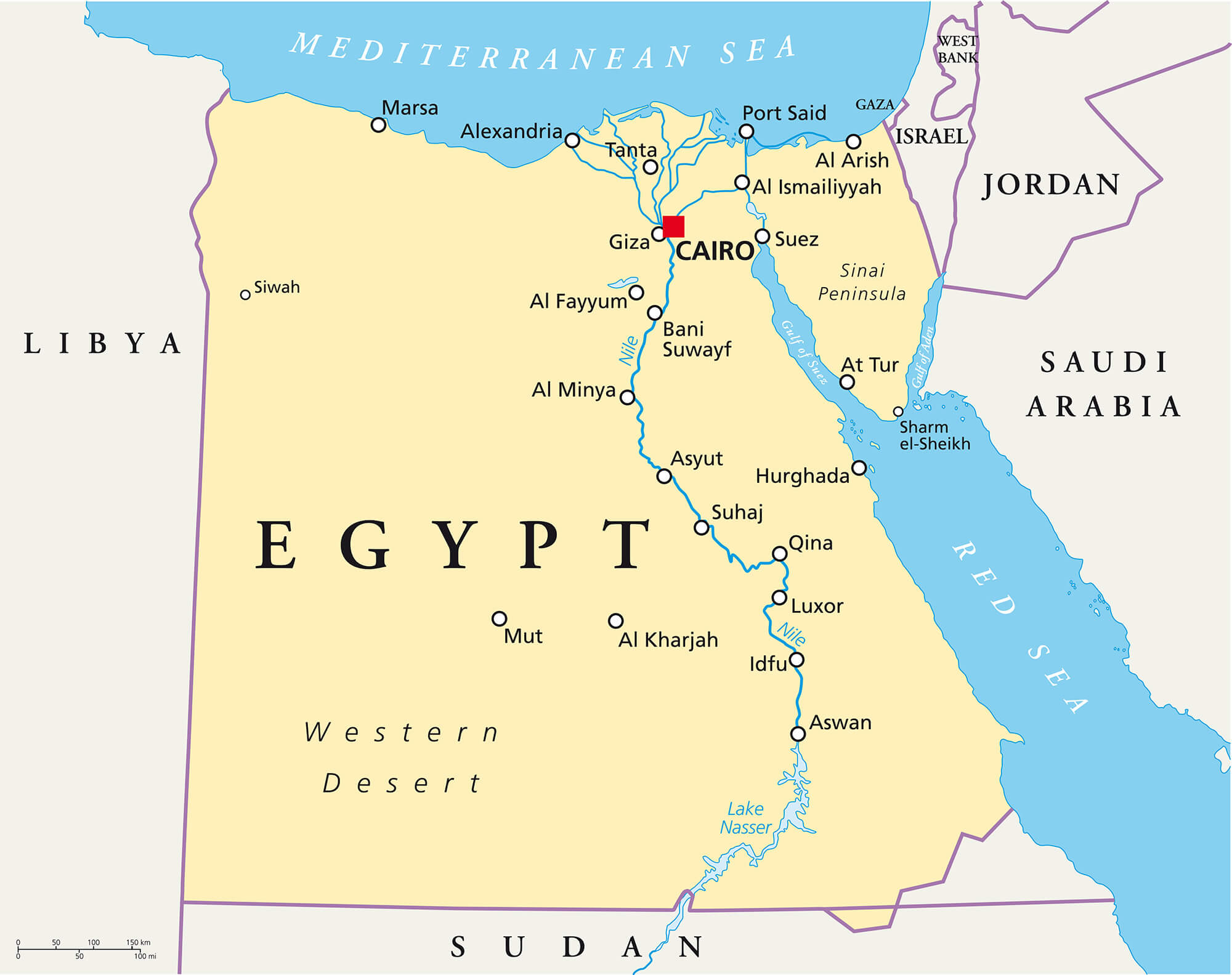
Egypt invited India to join the Egyptian Suez Canal Economic Zone (SCZONE).
The zone already hosts industrial complexes from Russia, China, and other nations.
Proposal: Establish a special Indian industrial zone within SCZONE.
Benefits for India:
Strategic access to markets across Africa, Europe, South America, and Arab countries (≈ 2 billion consumers).
Leverage Egypt’s trade agreements and port connectivity.
Boost India’s export footprint under the “Global South” partnership vision.
4. Bilateral Economic Relations
Current trade volume: Around USD 5 billion.
Goal: Double bilateral trade in the coming years.
Focus sectors:
Chemicals and minerals
Pharmaceuticals
Phosphates and fertilizers
Artificial Intelligence and digital technologies
Renewable energy
5. Diplomatic & Strategic Importance
Egypt’s position at the Suez Canal gives it immense geostrategic importance for global maritime trade.
The country acts as a bridge between Africa, the Middle East, and Europe.
Cooperation with Egypt supports India’s goal of diversified energy and trade connectivity beyond the Persian Gulf.
Egypt’s Gaza Peace Plan—signed with U.S. President Donald Trump and supported by PM Modi—highlights its mediatory role in West Asia.
6. Significance for India
India’s partnership with Egypt strengthens its West Asia outreach and maritime diplomacy.
Participation in SCZONE could provide strategic leverage parallel to IMEC, especially if IMEC remains stalled.
The episode underlines how regional conflicts (Israel–Palestine) can impact transcontinental projects and India’s connectivity ambitions.
7. Broader Geopolitical Implications
The IMEC–Palestine link reinforces that infrastructure diplomacy in West Asia is inseparable from political stability.
Egypt’s stance reflects the sentiment of Arab states that economic cooperation must accompany just political resolutions.
India’s diplomatic balancing between Israel, Arab nations, and the U.S. will remain key to reviving IMEC.
Suez Canal Economic Zone (SCZONE)
1. Overview
The Suez Canal Economic Zone (SCZONE), also known as SCEZ, is a special economic zone in Egypt established in 2015 under Presidential Decree No. 330 of 2015.
Total area: around 461 sq. km, spanning both eastern and western banks of the Suez Canal.
The Suez Canal Economic Zone (SCZONE) is a strategic industrial and logistics hub developed by Egypt around the Suez Canal passageway.
It lies along one of the world’s busiest maritime routes connecting Europe, Africa, and Asia via the Arabian Gulf.
The zone aims to transform Egypt into a global trade and manufacturing center by leveraging its geographical advantage.
Historical Background
The concept was proposed in August 2014 by President Abdel Fattah el-Sisi as part of Egypt’s national economic development vision.
The official establishment in September 2015 marked a major economic reform milestone focusing on logistics, industry, and connectivity.
2. Strategic Significance
Located along the main international maritime route, facilitating:
20% of global container trade
10% of global seaborne trade
18,000 ships passing annually
Acts as a link between three continents and is vital for energy and goods transportation between Asia and Europe.
3. Structure of SCZONE
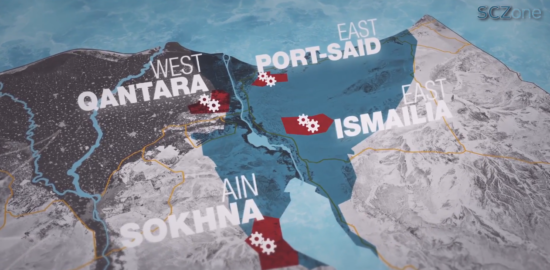
The zone includes:
Six major ports
Four large industrial areas
All are located along the banks of the Suez Canal.
Operates as a designated duty-free enclave, offering tax exemptions, customs incentives, and simplified regulations to attract foreign investment.
4. Key Industrial Areas & Ports
Industrial Areas: Ain Sokhna, East Port Said, Qantara West, and East Ismailia.
Ports: East Port Said, West Port Said, Ain Sokhna, Al-Adabiya, Al-Tor, and Arish.
These serve as integrated manufacturing and logistics hubs, connected to major global shipping lines.
Prelims Practice MCQ
The Suez Canal Economic Zone (SCZONE) is strategically located because it connects:
A. Europe, East and North Africa with Asia via the Arabian Gulf
B. North America with Africa through the Mediterranean Sea
C. The Caspian Sea with the Persian Gulf via Iran
D. The Atlantic Ocean with the Indian Ocean via the Red Sea
Answer: A