
India’s Call for Reformed Multilateralism & Strengthened UN Peacekeeping
Context
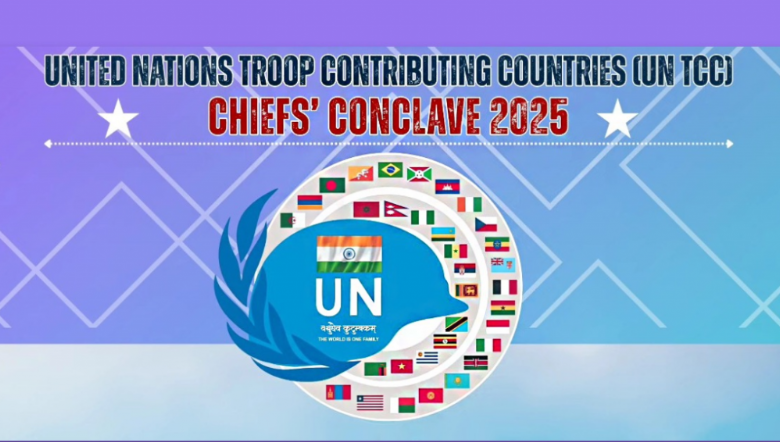
Event: Chiefs’ Conclave of United Nations Troop Contributing Countries (UNTCC)
Venue: New Delhi (October 14–16, 2025)
Hosted by: India (for the first time)
Participants: 32 nations contributing to UN peacekeeping
Key Highlights
1. The “4C Formula” for Peacekeeping
Consultation, Cooperation, Coordination & Capacity Building identified as guiding principles.
Aimed at tackling emerging peacekeeping challenges and ensuring global peace.
2. Call for Technological and Financial Support
Nations with advanced capabilities urged to contribute more through:
Troops and police personnel
Logistics and technology
Specialised capacities (e.g., secure communications, surveillance, UAVs)
Goal: Make peacekeeping missions safer, effective, and sustainable.
3. Need for Reformed Multilateralism
Outdated international structures no longer fit modern challenges.
Advocated reforms to ensure:
Representation of all stakeholders
Addressing contemporary global issues
Focus on human welfare
Restoration of confidence in the UN system
“We cannot fight today’s challenges with outdated multilateral structures.” – Rajnath Singh
4. Upholding the Rules-Based International Order
Criticized nations violating or undermining international rules.
India upholds the rules-based global order while advocating institutional reform.
Stressed Gandhian philosophy of non-violence and truth as India’s guiding ethos.
5. India’s Contribution to UN Peacekeeping
Nearly 2,90,000 Indian personnel have served in 50+ UN missions.
India’s contributions include:
Troops, police, and medical personnel
Centre for United Nations Peacekeeping (CUNPK), New Delhi – trained participants from 90+ countries.
India provides training, interoperability development, and Aatmanirbhar Bharat-based innovations (land mobility, UAVs, med-tech, secure comms).
6. Role of Women in Peacekeeping
Highlighted India’s pioneering role in women-led missions:
All-women Formed Police Unit (Liberia, 2007) – global symbol of empowerment.
Women officers serve in South Sudan, Golan Heights, Lebanon.
2024: Indian woman peacekeeper won UN Military Gender Advocate of the Year Award (DR Congo mission).
Women enhance mission trust, empathy, and effectiveness.
7. Medical & Humanitarian Contributions
Indian medical teams serve in UN field hospitals across Africa.
Reflect India’s humanitarian ethos and the UN’s spirit of service.
8. India’s Global Vision
India’s aspiration to be “Vishwa Guru” is rooted in collaboration, not dominance.
Advocates sharing India’s heritage of peace and non-violence to strengthen peacebuilding.
India’s Broader Peacekeeping Diplomacy
Largest troop contributor in Asia and among top globally.
Pushes for:
Inclusivity in decision-making
Technology-driven innovation
Interoperability among UN contingents
Reflects Vasudhaiva Kutumbakam — “The world is one family.”