
India’s Economic Ambitions and the Need for Better Gender Data
Context
-
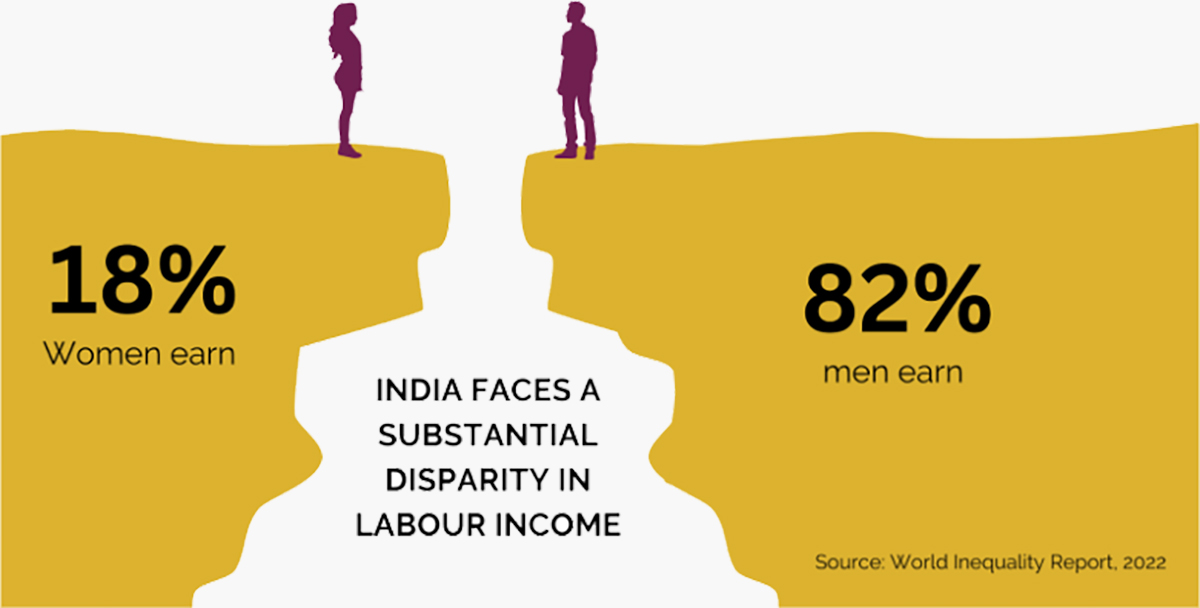
Women contribute only 18% to India’s GDP, despite making up nearly half the population.
-
India’s aspiration to become a $30 trillion economy by 2047 requires inclusive growth, which is impossible without harnessing women’s potential.
-
Nearly 196 million employable women are outside the workforce. FLFPR has improved to 41.7%, but only 18% are in formal employment.

Importance of Gender-Disaggregated Data
-
Current indices on health, economy, and infrastructure rarely disaggregate data by gender.
-
Without a gender lens, participation gaps and systemic barriers remain invisible.
-
Gender data helps identify structural barriers (school-to-skill, skill-to-work, entrepreneurship-to-credit transitions).
Case Study: Uttar Pradesh’s WEE Index
-
First district-level Women’s Economic Empowerment (WEE) Index launched in India.
-
Tracks participation across five levers:
-
Employment
-
Education and Skilling
-
Entrepreneurship
-
Livelihood and Mobility
-
Safety and Inclusive Infrastructure
-
-
Example: In UP’s transport sector, data showed low female participation → recruitment redesign + women’s restrooms in bus terminals.
Key Insights
-
Women dominate skilling enrolment (>50%) but remain underrepresented in entrepreneurship and credit access.
-
Data reveals not just participation gaps but systemic finance and enterprise barriers.
-
Catalytic for reforms in infrastructure, employment, and policy.
Policy Implications
-
Universal Gender-Disaggregated Data: integrate gender metrics in MIS across departments (MSME, housing, transport, etc.).
-
Rethink Gender Budgeting: move beyond welfare schemes → apply gender lens to every rupee spent.
-
Local Capacity Building: strengthen panchayats and local bodies to collect and act upon gender data.
-
Replication by States: Andhra Pradesh, Maharashtra, Odisha, Telangana (with trillion-dollar goals) can adopt WEE Index-type tools.
Conclusion
-
Gender data is the starting block, not the finish line.
-
Making women’s economic contributions visible, measurable, and actionable is essential to move them from margins to mainstream.
-
Inclusive growth = sustainable path to $30 trillion economy by 2047.