
India’s Fossils at Risk of Being Sold Abroad
Context
-
India has rich fossil beds, especially in Kutch (Gujarat), Madhya Pradesh, and Deccan basins.
-
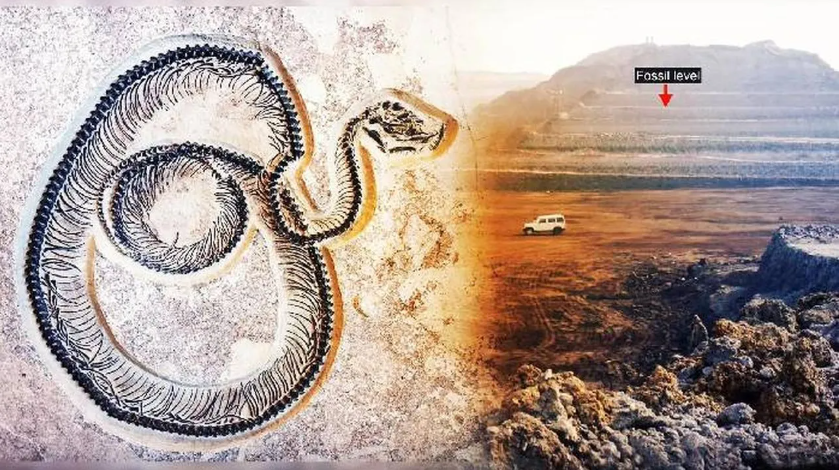
Recent find: Vasuki indicus (47-million-year-old, ~15 m long snake) in Panandhro lignite mine, Kutch.
-
Lack of laws and institutions puts fossils at risk of theft, vandalism, or illicit sale abroad.
Fossil Heritage of India
-
Mesozoic fossils: Dinosaurs, early reptiles, ammonites.
-
Cenozoic fossils: Early whales (Indohyus), ancestral horses.
-
Human remains: Ancient skulls and plant fossils.
-
Result of India’s unique evolutionary history – isolation after Gondwanaland (150 mya) and later Himalayan collision (50–60 mya).
Current Challenges
-
No Legal Protection
-
Unlike antiquities (protected under the Antiquities and Art Treasures Act, 1972), fossils have no specific legislation.
-
Open sale online and in global auctions.
-
-
Theft & Commercialisation
-
Fossils stolen from museums (e.g., dinosaur eggs in Mandav, MP).
-
Sold at auctions abroad (e.g., Stegosaurus fossil sold for $44.6 million at Sotheby’s, 2024).
-
High demand from private collectors, including celebrities.
-
-
Institutional Gaps
-
No national fossil repository despite draft proposals.
-
Private collections (e.g., Ranga Rao–Obergfell Trust in Dehradun) remain unsorted and vulnerable.
-
-
Unsung Custodians
-
Local enthusiasts (e.g., Vishal Verma in MP) rescue fossils, but lack resources and security.
-
Global Parallels & Concerns
-
USA: ~71 T. rex fossils in private hands; only 61 in public institutions (Thomas Carr study, 2024).
-
Fossils increasingly treated as luxury collectibles rather than scientific resources.
-
UNESCO regards fossils as part of world natural heritage.
Implications for India
-
Loss of scientific knowledge: Fossils provide key insights into evolution (dinosaurs → whales → mammals).
-
Cultural & natural heritage loss: Similar to antiquities stolen and auctioned abroad.
-
Tourism & education impact: Fossil parks and museums remain underdeveloped compared to global standards.
Way Forward
-
Legal Framework
-
Enact a Fossil Protection Act (on lines of Antiquities Act).
-
Prohibit private sale; mandate reporting of finds.
-
-
Institutional Measures
-
Establish a National Fossil Repository & Museum Network.
-
Digitisation and cataloguing of existing collections.
-
-
Community Involvement
-
Incentivise local custodians and amateur fossil hunters.
-
Awareness campaigns on heritage value.
-
-
International Cooperation
-
Strengthen monitoring with UNESCO & INTERPOL for fossil trafficking.
-
Push for return of stolen fossils like stolen antiquities.
-