
India’s Heat Action Plans (HAPs) – Analysis of Gaps and Challenges
Context:
-
India’s summer (March–June) in 2025 started unusually early with:
-
An unprecedented February heatwave
-
Above-normal March and April temperatures
-
Followed by early monsoon and temporary rainfall relief
-
About Heat Action Plans (HAPs):
-
Launched: 2013
-
Primary policy response to extreme heat in India
-
Aimed at protecting public health, food security, and vulnerable populations like outdoor workers
-
Over 250 cities and districts in 23 states have devised HAPs
-
Not mandatory for state or local governments
Key Concerns and Gaps:
1. Lack of Long-Term Vision
-
Local governments acknowledge heat as a problem
-
But lack imagination or planning for climate resilience
-
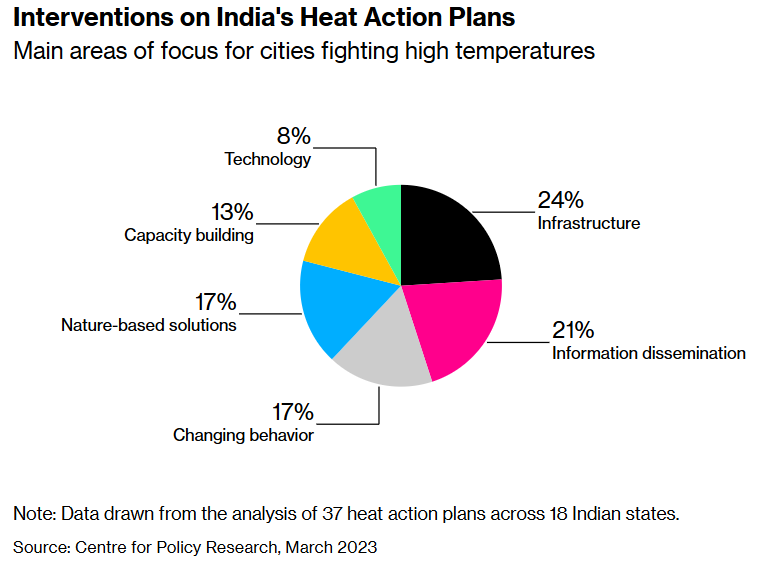
Focus remains on short-term, seasonal, reactive measures
2. Low-Cost Fixation
-
Measures like:
-
Setting up water stations
-
Changing school timings
-
Issuing heat advisories
-
-
No systemic transformation of urban design or housing
3. Poor Urban Planning & Infrastructure Gaps
-
Redesign of built environment is rare
-
Tree plantation and water-body restoration efforts avoid slums and densest areas due to:
-
Land ownership issues
-
Infrastructure limitations
-
-
Green spaces developed in outskirts, not urban heat hotspots
4. Inadequate Investment & Community Involvement
-
HAPs lack targeted financing
-
Developed in a top-down manner
-
Little community participation
-
Heat is treated mainly as a health issue, ignoring:
-
Labour rights
-
Housing vulnerability
-
Urban planning gaps
-
Data & Reports:
1. Council on Energy, Environment and Water (CEEW)
-
Over 50% of India’s urban and rural districts at high or very high risk
-
Risk affects over 1 billion people (~76% of population)
2. Sustainable Futures Collaborative (SFC) – March 2025
-
Analysed 9 high-risk cities: Delhi, Kolkata, Varanasi, Bhopal etc.
-
150+ heat-related measures (2018–2023)
-
Mostly reactive and temporary
-
Few focused on systemic healthcare or climate adaptation
-
Very few plans for climate-sensitive urban housing
-
Policy Recommendations (Implied):
-
Make HAPs mandatory and performance-linked
-
Focus on climate-sensitive infrastructure, not just advisories
-
Integrate labour, housing, and urban equity into heat policy
-
Improve data collection, public participation, and funding
Conclusion:
Despite early warnings and increasing heat-related risks, India’s HAPs remain underfunded, piecemeal, and reactive. A transformation toward inclusive, resilient urban planning is urgently required.