
India’s Nuclear Power Promise
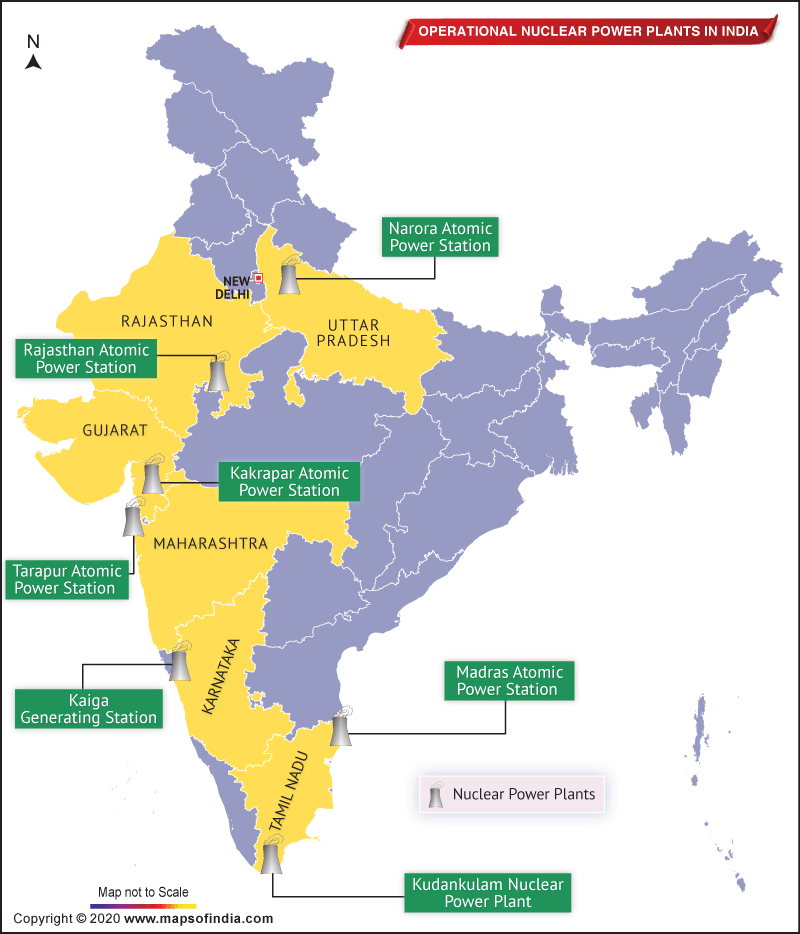
Context: India has set an ambitious target of 100 GW of nuclear power capacity by 2047, up from the current 8.18 GW, to support its development and net zero goals. The 2025–26 Union Budget reflects this shift, also allocating ₹20,000 crore to develop five Small Modular Reactors (SMRs) by 2033.
Challenges and Reforms Needed:
-
India's nuclear sector has been government-controlled under the Atomic Energy Act, 1962.
-
To meet its targets, private and foreign participation is now essential, requiring reforms to:
-
The Atomic Energy Act for ownership and operational changes.
-
The Civil Liability for Nuclear Damage Act (CLNDA), 2010, especially liability provisions.
-
Tariff regulations to align with other energy sectors.
-
Ensure independent regulation by making AERB a legally autonomous body.
-
Offer financial incentives, including FDI up to 49% and green financing.
-
India’s Nuclear Journey:
-
Early start with Apsara (1956) and Tarapur reactors (1963).
-
Progress slowed due to geopolitical isolation after the 1974 nuclear test and absence from the NPT.
-
Indigenous PHWRs (Pressurised Heavy Water Reactors) were developed using natural uranium.
-
Despite a 2008 NSG waiver, the CLNDA has deterred foreign participation; Russia remains India’s only active partner (Kudankulam).
Why Nuclear is Critical:
-
India’s electricity needs will grow fivefold by 2047.
-
Renewable sources like solar and wind are intermittent.
-
Coal dominates power generation, but climate goals demand alternatives.
-
Nuclear provides reliable, low-carbon baseload power.
-
Global momentum supports nuclear, the IAEA–World Bank partnership to support nuclear in developing countries.
Dubai 2023 COP28 ‘Declaration to Triple Nuclear Energy’, acknowledging nuclear power as a critical input in reducing reliance on fossil fuels, enhancing energy security, and a move towards a low carbon future.
Government & Regulatory Bodies:
-
Department of Atomic Energy (DAE) – Governing body for nuclear policy and regulation.
-
Atomic Energy Regulatory Board (AERB) – Safety oversight body.The certification and safety oversight is the responsibility of the Atomic Energy Regulatory Board (AERB) that is ‘autonomous’ but not a legal entity and is subordinate to the Department of Atomic Energy.
-
Central Electricity Regulatory Commission (CERC) – Regulates power tariffs and disputes under the Electricity Act.
-
Supreme Court of India – Currently reviewing regulatory disputes (e.g., NPCIL vs Gujarat Urja case).
Public Sector Undertakings (PSUs):
-
Nuclear Power Corporation of India Limited (NPCIL) – Builds and operates nuclear plants.While it is a profit-making, dividend-paying company with a high credit rating, it is not classified as a Miniratna, Navratna, or Maharatna PSU. NPCIL is a wholly-owned enterprise of the Government of India, unlike other PSUs where the government may hold at least 51% share.
-
National Thermal Power Corporation (NTPC) – Partnering with NPCIL in a joint venture (Mahi Banswara project).
-
Rural Electrification Corporation (REC) – A proposed JV partner in future nuclear projects.
International Partners:
-
Russia (Rosatom) – Only active foreign partner (Kudankulam VVER reactors).
-
France & United States – Ongoing but delayed negotiations for nuclear collaboration.
-
International Atomic Energy Agency (IAEA) – Partnering with the World Bank to support nuclear in developing nations.
-
World Bank – Endorsing nuclear as essential for economic developmen
Way Forward:
-
Standardise SMRs for cost-effective deployment.
-
Scale up 700 MW PHWRs through land, licensing, and supply chain support.
-
Speed up stalled foreign deals (e.g., with France and the U.S.).
-
Revise nuclear classification to allow green financing and incentives.
-
Allow private sector JVs (e.g., NPCIL-NTPC at Mahi Banswara) and expand beyond public sector partnerships.
India’s nuclear promise depends on decisive reforms, private sector involvement, and global collaboration to meet energy demands while staying on a sustainable path.