
Japan's Final H-2A Rocket Launch
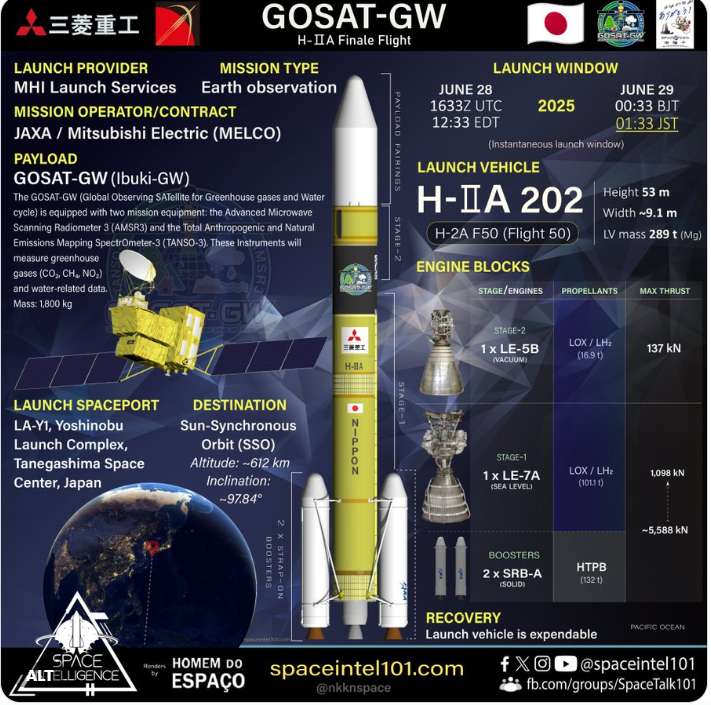
Context: Japan successfully launched the GOSAT-GW (Global Observing Satellite for Greenhouse Gases and Water Cycle) aboard the H-2A rocket, marking the 50th and final flight of the H-2A, which has been Japan’s primary launch vehicle since 2001.
Key Highlights:
-
Launch Site: Tanegashima Space Centre, southwestern Japan
-
Operator: Mitsubishi Heavy Industries (MHI)
-
Satellite Purpose:
-
Monitor carbon dioxide, methane, and other greenhouse gases
-
Provide high-resolution global data on sea surface temperatures and precipitation
-
Data to be shared with agencies like the U.S. NOAA within a year
-
H-2A Rocket Overview:
-
In service since 2001 with 49 successful missions out of 50 (only failure in 2003)
-
Carried notable missions like SLIM (moon lander) and Hayabusa2 (asteroid probe)
-
Operated by Mitsubishi Heavy Industries since 2007
Transition to Next-Gen Rockets:
-
H-2A now retired, replaced by:
-
H3: Larger payload capacity, half the launch cost, aimed at global market competitiveness
-
Epsilon: Smaller rocket under development by IHI for diverse missions
-
-
The H3 rocket, despite a failed debut in 2023, has since achieved four consecutive successful launches
Strategic Importance:
-
Japan is strengthening its commercial launch capabilities for space and national security
-
Focus on cost efficiency, payload flexibility, and securing a place in the growing global satellite launch market