
Jarawa Tribe - 2027 Census
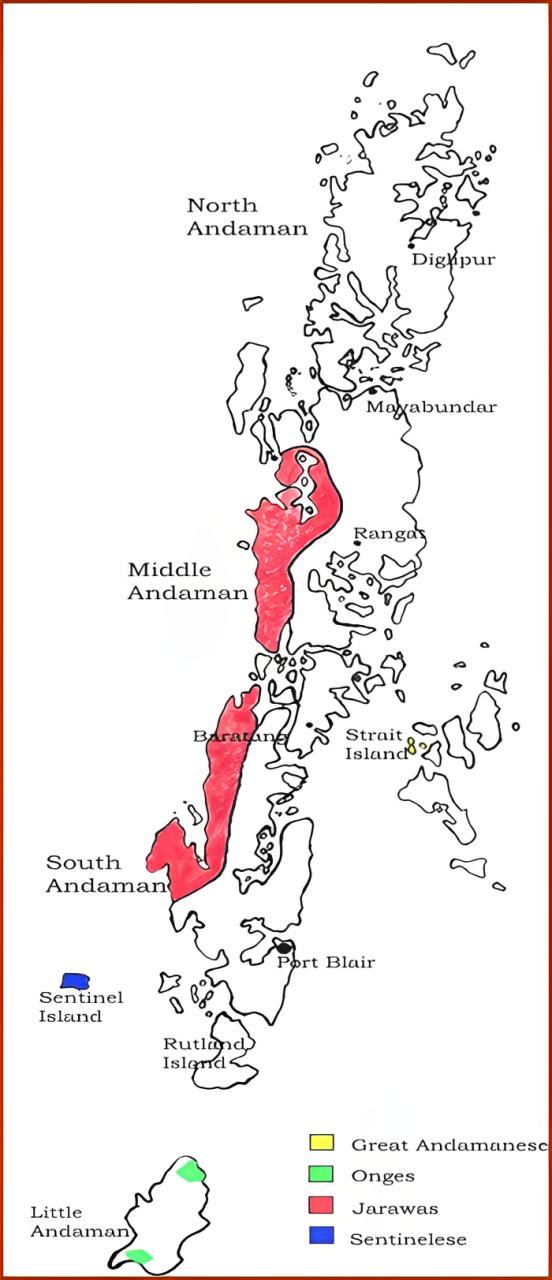
Why in news :
In preparation for Census 2027, concerns regarding access to Particularly Vulnerable Tribal Groups (PVTGs) like the Jarawa tribe in the Andaman and Nicobar Islands have been addressed by Dr. Ratan Chandra Kar, a tribal health expert.
Key Points:
1. Tribe Profile – Jarawas:
-
Among the oldest surviving hunter-gatherer tribes globally.
-
Live in nomadic bands of 40–50.
-
Identified as PVTGs under the Ministry of Tribal Affairs.
-
Recorded population in 2011 Census: 380 individuals.
-
Estimated population in 2025: 647 individuals.
-
Known for strong natural immunity, no incidence of lifestyle diseases (e.g., diabetes, hypertension).
-
Other PVTGs in the islands: Andamanese, Shompen, Onge, Sentinelese (except Nicobarese).
2. Census Preparedness:
-
Census 2027 to be conducted in two phases:
-
October 1, 2026 – Snow-bound areas (e.g., Ladakh).
-
March 1, 2027 – Rest of India.
-
-
Jarawa enumeration is feasible due to:
-
Established trust and contact since 1998.
-
Use of satellite imagery for monitoring population and movements.
-
Government policy of non-intrusive support.
-
3. Healthcare Intervention:
-
Successful containment of epidemics since the 1999 measles outbreak.
-
Diseases tackled: Measles, malaria, hepatitis, conjunctivitis, mumps.
-
Model: Preventive and supplementary modern medicine, while respecting traditional healing practices.
4. Development vs. Conservation:
-
Andaman Trunk Road (ATR) provides physical access, but raises concerns of intrusion.
-
Recommendation: Minimal intervention, support tribal autonomy, and focus only on essential health and welfare delivery.
5. Scheme Involved:
-
PM-JANMAN (Prime Minister’s Development Mission for PVTGs):
-
Aimed at identifying and delivering targeted welfare benefits.
-
Only 191 individuals from A&N Islands identified so far—highlighting gaps due to outdated census data.
-