
Kerala’s Maternal Mortality Ratio (MMR) Rise:
Context
-
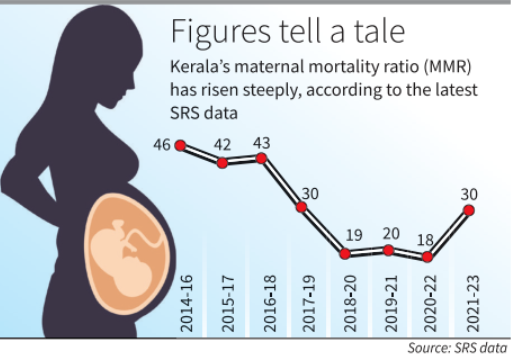
Latest SRS Special Bulletin (2021–2023): Kerala’s MMR rose from 18 to 30 per 1 lakh live births.
-
Kerala and Andhra Pradesh share the lowest MMR in India, despite the rise.
Causes of the Increase
-
COVID-19 Impact (2021):
-
97 maternal deaths due to COVID-19.
-
In 2021-22, maternal deaths rose to 220, pushing MMR to 51.
-
-
Declining Live Births (Denominator Effect):
-
Kerala earlier had 5–5.5 lakh live births annually.
-
By 2023: 3.93 lakh live births.
-
Projection for 2024–25: ~3.54 lakh.
-
Maternal deaths remain steady at 120–140 annually → fewer births inflate the ratio.
-
-
Demographic Transition:
-
Low fertility rate, ageing population, and delayed pregnancies increase high-risk cases.
-
-
Last-Mile Challenges:
-
While major causes (hemorrhage, sepsis, obstructed labour) have reduced,
-
New challenges: lifestyle diseases, caesarean-related complications, and co-morbidities in older mothers.
-
Data Discrepancy Issue
-
SRS (Sample Registration System): Uses sampling → quoted in official records.
-
Kerala Health Department (Line List Method): Records every maternal death → considered more accurate.
-
Hence, variations between reported MMR figures.
Broader Implications
-
Policy Concern: Declining births impact denominator, making Kerala’s MMR appear worse than ground reality.
-
Safe Motherhood Efforts: Kerala has historically invested in institutional deliveries, skilled birth attendants, and maternal health infrastructure.
-
Challenge Ahead: Further reducing maternal deaths in a state already at low levels requires tackling non-communicable disease risks, advanced maternal age pregnancies, and healthcare accessibility in remote areas.