
M.S. Swaminathan Birth Centenary Science Conference
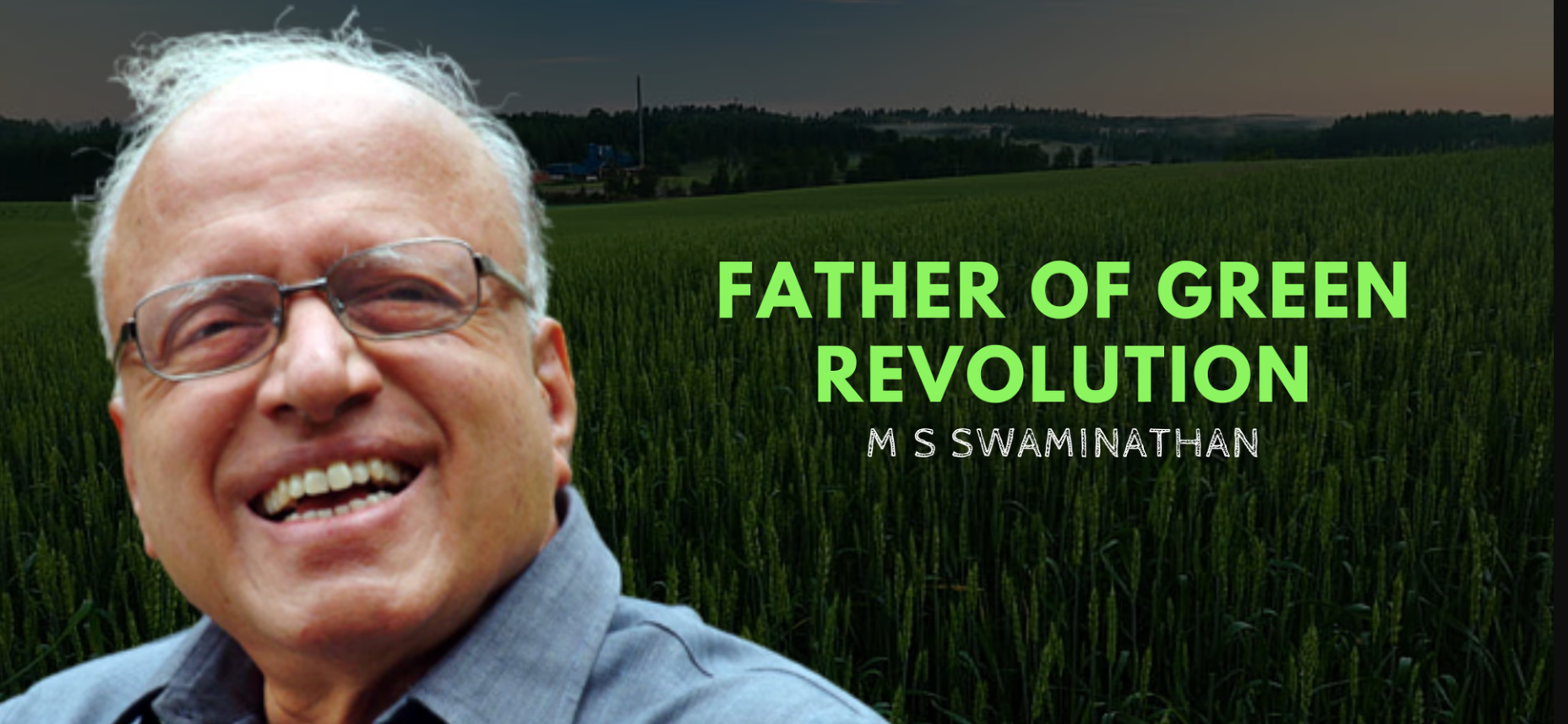
Context: On August 7, 2025, the Government of India will commemorate M.S. Swaminathan’s birth centenary with a three-day science conference organized by MSSRF in New Delhi.
Occasion and Purpose
-
Occasion: Birth Centenary (100th birth anniversary) of M.S. Swaminathan, the father of India’s Green Revolution.
-
Objective: Celebrate Swaminathan’s legacy in agriculture, biodiversity, food security, and peace.
-
Platform: Discuss sustainable agricultural practices by integrating traditional knowledge and modern science.
Concept of "Biohappiness"
-
Coined by M.S. Swaminathan
-
Definition: Sustainable use of biodiversity to:
-
Enhance food security
-
Improve livelihoods and income
-
Restore degraded ecosystems
-
-
Goal: Link ecological wisdom with technological innovation
Key Launches and Releases by the PM
-
Reprint of Swaminathan’s Book:
-
In Search of Biohappiness (2011)
-
-
Special Commemorative Volume:
-
Published by The Hindu
-
Includes articles by Swaminathan’s family and colleagues
-
-
Commemorative Stamp
-
₹100 Coin in honor of M.S. Swaminathan
M.S. Swaminathan Award for Food and Peace
-
First Edition: To be presented by PM Modi on August 7
-
Awarded for: Global contributions to food security and peace
-
Supported by: MSSRF and The World Academy of Sciences (TWAS)
-
Prize: $25,000
-
Aim: To recognise visionary scientists working on agri-based peace and development models
Agritech Grand Challenge
-
Organised by: MSSRF + Social Alpha
-
Objective: Promote innovation in agriculture
-
Funding: ₹1 crore grant
-
Support Provided To:
-
Early-stage agritech ideas
-
Pilot projects
-
Scalable agri-innovations
-
Significance and Legacy
-
Reinforces India’s leadership in agricultural innovation and food security
-
Aligns with SDG Goals 1, 2, 12 & 15 (No Poverty, Zero Hunger, Responsible Consumption, Life on Land)
-
Celebrates the legacy of a scientist who promoted ethical science, rural prosperity, and agro-biodiversity conservation
M.S. Swaminathan: Architect of India’s Evergreen Revolution
Mankombu Sambasivan Swaminathan (1925–2023), widely regarded as the Father of India’s Green Revolution, was an agricultural scientist, geneticist, and visionary policy advocate who fundamentally transformed Indian agriculture by introducing high-yielding varieties of wheat and rice during the 1960s. His efforts helped India achieve self-sufficiency in food production and avert famine.
Major Contributions and Roles:
Green Revolution Leader: Played a central role in introducing and promoting high-yielding crop varieties, particularly wheat and rice, in collaboration with Norman Borlaug.
Evergreen Revolution: Coined the term in 1990 to describe “productivity in perpetuity without associated ecological harm.” He emphasized sustainable agriculture, integrating modern technology with ecological wisdom.
National Commission on Farmers (2004): Chaired this commission, which made seminal recommendations to address agrarian distress, ensure food and livelihood security, and reform policies. The report continues to be a reference point for farmer-centric reforms.
Founder of M.S. Swaminathan Research Foundation (MSSRF): Established to promote pro-nature, pro-poor, and pro-women science and technology interventions in agriculture and rural development.
Pioneer of Economic Ecology: Called the “Father of Economic Ecology” by the United Nations Environment Programme for his work in integrating ecology with economics in agriculture.
Scientific and Institutional Leadership:
Played a pivotal role in institutions such as the Indian Agricultural Research Institute (IARI), where he also established the Nuclear Research Laboratory.
Advocated for blending traditional knowledge systems with modern science in agricultural development.
Major Awards and Honours:
| Year | Award |
|---|---|
| 1961 | Shanti Swarup Bhatnagar Award |
| 1965 | Mendel Memorial Medal, Czechoslovak Academy of Sciences |
| 1971 | Ramon Magsaysay Award for Community Leadership |
| 1986 | Albert Einstein World Science Award |
| 1987 | First World Food Prize, considered the ‘Nobel Prize’ of food and agriculture |
| 1991 | Tyler Prize for Environmental Achievement |
| 2000 | Four Freedoms Award and Planet and Humanity Medal (International Geographical Union) |
| 2024 | Bharat Ratna, India’s highest civilian award (posthumously) |
In Search of Biohappiness (2011) – Advocates the sustainable use of biodiversity to ensure food security and ecological balance.
From Green to Evergreen Revolution
Science and Integrated Rural Development
I Predict: A Century of Scientists
Towards Food and Nutrition Security
Sustaining Our Food Security
M S Swaminathan Award
- It was instituted in 2004 with the objective to recognize the lifetime contributions of eminent persons who have made great impacts and outstanding contributions to agricultural research and development and to the overall food security and sustainability of agriculture, with special reference to India.
- It is named after the doyen of Indian Agriculture, Prof. M.S. Swaminathan, Chairman, M.S Swaminathan Research Foundation, Chennai.
- It is a biennial award constituted by the Retired Indian Council of Agricultural Research Employees Association (RICAREA) and Nuziveedu Seeds Limited (NSL).
- The award carries a Cash prize of Rs.2 lakhs (Rupees Two Lakhs only), a Medal, and a Citation.
- The award is open to all, irrespective of his/her nationality..