
Mangrove Restoration in India
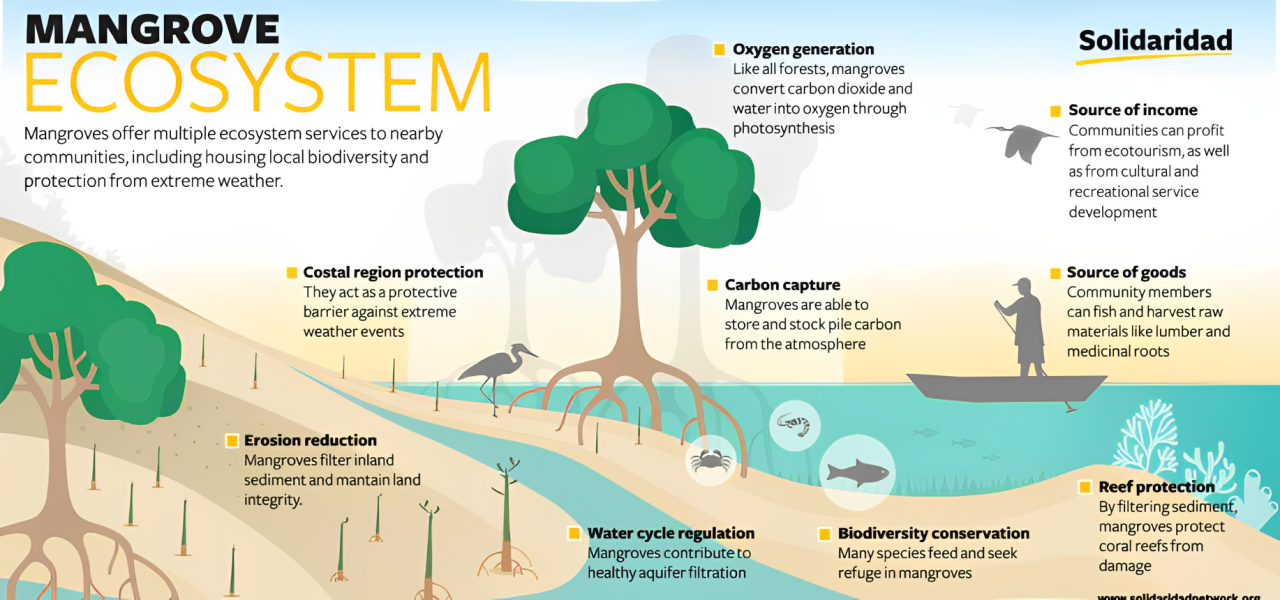
What are Mangroves?
-
Forested wetlands with trees tolerant to saline water.
-
Act as natural barriers: protect from cyclones, tidal surges, erosion.
-
Help reduce damage during disasters (e.g., 2004 tsunami, Bay of Bengal cyclones).
-
Provide breeding grounds for fish, crustaceans, molluscs, and migratory birds.
-
Store blue carbon — mitigating climate change.
Mangroves in India
-
Total area: ~4,900 sq. km.
-
Found in: West Bengal, Odisha, Tamil Nadu, Gujarat, Karnataka,Maharastra,goa.
-
Vital to coastal communities — livelihoods, fishing, honey gathering.
-
Threats: urban expansion, aquaculture, pollution, climate change.
-
Global status: Over 50% at risk of collapse by 2050 (IUCN report).

India’s Restoration Efforts
Tamil Nadu:
-
Success under Green Tamil Nadu Mission and other restoration schemes.
-
Mangrove cover doubled: from 4,500 ha to 9,000 ha (2021–2024).
-
Thanjavur, Tiruvarur, Cuddalore — key districts.
-
Pattuvanachi Estuary Restoration:
-
By M.S. Swaminathan Research Foundation (2017).
-
Dug 19 canals, planted 4.3 lakh Avicennia & 6,000 Rhizophora.
-
-
Kazhipattur (Chennai):
-
Removed Prosopis juliflora weed.
-
Planted 12,500 mangrove seedlings (5 species) in 2024.
-
Mumbai (Maharashtra):
-
Project by Amazon Right Now Climate Fund + BMC + Hasten Regeneration (2025).
-
₹10.3 crore project to restore Thane Creek:
-
Install trash booms to stop plastic (target: 150 tonnes in 3 years).
-
Plant 3.75 lakh mangrove saplings.
-
Provide jobs to local women for planting & maintenance.
-
Gujarat:
-
Success under MISHTI (Mangrove Initiative for Shoreline Habitats and Tangible Incomes).
-
19,000+ hectares restored in 2 years — fastest in India.
-
Focus on Kutch & Saurashtra.
-
Promotes ecotourism, local livelihoods, biodiversity, & blue carbon goals.
-
Gujarat holds 23.6% of India’s total mangroves.
Why Mangrove Conservation Matters
-
Coastal shield against storms and disasters.
-
Key to climate resilience and biodiversity.
-
Support traditional livelihoods.
-
Store carbon and help in climate mitigation.
-
India is at the forefront of mangrove restoration with strong government, community, and corporate support.
-
Restoration efforts in Tamil Nadu, Mumbai, and Gujarat show mangroves can thrive with strategic support.
-
Urgent action is needed as climate change and development threaten coastal ecosystems.