
Neolithic relics from Lakkundi and UNESCO World Heritage nomination
Why in news
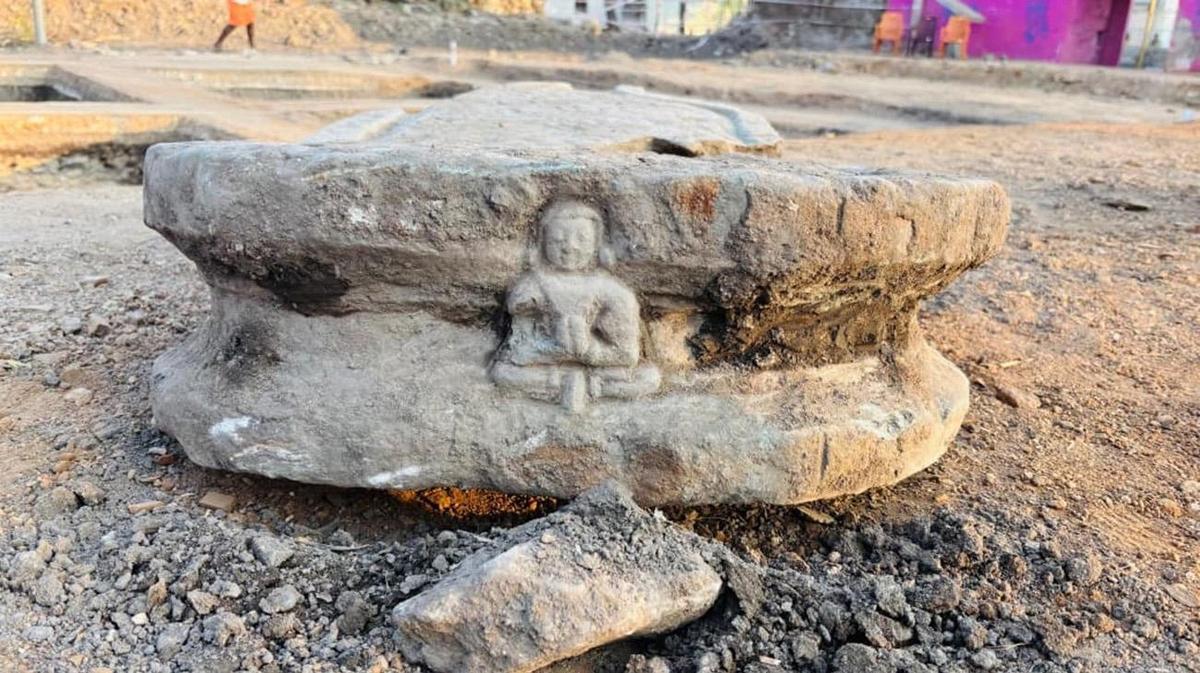
Recent excavations at Lakkundi, Karnataka, have yielded Neolithic-period relics, strengthening the State government’s proposal to include Lakkundi in UNESCO World Heritage Sites list.
Location and historical background
Lakkundi is located about 12 km from Gadag, Karnataka.
Historically known as Lokkigundi.
Mentioned in 11th–12th century inscriptions, described as affluent and compared to Amaravati (Indra’s capital).
Known as the “village of hundred wells and temples”.
Archaeological significance
Excavations began on January 16, 2026, near Kote Veerabhadreshwar temple.
Discovery of Neolithic relics indicates prehistoric human habitation, extending the site’s cultural timeline beyond medieval history.
Many architectural remains are believed to lie buried beneath present-day houses and structures.
Cultural and religious importance
Lakkundi was the Karmabhoomi of Queen Attimabbe (11th century):
Prominent Jain patron.
Built Jain basadis, temples, and wells.
Jainism flourished alongside 12th century Veerashaiva movement.
Home to sharanas like Shivasharana Ajaganna and Sharane Muktayakka, who propagated Basaveshwara’s philosophy.
Reflects religious coexistence and syncretism.
Architectural features
Architecture associated with Kalyana Chalukyas.
Mumbai State Gazetteer records 13 surviving temples of this style.
Notable for stepwells (pushkarnis) and temple complexes.
Conservation and institutional initiatives
Excavation and restoration revived under H.K. Patil, Karnataka Minister for Tourism and Law.
Karnataka State Tourism Development Corporation (KSTDC) and State Archaeology Department initiated relic collection (Nov 2024).
1,050 historical relics and 13 inscriptions collected from local households.
Establishment of an open museum, with land voluntarily provided by residents.
UNESCO nomination process
Proposal to include Lakkundi and nearby monuments in UNESCO’s Tentative List.
Karnataka government has tied up with Indian National Trust for Art and Cultural Heritage (INTACH) to refine the proposal.
Multiple consultations underway.
Protection status
7 monuments protected by Archaeological Survey of India (ASI).
16 State-protected temples, with 8 more proposed.
Study directed for protection of 20 additional temples and structures.
Prelims Practice MCQs
Q. With reference to Lakkundi, consider the following statements:
Recent excavations indicate Neolithic habitation at the site.
Lakkundi was associated exclusively with Jainism during the medieval period.
The architectural style of Lakkundi temples is linked to the Kalyana Chalukyas.
Which of the statements given above are correct?
(a) 1 and 3 only
(b) 1 only
(c) 2 and 3 only
(d) 1, 2 and 3
Answer: (a)
Explanation:
Statement 1 is correct: Neolithic relics were discovered.
Statement 2 is incorrect: Jainism flourished, but Veerashaiva sharanas were also present.
Statement 3 is correct: Temples belong to Kalyana Chalukya architecture.