
Neurotechnology and India
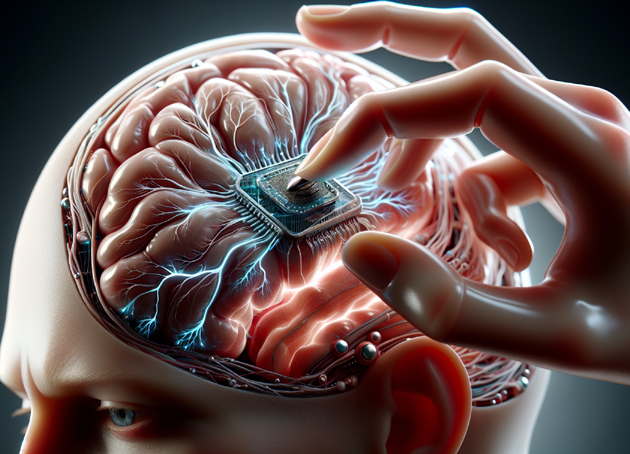
Neurotechnology
Neurotechnology refers to mechanical/electronic tools that directly interact with the brain.
These systems can record, monitor, or influence neural activity.
Integrates neuroscience, AI, computing, and engineering.
Enables real-time sensing or stimulation of brain signals.
Brain-Computer Interface (BCI)
A BCI translates brain signals into digital commands.
Allows tasks like controlling a cursor, wheelchair, robotic arm.
Types:
Non-invasive: EEG headsets.
Invasive: Implanted electrodes with higher precision.

Uses:
Diagnosing brain disorders.
Helping paralysed patients use prosthetic limbs.
Treating disorders like depression or Parkinson’s through targeted stimulation.
Scope for enhancement and defence use
Human-to-human brain communication shown in animal studies.
Human enhancement or military applications are technically feasible, but require strong ethical and regulatory debate.
Currently, most human applications are therapeutic, not enhancement-oriented.
Why India needs neurotechnology
Rising burden of non-communicable and injury-related neurological disorders (1990–2019).
Stroke is the largest contributor.
Potential benefits:
Neuroprosthetics for paralysis.
Brain stimulation for mental health.
Reduction in long-term medication dependence.
Opportunity for India in emerging biotech-AI-engineering convergence.
India’s current capabilities
IIT Kanpur: BCI-based robotic hand for stroke patients.
National Brain Research Centre (NBRC) and IISc Brain Research Centre: leading institutions.
Startups (e.g., Dognosis) using neurotech for detecting cancer-related neural patterns in trained dogs.
India has favourable factors: genomic diversity, research capacity, growing awareness.
The National Brain Research Centre (NBRC) in Manesar, Haryana, is India's premier autonomous institute under the Department of Biotechnology, focused on multidisciplinary neuroscience research to understand brain function in health and disease, training human resources, and promoting brain science nationally
Global developments
United States:
BRAIN Initiative is the largest neurotech research programme.
Neuralink approved (FDA, May 2024) for in-human BCI trials; demonstrated prosthetic motor function restoration.
China:
China Brain Project (2016–2030): cognition research, brain-inspired AI, neurological disorder treatment.
EU & Chile:
Pioneering laws for neurorights and BCI governance.
Regulatory needs for India
Inadequate regulatory support can hinder BCI development.
India needs:
Public engagement strategy to assess benefits and risks.
Tailored regulatory pathways based on type of BCI and risk profile (not one-size-fits-all).
Ethical and technical safeguards including data privacy, autonomy, safety evaluation.
Prelims Practice MCQs
Q. With reference to Brain-Computer Interfaces (BCIs), consider the following statements:
BCIs can both decode brain signals and stimulate specific brain regions.
All BCIs require surgical implantation to function effectively.
BCIs have already enabled prosthetic movement in paralysed human patients.
Which of the statements given above is/are correct?
A. 1 and 3 only
B. 2 and 3 only
C. 1 and 2 only
D. 1, 2 and 3
Answer: A
Explanation:
Statement 1 is correct: BCIs can listen to and sometimes stimulate brain regions.
Statement 2 is incorrect: Non-invasive EEG BCIs exist.
Statement 3 is correct: Neuralink and other research groups have demonstrated this.
Q. Consider the following statements regarding neurotechnology in India:
IIT Kanpur has developed a BCI-based robotic hand targeted at stroke rehabilitation.
Dognosis uses neurotechnology to study human neural patterns for cancer detection.
India’s genomic diversity is seen as an advantage in neurotechnology research.
Which of the statements given above is/are correct?
A. 1 only
B. 1 and 3 only
C. 2 and 3 only
D. 1, 2 and 3
Answer: B
Explanation:
Statement 1 is correct.
Statement 2 is incorrect: Dognosis studies dog brain signals, not human neural patterns.
Statement 3 is correct.