
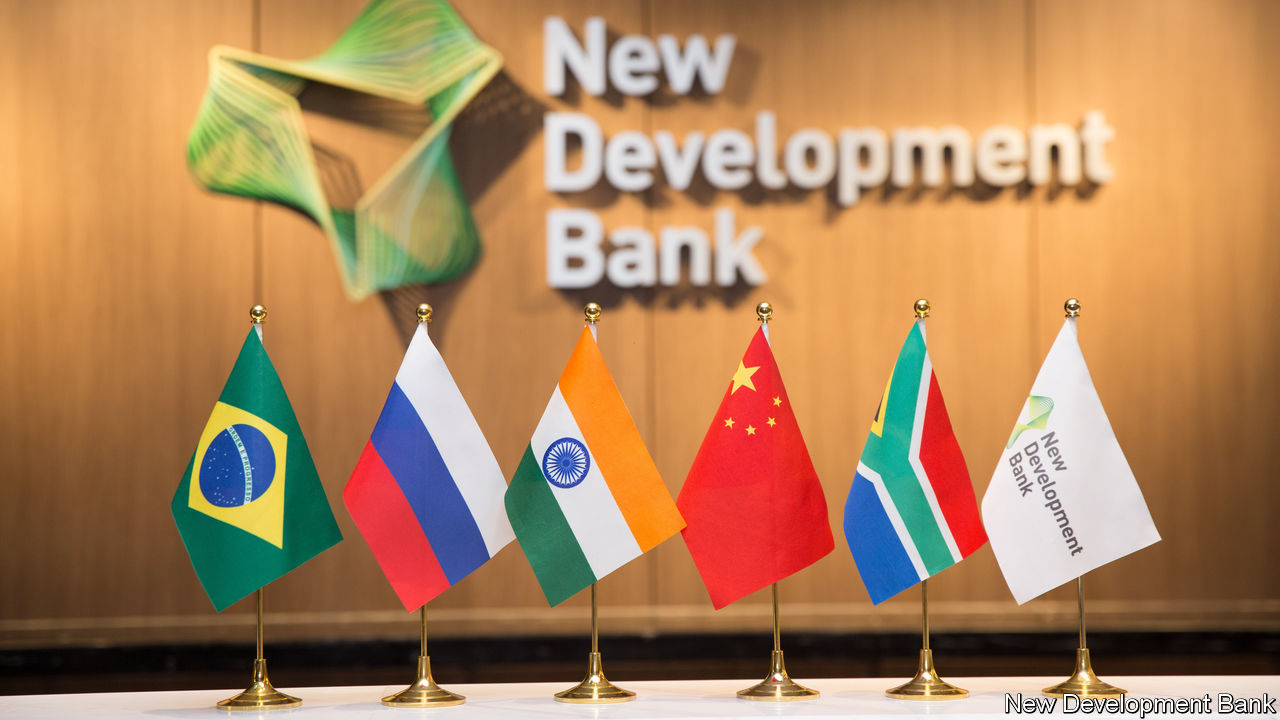
New Development Bank (NDB)
Basic Overview
-
Formerly Known As: BRICS Development Bank
-
Type: Multilateral Development Bank
-
Founded:
-
Proposed: 2012 (4th BRICS Summit, New Delhi, India)
-
Treaty Signed: July 2014 (6th BRICS Summit, Fortaleza, Brazil)
-
Operational: July 2015
-
-
Headquarters: Shanghai, China
-
President (as of 2025): Dilma Rousseff (Brazil)
-
Official Language: English
-
Website: ndb.int
Purpose & Objectives
-
Main Aim: Finance infrastructure and sustainable development projects in BRICS and other developing countries.
-
Key Functions:
-
Provide loans, guarantees, equity participation, and technical assistance.
-
Foster cooperation with national and multilateral financial institutions.
-
-
Mandate: Align financing with national development plans of member countries.
Capital Structure
-
Authorized Capital: $100 billion
-
Subscribed Capital: $50 billion (initial), equally divided among founding BRICS members
-
Paid-in Capital: $10 billion
-
Callable Capital: $40 billion
-
-
Capital Increase: Possible only with unanimous approval of founding members.
Voting Power
-
One country, one vote (No veto power).
-
BRICS countries must retain at least 55% of total voting power, even as new members join.
Governance Structure
-
Board of Governors – Top decision-making body.
-
Board of Directors – Supervises daily operations.
-
President & 4 Vice Presidents – One from each founding member (except country of the President).
-
President Tenure (Rotational):
-
1st President: K.V. Kamath (India)
-
2nd President: Marcos Prado Troyjo (Brazil)
-
Current President: Dilma Rousseff (Brazil, 2023–)
-
Membership
-
Current Members (2025):
-
Founding: Brazil, Russia, India, China, South Africa
-
New Members: Bangladesh, UAE, Egypt, Algeria, Uruguay, Colombia, Uzbekistan
-
-
Membership Open To: All UN members, subject to approval.
-
Note: BRICS must retain majority capital and voting rights.
NDB Regional Offices
-
Africa Regional Center: Johannesburg, South Africa (2016)
-
Americas Regional Office: São Paulo, Brazil
-
India Regional Office: Gujarat (Ahmedabad) – expanded to oversee projects in India & Bangladesh
-
Russia Office: Moscow
Key Developments
-
2016: Issued first green bond (RMB 3 billion, China bond market)
-
2016: Approved first set of infrastructure projects in all founding countries
-
2018: Received AA+ credit ratings from S&P and Fitch
-
2020 (COVID Response): Set up a $10 billion Emergency Assistance Facility (initial $5 billion disbursed)
-
2022: Suspended new transactions with Russia after Ukraine crisis (due to sound banking principles)
Shareholding Structure (2025 Snapshot)
| Country | Subscribed Capital (USD bn) | Shareholding (%) |
|---|---|---|
| Brazil, Russia, India, China, South Africa | $10 bn each | 18.45% each |
| Bangladesh | $0.942 bn | 1.74% |
| Algeria | $1.5 bn | 2.77% |
| Egypt | $1.196 bn | 2.21% |
| UAE | $0.556 bn | 1.03% |
| Unallocated | $45.806 bn | 45.81% |
Note: Share data for Colombia, Uruguay, and Uzbekistan not yet published.
Strategic Goals (As per 2017–2021 Strategy)
-
Finance transformational infrastructure
-
Balance portfolio across sectors and geography
-
Partner with national and multilateral banks
-
Focus on sustainable, climate-resilient growth
Relevance for UPSC
GS 2 – International Institutions:
-
Role of alternative global financial governance
-
India’s leadership in multilateral institutions
GS 3 – Economy:
-
Financing infrastructure, sustainable development, South-South cooperation