
New GDP series: methodological overhaul and better data capture
Context
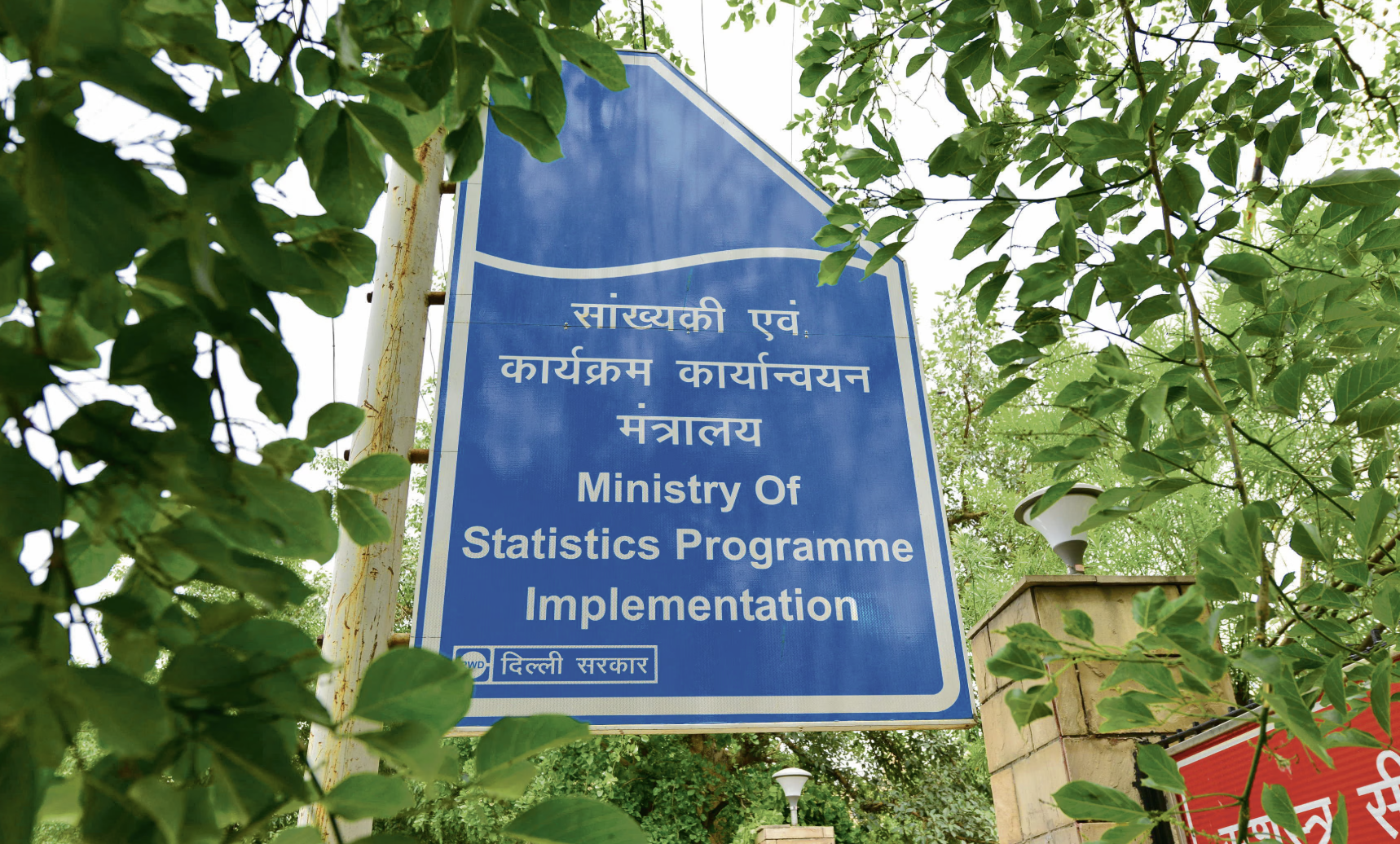
India’s new national accounts series — shifting the base year from 2011–12 to 2022–23 — represents a significant statistical upgrade. Spearheaded by the Ministry of Statistics and Programme Implementation (MoSPI), the revised GDP and GVA framework aims to better reflect the structure of today’s economy through improved methodology, new data sources, and sectoral refinements.
This change is not merely cosmetic. Updating the base year and refining estimation techniques can meaningfully alter sectoral shares, growth rates, and policy interpretation.
1. Why updating the base year matters
GDP is measured at constant prices using a base year. Shifting from 2011–12 to 2022–23:
Aligns price structures with the current economy.
Reflects structural changes (digitalisation, GST regime, services expansion).
Improves inter-temporal comparisons.
Reduces distortions from outdated weights.
An outdated base year risks misrepresenting sectoral contributions and productivity trends.
2. Key methodological improvements
(a) Non-financial private corporate sector
Earlier (2011–12 series):
Entire Gross Value Added (GVA) of multi-sector companies was assigned to the sector of their dominant activity.
Now:
Activity-wise revenue shares are used.
Value added is allocated across multiple business activities.
This improves sectoral accuracy and avoids over-concentration in dominant sectors.
(b) General government sector
Enhancements include:
Inclusion of housing services provided to government employees.
Expanded coverage of autonomous institutions and local bodies.
This results in more realistic estimation of government output, particularly in services.
(c) Household sector: direct annual estimation
The household sector — a major contributor to India’s economy — will now be estimated annually using:
Annual Survey of Unincorporated Sector Enterprises (ASUSE)
Periodic Labour Force Survey (PLFS)
Previously, estimates were extrapolated. Direct annual estimation improves:
Informal sector measurement.
Labour productivity analysis.
Structural change assessment.

3. Better measurement of private consumption
Private Final Consumption Expenditure (PFCE) will be measured more granularly using:
Enhanced use of Household Consumer Expenditure Surveys.
Direct production-based estimation methods.
Given that consumption accounts for nearly 55–60% of GDP, improved PFCE measurement significantly strengthens macroeconomic reliability.
4. Integration of new data sources
(a) GST data
Goods and Services Tax (GST) data will now:
Be used more extensively in annual GDP estimates.
Improve regional output estimation.
Identify active companies.
Better capture value added of non-reporting firms.
GST provides near-real-time transactional data, enhancing accuracy.
(b) Banking and financial sector improvements
Use of Statistical Tables Relating to Banks in India (STRBI) from the Reserve Bank of India.
Replacement of proxy-based estimation for private NBFCs with actual financial data from the Ministry of Corporate Affairs.
This strengthens measurement of financial intermediation — crucial in a credit-driven economy.
5. Broader statistical strengthening
Improved state-level data reporting.
Better coverage of local bodies.
More efficient use of ASUSE data.
Reduced reliance on imputations.
The new framework moves toward direct measurement rather than assumption-based extrapolation.
6. Why this matters for policy
More accurate GDP and GVA estimates affect:
Fiscal deficit calculations (as % of GDP).
Debt sustainability ratios.
Sectoral policy prioritisation.
Investment and credit planning.
International comparisons.
Improved granularity also helps:
Track formalisation trends post-GST.
Better understand informal sector dynamics.
Capture structural shifts toward services and digital sectors.
7. Caution in interpretation
Whenever a base year is revised:
Growth rates may change retrospectively.
Sectoral shares may shift.
Historical comparisons need careful recalibration.
Policy narratives should distinguish between statistical revision and real economic change.
Conclusion
The new GDP series reflects India’s attempt to modernise its statistical architecture in line with structural transformation, GST integration, digitalisation, and improved survey mechanisms.
While statistical reform cannot by itself improve economic performance, better measurement enhances policy credibility, macroeconomic transparency, and informed decision-making. In an economy as large and diverse as India’s, methodological precision is itself a strategic asset.
Prelims Practice MCQs
Q. With reference to Gross Value Added (GVA) estimation in the new GDP series, consider the following:
Multi-sector companies’ value added will be allocated activity-wise instead of assigning it entirely to the dominant sector.
This change improves sectoral accuracy in national accounts.
GVA is calculated by adding indirect taxes and subtracting subsidies.
Which of the statements given above are correct?
(a) 1 and 2 only
(b) 2 and 3 only
(c) 1 and 3 only
(d) 1, 2 and 3
Answer: (a)
Explanation:
Statements 1 and 2 are correct. The new method allocates value added based on activity-wise revenue share, improving sectoral precision. Statement 3 is incorrect because GDP (not GVA) is obtained by adding indirect taxes and subtracting subsidies to GVA.
Q. Which of the following data sources are being used more extensively in the new GDP series?
Goods and Services Tax (GST) data
Annual Survey of Unincorporated Sector Enterprises (ASUSE)
Periodic Labour Force Survey (PLFS)
Statistical Tables Relating to Banks in India (STRBI)
Select the correct answer using the code below:
(a) 1 and 4 only
(b) 1, 2 and 3 only
(c) 2, 3 and 4 only
(d) 1, 2, 3 and 4
Answer: (d)
Explanation:
All four are being used more effectively in the new series. GST data improves corporate output estimation; ASUSE and PLFS strengthen household sector measurement; STRBI enhances banking sector estimates.
Q. With reference to Private Final Consumption Expenditure (PFCE), consider the following statements:
PFCE constitutes the largest component of India’s GDP.
The new GDP series uses enhanced Household Consumer Expenditure Survey data for better estimation of PFCE.
PFCE includes government final consumption expenditure.
Which of the statements given above are correct?
(a) 1 and 2 only
(b) 2 and 3 only
(c) 1 and 3 only
(d) 1, 2 and 3
Answer: (a)
Explanation:
Statement 1 is correct; PFCE forms the largest share of GDP. Statement 2 is correct as improved survey-based estimation is being used. Statement 3 is incorrect because PFCE refers only to private consumption; government consumption is separately classified.