
Offshore Atomic Minerals Concession Rules, 2025 (India’s Strategic Resource Regulation)
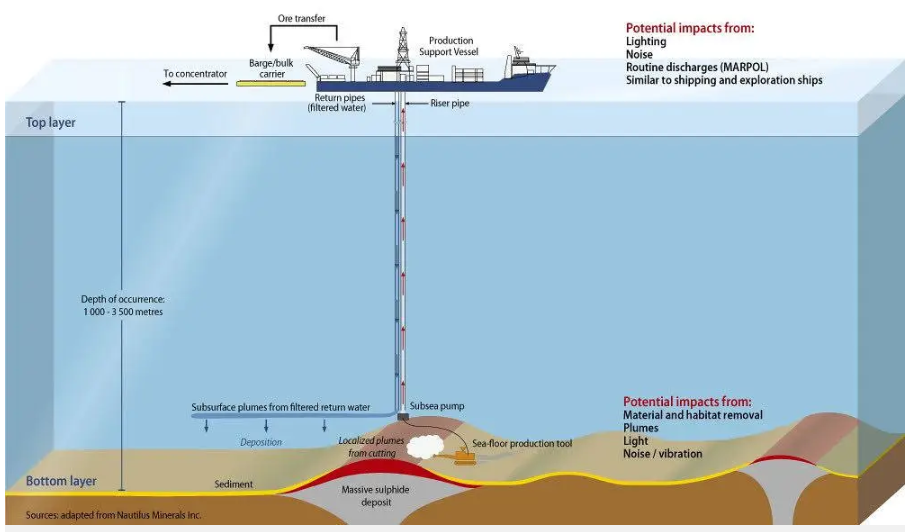
The Government of India has enforced the Offshore Area Atomic Minerals Concession Rules, 2025 to tighten control over exploration and production of atomic minerals (such as uranium and thorium) in the country’s territorial waters and Exclusive Economic Zone (EEZ).
Key Provisions & Features:
-
Scope:
-
Applies to atomic minerals: Uranium, Thorium, and other radio-elements critical to India's nuclear energy programme.
-
Covers territorial waters and EEZ of India.
-
-
Agencies Involved:
-
Ministry of Mines and Department of Atomic Energy notified the rules.
-
Atomic Energy Regulatory Board (AERB) and Directorate of Atomic Minerals Exploration and Research (AMD) designated as oversight bodies.
-
Strategic coordination required with Defence, Home, and Environment Ministries.
-
-
Licensing Restrictions:
-
Only Central Government agencies, state-owned enterprises, or government-nominated entities are eligible for composite licenses or mining leases.
-
Foreign firms:
-
Barred from direct participation.
-
Can operate only through subcontracting under strict conditions and prior security clearance.
-
-
Exploration without license permitted for notified government agencies only.
-
-
Threshold Grade Clause:
-
Discovery of atomic minerals above threshold grade (as per Atomic Mineral Concession Rules, 2016) must be reported to AMD (Directorate of Atomic Minerals Exploration and Research)
-
Such discoveries may lead to immediate reservation of blocks for national strategic use.
-
Government can revoke or deny license and acquire the block directly if the find is deemed strategically sensitive.
-
Compensation to the original explorer will be based on actual expenses, discouraging speculative exploration.
-
-
Compliance Mandates:
-
All activities must align with Offshore Area Mineral Conservation and Development Rules, 2024.
-
Bank guarantees up to 0.50% of estimated resource value are mandatory.
-
Mandatory:
-
Periodic reporting to AMD.
-
Environmental restoration.
-
Tracking technologies on offshore assets.
-
Data sharing protocols with central authorities.
-
-
Strategic Importance:
-
Reflects India’s effort to secure critical atomic mineral resources amid:
-
Rising nuclear energy needs.
-
Energy transition goals.
-
Global geopolitical tensions over strategic resources.
-
-
Establishes a robust legal regime replacing earlier fragmented rules.
-
Enhances national security by excluding foreign players and ensuring central oversight on radiological and strategic aspects.