
Oral rehydration solutions (ORS)
Context:
FSSAI has banned misleading use of the term “ORS” on sugary drinks in India. Only medically approved formulations can now be labeled as Oral Rehydration Salts.
What Was Happening?
Some companies in India were selling sweet drinks and calling them “ORS” (Oral Rehydration Salts).
These drinks did not meet WHO standards for real ORS, which is a medical solution used to treat dehydration—especially in children with diarrhea.
Parents thought they were giving their kids proper treatment, but these sugary drinks could actually worsen dehydration.
What Did FSSAI Do?
On October 14, 2025, the Food Safety and Standards Authority of India (FSSAI) issued a ban:
Companies cannot use the term “ORS” unless the product matches the exact formula approved by the World Health Organization (WHO).
This move came after an 8-year campaign by Dr. Sivaranjani Santosh, a pediatrician from Hyderabad, who saw children suffer due to fake ORS drinks.
What Is Real ORS?
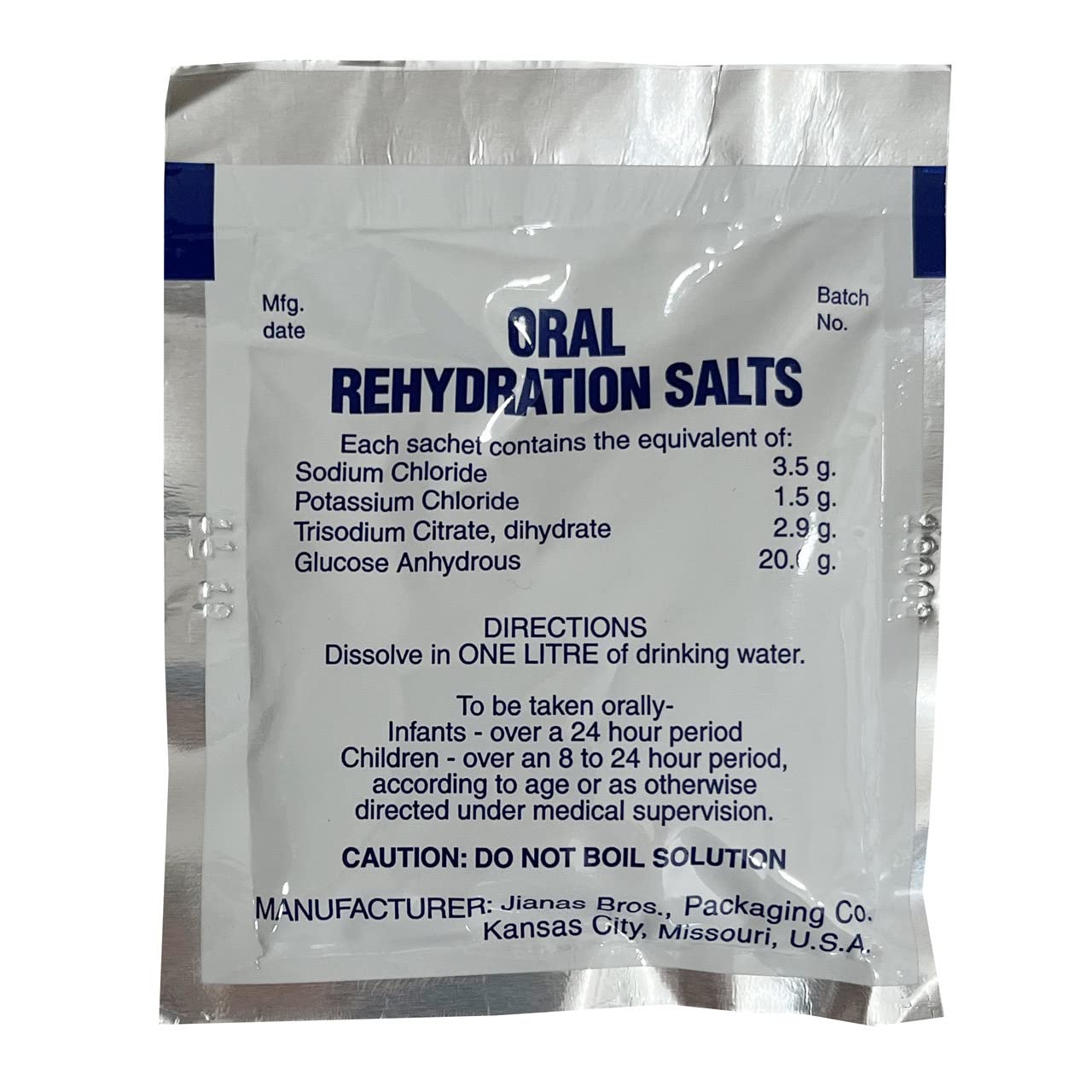
Real ORS contains a specific mix of salts and glucose:
Sodium chloride
Potassium chloride
Sodium citrate
Glucose
It’s designed to rehydrate the body safely and effectively.
Development and Global Guidelines
Developed jointly by WHO and UNICEF, with official manufacturing and usage guidelines.
Available as ready-to-drink fluids or powder packets to mix with water.
In emergencies, homemade ORS can be prepared using a 1:1 molar ratio of sugar to salt with clean water.
Key Principle: Rehydration takes precedence , even potentially unsafe water should be used if clean water is unavailable.
Composition and Formula
Component | Standard ORS (g/L) | Reduced Osmolarity ORS (g/L) |
Sodium chloride (NaCl) | 3.5 | 2.6 |
Trisodium citrate dihydrate | 2.9 | 2.9 |
Potassium chloride (KCl) | 1.5 | 1.5 |
Anhydrous glucose | 20 | 13.5 |
Total Osmolarity (mOsm/L) | 311 | 245 |
Reduced osmolarity solution introduced in 2003 to reduce stool volume, vomiting, and the need for IV therapy in children with diarrhea.
ReSoMal is specially formulated for malnourished children (less sodium, more potassium).
Rehydration must be slow and cautious to prevent cardiac overload.
IV route used only for shock, and with slow infusion.
Why This Matters
Protects children’s health by ensuring only safe, effective products are used during illness.
Prevents companies from misleading consumers with marketing tricks.
Raises awareness about the importance of using medically approved treatments.
Prelims Practice MCQ
Q. The main physiological basis of Oral Rehydration Therapy (ORT) lies in:
A. Osmotic absorption of sodium independent of glucose
B. Active absorption of glucose and sodium via co-transport mechanism
C. Passive diffusion of electrolytes across the intestine
D. Inhibition of intestinal motility
Answer: B
Explanation: ORT works on the principle of glucose-sodium co-transport in the intestinal mucosa, enabling absorption of water and electrolytes even during diarrhea.
Q. ReSoMal (Rehydration Solution for Malnutrition) differs from standard ORS by:
A. Having higher sodium and lower potassium content
B. Having lower sodium and higher potassium content
C. Being hyperosmolar
D. Containing no glucose
Answer: B
Explanation: ReSoMal is formulated for malnourished children — it contains lower sodium (45 mmol/L) and higher potassium (40 mmol/L) compared to standard ORS.