
PM Modi’s review of the National Maritime Heritage Complex (NMHC) at Lothal:
Context:
-
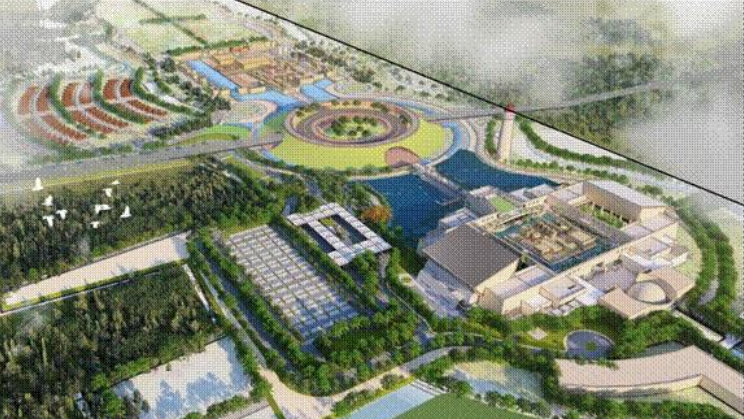
Prime Minister Narendra Modi will visit Gujarat to review the progress of the National Maritime Heritage Complex (NMHC) at Lothal, Ahmedabad district.
-
He will inspect completed works and hold a detailed review with officials on ongoing projects.
About Lothal
-
An important Indus Valley Civilization (IVC) site, dating back ~5000 years.
-
Known as a major trading hub and dockyard of the Harappans.
-
Evidence of shipbuilding, bead-making, and overseas trade with Mesopotamia, Oman, and other regions.
-
Symbol of India’s ancient maritime prosperity.
Lothal – History and Archaeology
1. Location and Background
-
Situated near Gulf of Khambhat, Ahmedabad district, Gujarat.
-
Part of the Indus Valley Civilization (IVC) (c. 2400–1900 BCE).
-
Before Harappan arrival (c. 3000 BCE):
-
Prosperous indigenous settlement producing copper objects, beads, semi-precious stones.
-
Introduced Black-and-Red Ware pottery.
-
-
Attracted Harappans for its sheltered harbour, fertile cotton–rice region, and bead industry.
-
Evidence of flourishing westward trade (Mesopotamia, Oman, Bahrain).
2. Town Planning and Architecture
-
Planned township after floods (~2350 BCE).
-
Divided into:
-
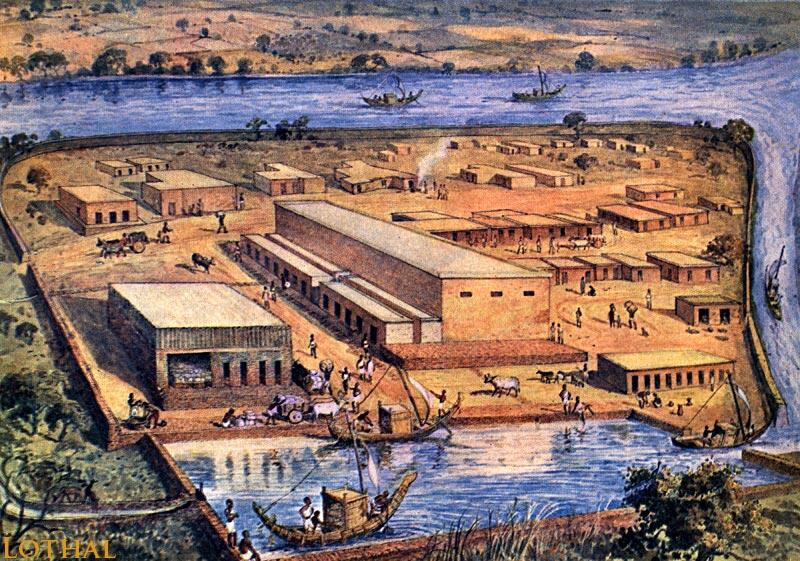
Acropolis (Citadel): residences of rulers, paved baths, underground drains, warehouse, potable well.
-
Lower Town: commercial and residential areas, workshops, marketplaces.
-
-
Buildings made of fire-burnt bricks, lime, and sand mortar (still intact after 4000 years).
-
Drainage: underground drains, soakage jars, sump pits for solid waste.
3. Economy and Urban Culture
-
Highly disciplined civic administration: regulated street widths, waste management, no encroachments.
-
Major industries:
-
Bead-making and gems (exported widely).
-
Shell-working, ivory workshops, metallurgy (cire perdue casting, tin-bronze alloys).
-
Stone blade industry (chert from Larkana, chalcedony locally).
-
-
Exports: beads, gemstones, ivory, shells.
-
Imports: copper, chert, semi-precious stones.
-
International trade links: Mesopotamia, Bahrain, Egypt, Sumer.
-
Evidence: Persian Gulf seals, terracotta boat models.
4. Dockyard
-
World’s earliest known dockyard (rectangular trapezoidal basin).
-
Dimensions: ~215 m × 35 m, inlet & sluice gate for regulating water.
-
Connected to river via canal (~2 km long).
-
Supported a 220 m long wharf with direct ramp to warehouse.
-
Significance: Showed Harappan mastery in hydraulic engineering, tidal studies, and maritime trade.
-
Debate: Some archaeologists argue it was an irrigation tank; however, marine fossils and shells suggest sea-use.
5. Science, Technology, and Engineering
-
Weights & Measures: Standardized, including an ivory scale with smallest decimal divisions in IVC.
-
Instruments: Shell compass-like object (for angles/navigation).
-
Drainage: kiln-fired brick platforms, inspection chambers, silting pits.
-
Brick ratios: 1:0.5:0.25, showing advanced engineering.
6. Religion and Beliefs
-
Worshipped fire god (fire-altars discovered).
-
Evidence of animal worship and possibly sea goddess (linked to present-day worship of Sikotarimata).
-
Practised cremation (few burials found).
-
Religious practices suggest overlap with early Vedic elements (e.g., Gavamayana-like sacrifice).
7. Art and Culture
-
Seal-cutting: 213 seals (bulls, tigers, composite animals, inscriptions).
-
Bead industry: advanced techniques still used in Khambhat today.
-
Pottery: Convex bowls, flaring jars, Red Ware.
-
Paintings: realistic depictions of animals, birds, stories resembling Panchatantra fables.
-
Terracotta models: gamesmen, toys, figurines, male busts.
-
Jewellery: gold micro-beads (<0.25 mm), copper rings, faience ornaments.
8. Agriculture and Diet
-
Rice cultivation (earliest evidence in South Asia).
-
Other crops: ragi, jowar, lentils.
-
Animal bones: both domesticated and wild, indicating diverse diet.
9. Decline
-
Repeated floods & storms (~2000–1900 BCE).
-
River course shifted → dock cut off.
-
Poor repairs, weak administration, reduced trade.
-
Soil salinity → decline in agriculture.
-
By 1900 BCE, massive flood destroyed township.
-
Late Harappan phase: smaller population, poor houses, reduced literacy, revival of some trade (1700–1600 BCE).
10. Archaeological Significance
-
Provides crucial evidence of:
-
Maritime trade & dockyard engineering.
-
Urban planning & drainage system.
-
Technological innovation (weights, metallurgy, bead-making).
-
Cultural continuity into late Harappan phase.
-
-
Excavations led by S.R. Rao (1950s–60s, ASI).
-
Present condition: threatened by salinity, siltation, erosion, requiring preservation.
About NMHC at Lothal
-
Conceived as a world-class maritime museum complex.
-
Aims to blend history, education, and research.
-
Will showcase India’s maritime heritage from the IVC to modern times.
-
Features include:
-
Maritime museum and research centre
-
Exhibits on India’s naval and trading history
-
Reconstructed models of ancient ports and ships
-
Space for cultural activities and tourism promotion
-
Significance
-
Cultural & Historical: Revives Lothal’s identity as one of the world’s earliest dockyards.
-
Educational & Research: Promotes maritime studies, archaeology, and heritage awareness.
-
Tourism & Economy: Expected to boost heritage tourism and local economy in Gujarat.
-
Strategic Messaging: Positions India as a maritime power with ancient roots, aligning with the vision of “Sagar Mala” and “Blue Economy”.