
Protecting the freedom of speech of MPs
Context
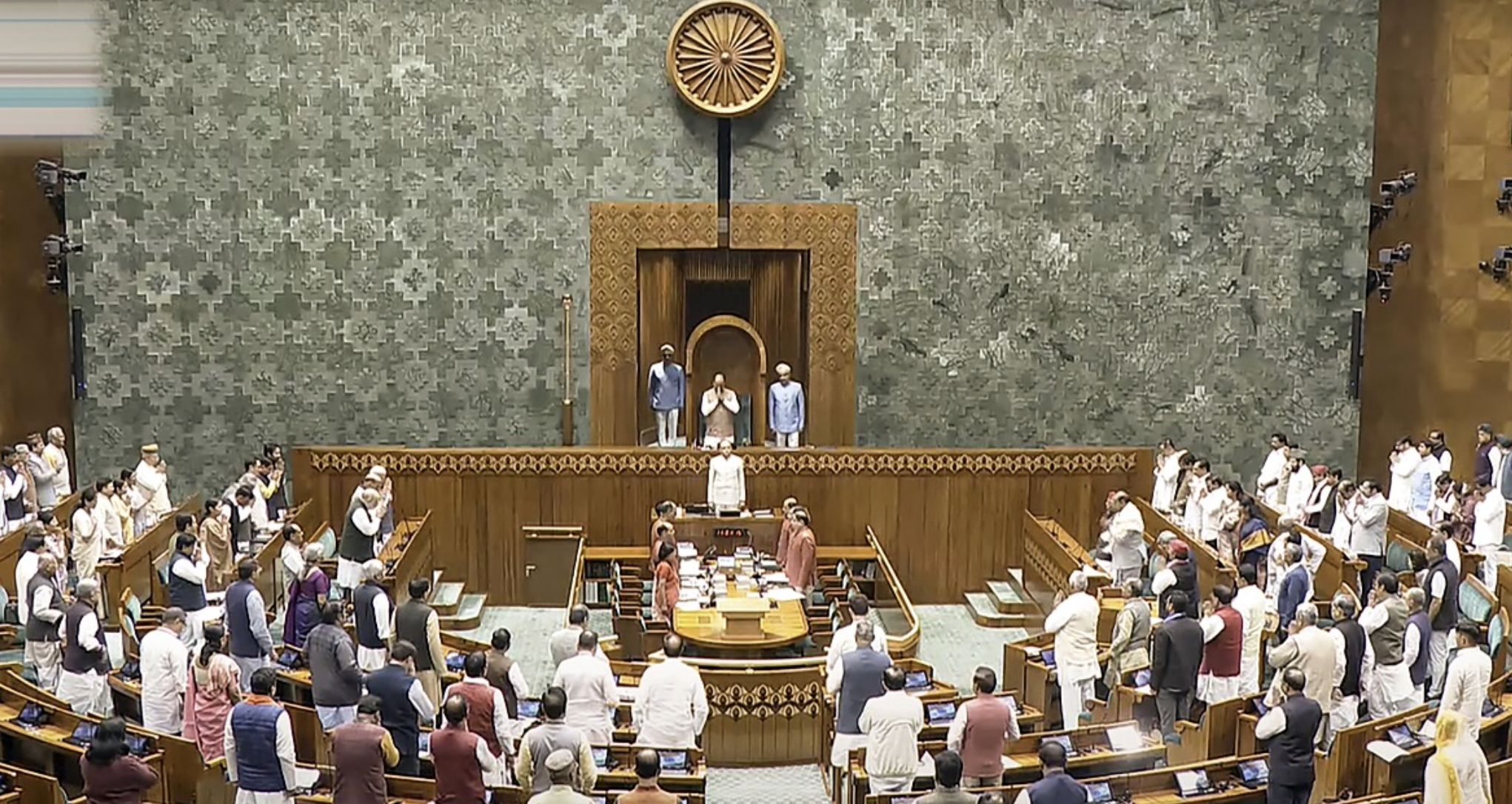
Recent controversies in Parliament have revived debate over the scope and limits of freedom of speech of Members of Parliament (MPs) under Constitution of India, particularly Article 105.
The core issue:
Can the Rules of the House be applied in a way that effectively dilute the constitutional guarantee of free speech inside Parliament?
Constitutional basis: Article 105
Article 105 provides:
Freedom of speech in Parliament.
Immunity from legal proceedings for anything said in the House.
Parliamentary privileges as defined by law and practice.
However, this freedom is:
Subject to provisions of the Constitution.
Subject to the Rules and Standing Orders of the House.
The critical concern is whether procedural rules are being interpreted in a manner that eclipses the constitutional guarantee.
Expunction of words: Scope and limits
Under Rule 380 of the Rules of Procedure:
The Speaker (or Chairman) may expunge words that are:
Unparliamentary
Defamatory
Indecent
Undignified
But the power is limited to expunging offending words, not entire arguments, sentences, or substantive criticism.
If large portions of a speech are removed:
The coherence of the speech may be destroyed.
The MP’s Article 105 right may be impaired.
The official parliamentary record may not reflect actual debate.
Parliamentary debates are preserved for posterity; arbitrary deletions affect institutional memory.
Constitutional restrictions on speech inside Parliament
Freedom under Article 105 is not absolute.
For example:
Article 121
Prohibits discussion of the conduct of judges of the Supreme Court or High Courts.
Exception: When a removal (impeachment) motion is under consideration.
Rules of the House restrict:
Discussion of sub judice matters
Personal allegations
Questioning bona fides of members
Reflections on conduct of high constitutional authorities
Defamatory allegations without prior notice
These restrictions are regulatory — meant to preserve decorum — not suppress dissent.
Weaponisation of rules: The core concern
The problem arises when:
Rules are applied mechanically or selectively.
Opposition speeches are disproportionately expunged.
Leaders of Opposition are prevented from articulating criticism.
The Supreme Court has repeatedly held that restrictions on fundamental rights must not eclipse the right itself. Though Article 105 privileges are distinct from Article 19 rights, the underlying democratic principle remains similar.
Parliamentary democracy and the Opposition
Healthy parliamentary democracy rests on:
Majority’s right to govern.
Minority’s right to criticise.
Constitutional scholar Ivor Jennings famously observed:
“The minority agrees that the majority must govern and the majority agrees that the minority should criticise.”
The Opposition’s role includes:
Holding government accountable.
Scrutinising legislation.
Exposing administrative failures.
If the Leader of the Opposition is effectively prevented from speaking, the adversarial structure of parliamentary democracy weakens.
On disqualification: Constitutional position
Parliament itself cannot arbitrarily disqualify a member.
Disqualification grounds are laid down under:
Articles 102 and 191
Representation of the People Act, 1951
Any attempt to bypass constitutional procedures undermines institutional balance.
Normative foundation: Early parliamentary practice
In the early years of the Republic:
The Prime Minister regularly attended Question Hour.
Opposition speeches were heard seriously.
Parliamentary debate was treated as a source of corrective insight.
This culture fostered mutual forbearance between government and Opposition.
Core democratic principle
Freedom of speech in Parliament is not merely an individual privilege — it is an institutional safeguard.
If procedural tools like expunction are applied in a manner that stifles dissent:
Debate becomes ritualistic.
Accountability weakens.
Parliamentary democracy erodes.
A functioning democracy requires mutual restraint — not procedural dominance.
Prelims Practice MCQs
Q. With reference to the freedom of speech of Members of Parliament (MPs), consider the following statements:
The freedom of speech of MPs in Parliament is guaranteed under Article 19(1)(a) of the Constitution.
The freedom of speech in Parliament is subject to the provisions of the Constitution and the Rules of the House.
No court proceedings can be initiated against an MP for anything said in Parliament.
Which of the statements given above is/are correct?
A. 1 and 2 only
B. 2 and 3 only
C. 3 only
D. 1, 2 and 3
Answer: B
Explanation:
Statement 1 is incorrect: Freedom of speech in Parliament flows from Article 105, not Article 19(1)(a).
Statement 2 is correct: Article 105 makes the freedom subject to constitutional provisions and House rules.
Statement 3 is correct: MPs enjoy immunity from court proceedings for anything said or any vote given in Parliament.
Q. Article 121 of the Constitution of India prohibits discussion in Parliament regarding:
A. Conduct of the President
B. Conduct of Election Commissioners
C. Conduct of Judges of Supreme Court and High Courts except upon a motion for removal
D. Conduct of Members of Parliament
Answer: C
Explanation:
Article 121 bars discussion of the conduct of Supreme Court or High Court judges, except when a motion for their removal is under consideration.
Q. Which of the following powers is exercised by the Speaker under the Rules of Procedure of the Lok Sabha?
Expunging unparliamentary or defamatory words from the proceedings.
Disqualifying a Member of Parliament permanently.
Regulating discussion on sub judice matters.
Select the correct answer:
A. 1 and 3 only
B. 1 only
C. 2 and 3 only
D. 1, 2 and 3
Answer: A
Explanation:
Statement 1 is correct: The Speaker can expunge unparliamentary words.
Statement 2 is incorrect: Disqualification is governed by constitutional provisions and the Representation of the People Act, not by the Speaker’s arbitrary power (except limited Tenth Schedule cases).
Statement 3 is correct: Rules regulate discussion on sub judice matters.