
Right to Vote in India
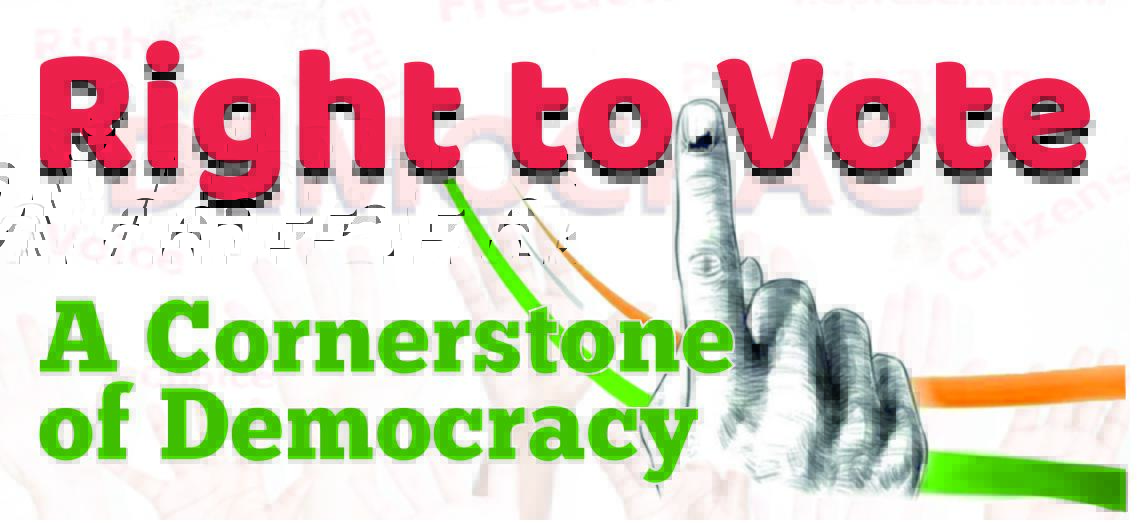
Safeguarding the Right to Vote in India: SC Intervention and Electoral Vigilance
Why in news:
The Supreme Court on July 10, 2025, directed the Election Commission (EC) to accept Aadhaar, voter ID, and ration cards for the Special Intensive Revision (SIR) of electoral rolls in Bihar, amid petitions alleging mass deletion of voters. This reignited debate on the legal nature of voting rights, electoral integrity, and democratic inclusion.
Key Constitutional and Legal Provisions:
-
Article 326: Grants universal adult suffrage (initially 21 years, lowered to 18 by the 61st Amendment in 1989).
-
Representation of the People Act (RPA), 1950: Governs electoral rolls, eligibility, and revision.
-
RPA, 1951: Regulates conduct of elections and electoral offences.
-
Section 21 of RPA 1950: Empowers EC to revise rolls.
-
Section 62 of RPA 1951: States that voting is a statutory right, as upheld in Kuldip Nayar v. Union of India (2006).
Is Voting a Fundamental Right?
-
No: Voting is not a fundamental right. It is a statutory right, though essential for democracy.
-
While courts recognise it as a “democratic imperative”, it is not protected under Part III of the Constitution.
-
In Rajbala (2016) and Anoop Baranwal (2023), minority opinions suggested that voting flows from Article 19(1)(a) and Article 21, but these are not binding.
Significance of Electoral Roll Accuracy:
-
Errors like omissions, duplications, or ineligible names violate the “one person, one vote” principle.
-
Courts have ruled that only systemic and outcome-affecting errors can invalidate an election.
-
Inclusion and exclusion errors both erode electoral credibility.
-
SC’s direction to accept a wider range of documents for Bihar SIR seeks to balance vigilance and voter inclusion.
Defining ‘Ordinary Residence’:
-
As per Section 19 of RPA, 1950, a voter must be an ordinary resident — meaning habitual and genuine presence, not temporary stay.
-
Manmohan Singh case (1991) clarified that intention and continuity matter for residency.
Role of Political Parties:
-
In Lakshmi Charan Sen v. A.K.M. Hassan Uzzaman (1985), SC encouraged political parties to assist in voter inclusion and scrutiny, especially in low-literacy regions.
Safeguards Against Arbitrary Exclusion:
-
In Lal Babu Hussein v. ERO (1995) and Md. Rahim Ali (2024):
-
SC struck down EC guidelines allowing summary deletion of alleged foreigners from rolls.
-
Court held that due process, quasi-judicial inquiry, and natural justice must be followed.
-
Citizenship must be verified legally, not presumptively.
-
Relevance and Way Forward:
-
The right to vote, while not fundamental, is vital to India’s democratic structure.
-
EC must ensure voter inclusion without compromising electoral integrity.
-
Public awareness, legal safeguards, and updated procedures are necessary to avoid disenfranchisement.
UPSC Syllabus :
-
GS Paper II: Polity, Electoral Reforms, Role of EC, Rights