
Russian Military Plane Incident over Baltic Sea also called as "NATO Lake"
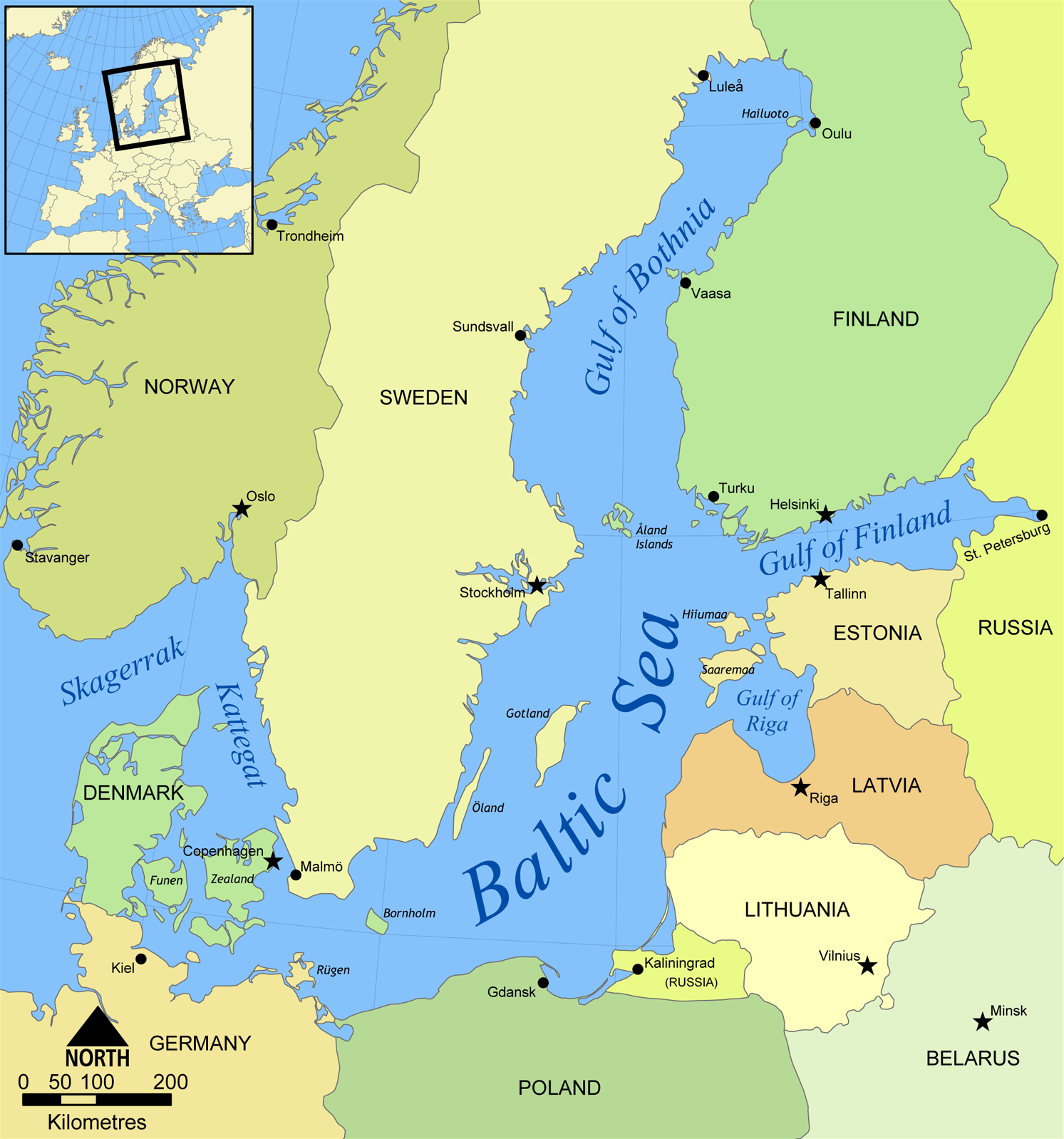
On September 21, 2025, Germany’s Air Force scrambled two Eurofighter jets to intercept and escort a Russian IL-20m reconnaissance aircraft after it entered neutral airspace over the Baltic Sea.
Handover: The escort operation was later handed over to NATO partners in Sweden.
Violation: NATO stated the aircraft had violated Estonian airspace, prompting serious security concerns.
NATO Response: The North Atlantic Council is scheduled to meet on September 23, 2025, to deliberate on Russia’s actions.
Strategic Context
Baltic Sea Region: Highly sensitive area with Estonia, Latvia, and Lithuania being NATO members bordering Russia.
IL-20m Aircraft: A Russian electronic intelligence (ELINT) and surveillance plane, capable of tracking communications and radar signals.
Pattern: Russian military aircraft often test NATO’s air defence readiness; however, entering sovereign airspace (Estonia) is considered a serious violation of international norms.
The Baltic states are a geopolitical term for three countries in Northern Europe along the eastern coast of the Baltic Sea: Estonia, Latvia, and Lithuania

Implications
For NATO:
Reinforces need for rapid-response air policing missions in the Baltics.
Could escalate tensions ahead of ongoing NATO–Russia confrontations.
For Europe:
Heightens Baltic States’ security concerns, already wary after Russia’s actions in Ukraine.
Likely to push for greater military presence in Eastern Europe.
For International Relations:
Adds strain to already tense NATO–Russia relations.
May influence NATO’s defence posturing in its upcoming 2025 Brussels Summit.
The Baltic Sea also called "NATO Lake"
1. Basic Geography
Type: Marginal sea / inland shelf sea of the Atlantic Ocean.
Location: Between 53°N – 66°N latitude and 10°E – 30°E longitude.
Countries bordering the Baltic Sea:
Nordic States: Denmark, Finland, Sweden
Baltic States: Estonia, Latvia, Lithuania
Central Europe: Germany, Poland
Russia
Scandinavia :
A subregion of Northern Europe
Members: Denmark, Norway, Sweden.
Nordic Countries
Members:
Sovereign states: Denmark, Finland, Iceland, Norway, Sweden
Autonomous territories: Faroe Islands, Greenland (both linked to Denmark)
Autonomous region: Åland (linked to Finland)
Extent & Features:
World’s largest brackish water basin.
Limited water exchange with the Atlantic → lower salinity.
Gotland, located off the coast of Sweden, is the largest island in the Baltic Sea.
Drains into Kattegat via Øresund, Great Belt, Little Belt (Danish Straits).
The Danish Straits—Øresund, Great Belt, and Little Belt—are a series of waterways connecting the North Sea to the Baltic Sea, vital for international shipping and forming a key part of the transition between the two seas.
Øresund is the narrowest strait, bordering Denmark and Sweden, while the Great Belt and Little Belt are located entirely within Danish territory.


The Great Belt (Storebaelt in Danish) is a section of the Danish Sea that connects the waters to the Baltic Sea and the Atlantic Ocean. The Great Belt is the largest strait in the Danish Sea, with the Oresund and Little Belt being the other significant straits in the waterway. It is located southwest of the Baltic Sea, which is the primary waterway near Norway, Denmark, Finland, and Sweden.
The Little Belt is a strait between the island of Funen and the Jutland Peninsula in Denmark. It is one of the three Danish Straits that drain and connect the Baltic Sea to the Kattegat strait, which drains west to the North Sea and Atlantic Ocean.
2. Major Sub-Divisions
Gulf of Bothnia (Bothnian Bay & Bothnian Sea).
Gulf of Finland.
Gulf of Riga.
Bay of Gdańsk.
Baltic Proper – central body of the sea.

3. Connectivity
Natural: Danish Straits → Kattegat → North Sea → Atlantic.
Artificial Canals:
Kiel Canal (Germany) → connects to North Sea (German Bight).
White Sea–Baltic Canal (Russia) → connects to White Sea (Arctic Ocean).

4. Strategic Importance
Trade & Energy: Major shipping route for oil, gas, and goods between Russia and Europe.
Military: NATO & Russia regularly conduct naval and air operations here.
Geopolitics: Encloses Baltic States (Estonia, Latvia, Lithuania), highly vulnerable in NATO–Russia rivalry.
Environment: Sensitive brackish ecosystem, facing eutrophication and pollution risks.
Eight NATO states (Lithuania, Latvia, Estonia, Poland, Germany, Denmark, Sweden, Finland) now surround the Baltic; Norway also borders key approaches.