
Section 152 of the Bharatiya Nyaya Sanhita (BNS), 2023
Context
-
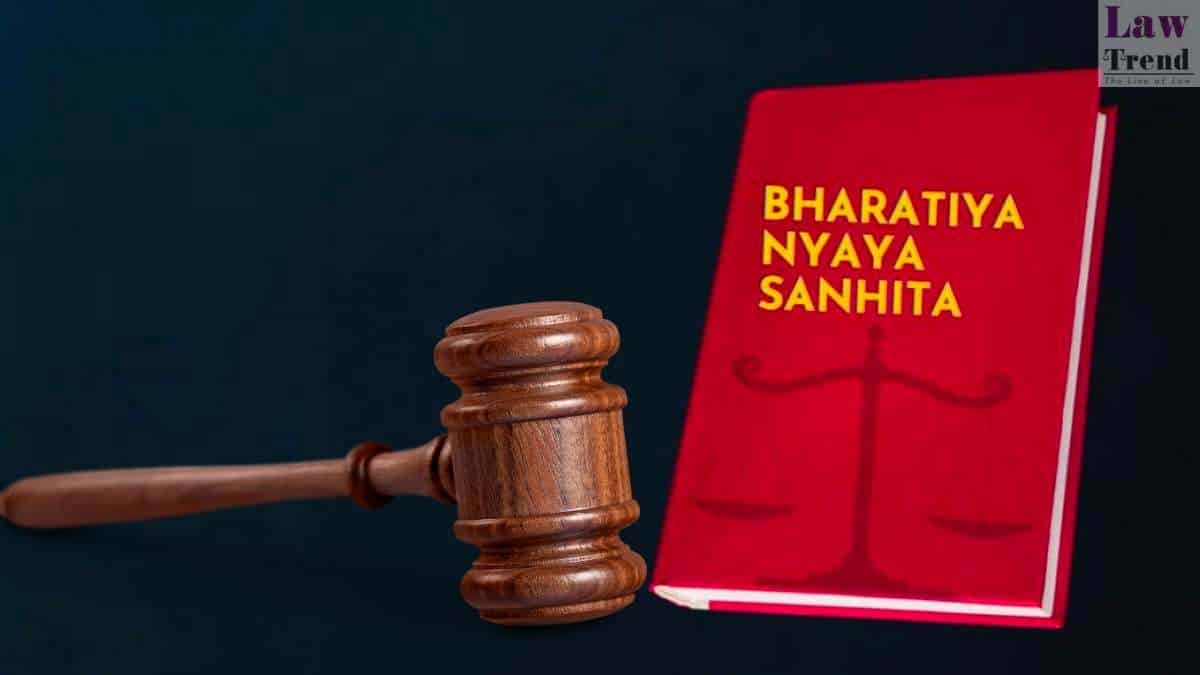
On 9 August 2025, the Supreme Court sought the Union Government’s response to a petition filed by S.G. Vombatkere challenging Section 152 of the Bharatiya Nyaya Sanhita (BNS), 2023.
-
Allegation: The provision is a “repackaged” form of the colonial sedition law, earlier codified as Section 124A of IPC, 1860.
Key Provisions in Question – Section 152, BNS 2023
-
Criminalises:
-
Subversive activity
-
Encouragement of separatist feelings
-
Acts endangering unity or integrity of India
-
-
Petition argues language is vague and broad, allowing wide discretion in interpretation.
-
Punishment: Similar or broader in scope compared to the repealed sedition provision.
Petitioner’s Arguments
-
Substantive Continuity with Section 124A IPC
-
Though nomenclature changed, core elements remain intact, possibly more expansive.
-
-
Violation of Fundamental Rights:
-
Article 14 – Equality before law; arbitrary law violates this.
-
Article 19(1)(a) – Freedom of speech and expression curtailed without reasonable justification.
-
Article 21 – Liberty threatened by vague and subjective definitions.
-
-
Overbreadth & Vagueness
-
Allows criminalisation of dissent, peaceful criticism, and political opposition.
-
Judicial Context
-
Kedar Nath Singh v. State of Bihar (1962) – SC upheld sedition but limited its application to acts involving incitement to violence or intention to create public disorder.
-
SC Order, May 2022 – Sedition law (Section 124A IPC) kept in abeyance; Union to reconsider provisions.
-
Current Challenge – Whether Section 152 is a disguised revival of the old sedition law.
Constitutional & Governance Implications
-
Free Speech in Democracy – Laws restricting dissent risk undermining democratic accountability.
-
Doctrine of Proportionality – Any restriction on rights must be necessary, proportionate, and narrowly tailored.
-
Separation of Powers – Courts’ role in preventing legislative overreach into constitutionally guaranteed freedoms.
Om Kumar v. Union of India (2001, SC)
Landmark: SC formally recognized Doctrine of Proportionality in Indian administrative law.
Principle:
Applied proportionality in cases involving fundamental freedoms (Part III).
Applied Wednesbury unreasonableness standard in non-fundamental right cases.
Modern Dental College v. State of Madhya Pradesh (2016, SC)
Principle: Adopted a four-pronged proportionality test in fundamental rights restrictions:
Legitimate aim
Rational connection
Necessity (least restrictive measure)
Balancing of rights and public interest.
K.S. Puttaswamy v. Union of India (2017, SC – Privacy Case)
Principle: Applied proportionality to test restrictions on the right to privacy.
Formula: Legality → Legitimate aim → Proportionality → Procedural safeguards.
Anuradha Bhasin v. Union of India (2020, SC)
Principle: Used proportionality to assess internet shutdowns in J&K — restrictions must be necessary, least restrictive, and periodically reviewed
Internet and Mobile Association of India v. Reserve Bank of India (2020, SC)
Principle: RBI’s ban on virtual currency exchanges failed proportionality — restrictions were excessive compared to objective.
Puttaswamy (Aadhaar-II) Review & Justice K.S. Puttaswamy (Aadhaar) case (2018, SC)
Principle: Upheld Aadhaar for targeted subsidies but struck down parts failing proportionality.