
Tamil Brahmi inscriptions in Egypt and ancient trade links
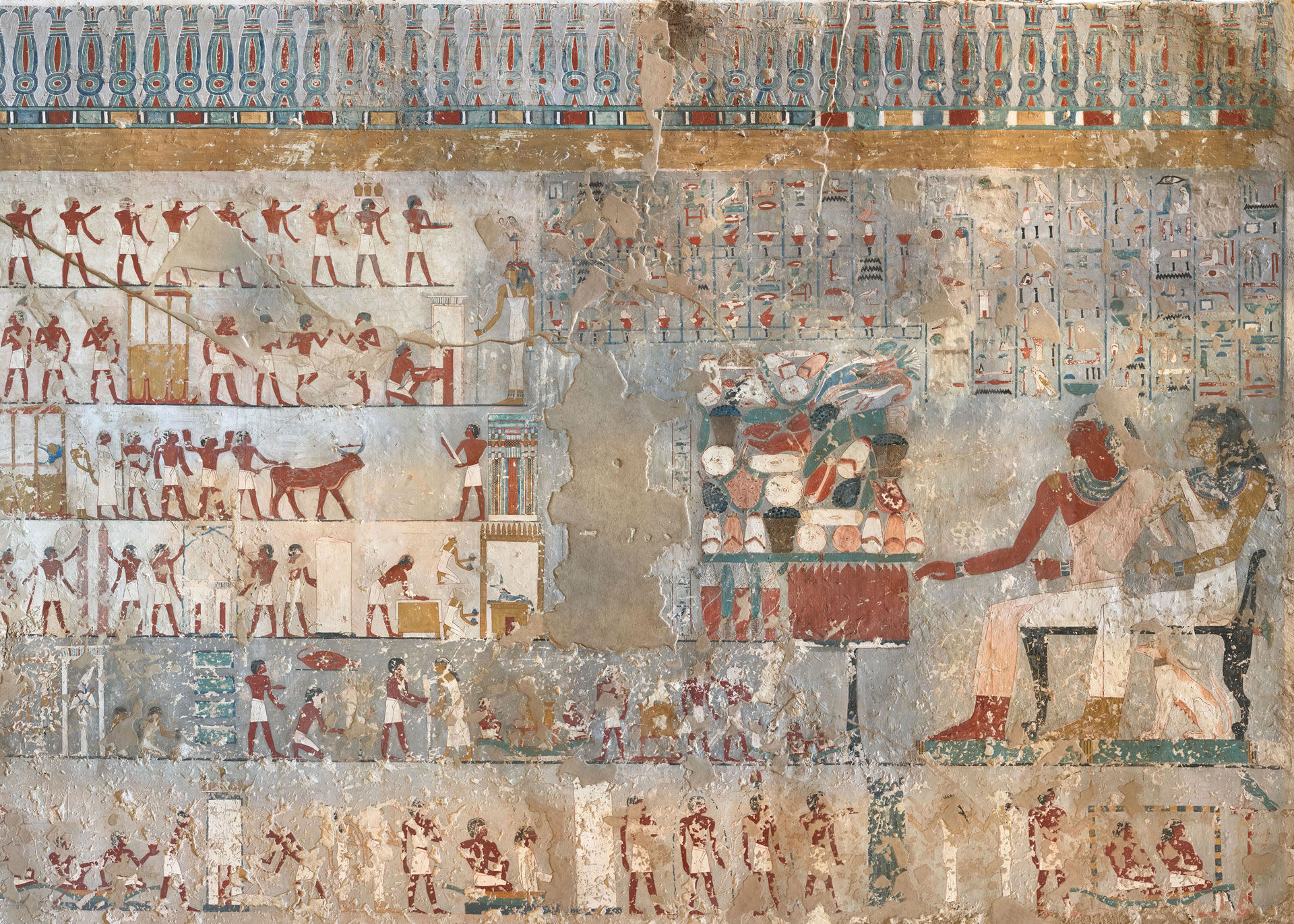
Context:
A major epigraphic discovery has revealed nearly 30 inscriptions in Tamil Brahmi, Prakrit and Sanskrit inside tombs at the Valley of the Kings in Egypt. These inscriptions date between the 1st and 3rd centuries C.E., providing strong evidence of direct contact between ancient Tamilagam and the Roman world.
The findings were presented at the International Conference on Tamil Epigraphy by Charlotte Schmid (EFEO, Paris) and Ingo Strauch (University of Lausanne). The inscriptions were documented across six tombs in the Theban Necropolis.
Nature of the inscriptions
The inscriptions are brief visitor graffiti.
Indian visitors carved their names inside corridors and chambers.
They appear alongside thousands of Greek graffiti previously documented by Jules Baillet in 1926.
This suggests Indians followed an established Mediterranean practice of marking presence in sacred or monumental spaces.
The name “Cikai Korran”
The most repeated name is Cikai Korran, found eight times across five tombs.
Linguistic significance:
Cikai may relate to Sanskrit śikhā (tuft or crown).
Korran is distinctly Tamil.
Derived from korram meaning victory or slaying.
Linked to the Chera warrior goddess Korravai.
Associated with the term korravan (king).
The name also appears:
On a pottery sherd at Berenike, a major Red Sea trading port.
In Sangam literature, including references in the Purananuru.
In inscriptions from Pugalur, linked to the Chera dynasty.
Other Tamil names found
Additional Tamil Brahmi inscriptions include:
Kopān varata kantan — meaning “Kopān came and saw.”
Names such as Cātan and Kiran.
The name Kopān has parallels in Tamil Nadu inscriptions (e.g., Ammankovilpatti).
Historical significance
1. Direct evidence of Indian presence in Egypt
Earlier evidence of Indo-Roman trade mainly came from:
Roman coins in Tamil Nadu
Pottery and amphorae at Arikamedu
Finds at Berenike
This discovery shifts focus from Red Sea ports to the Nile valley interior, suggesting:
Indian merchants or travellers moved beyond port settlements.
They visited culturally significant Egyptian sites.
2. Strengthening Indo-Roman trade narrative
Between 1st–3rd century C.E.:
Tamilakam exported pepper, pearls, ivory, textiles.
Roman gold flowed into South India.
Maritime trade routes connected Malabar Coast to Red Sea ports, then via Nile to Mediterranean centres.
The inscriptions confirm mobility of South Indian merchants across Roman-controlled territories.
Prelims Practice MCQs
Q. Which of the following Red Sea port cities has earlier yielded Tamil inscriptions indicating Indo-Roman trade links?
A. Alexandria
B. Memphis
C. Berenike
D. Carthage
Correct Answer: C
Explanation:
Berenike, a Red Sea port in Roman Egypt, has yielded Tamil Brahmi inscriptions on pottery sherds. It was a major hub in Indo-Roman maritime trade networks.
Q. With reference to Indo-Roman trade during the early centuries of the Common Era, consider the following:
Roman gold coins have been found in large numbers in Tamil Nadu.
Pepper was one of the major exports from Tamilakam.
Indian traders were confined only to Red Sea port settlements and did not travel inland in Egypt.
Which of the statements given above is/are correct?
A. 1 and 2 only
B. 2 and 3 only
C. 1 only
D. 1, 2 and 3
Correct Answer: A
Explanation:
Statement 1 is correct — large hoards of Roman coins have been discovered in Tamil Nadu.
Statement 2 is correct — pepper was a major export from the Malabar Coast.
Statement 3 is incorrect — recent discoveries in the Valley of the Kings show Indian visitors travelled inland along the Nile Valley.