
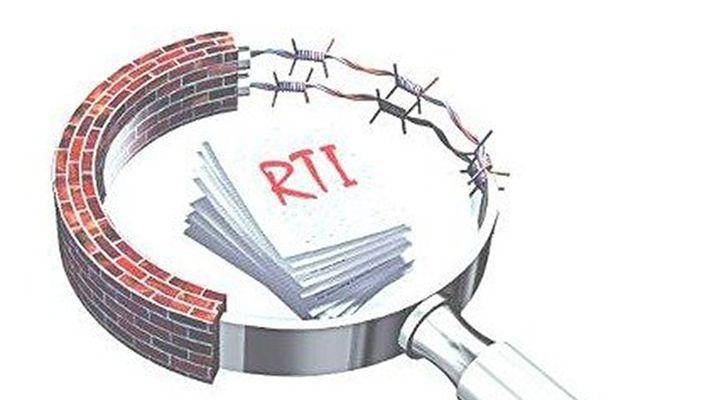
The RTI’s Shift to a “Right to Deny Information”
Background
-
RTI Act, 2005: Empowers citizens to access government-held information, based on the democratic principle that the State is only a custodian of information.
-
Amendment via DPDP Act, 2023: Alters Section 8(1)(j) of RTI, drastically reducing its scope on disclosure of “personal information”.
However, the Act always included specific exemptions to protect certain interests, such as national sovereignty. One crucial exemption is the Act’s Section 8(1)(j), which is on “personal information”.
Original Provision (Section 8(1)(j))
-
Denial allowed only if:
-
Information had no link with public activity, or
-
Disclosure constituted an unwarranted invasion of privacy,
-
Unless larger public interest justified disclosure.
-
-
Proviso: If info cannot be denied to Parliament/State Legislature, it cannot be denied to citizens.
Changes after Digital Personal Data Protection DPDP Act
-
Section 8(1)(j) reduced to just six words: “information which relates to personal information”.
-
Creates broad and vague ground for denial.
-
Ambiguity of “personal information”:
-
There are two conflicting views: the first is Natural Person Interpretation: One view holds that “person” should be understood in its general sense, referring to a “normal person” or natural person.
The second is the DPDP Bill Definition. The other, equally valid view, interprets “person” as defined in the Digital Personal Data Protection (DPDP) Bill.
The DPDP Bill’s definition is expansive, including a “Hindu undivided family, a firm, a company, [and] any association of individuals and the State”.
-
-
Effect: Almost all government-held data can be denied.
Problems with the Amendment
-
Information denial becomes default
-
PIOs fearful of penalties under DPDP (up to ₹250 crore).
-
Safer to deny information than risk disclosure.
-
-
Threat to transparency & accountability
-
Citizens’ ability to monitor corruption weakens.
-
Example: Pension rolls, ghost employees, corrected marksheets can be withheld.
-
-
Facilitation of corruption
-
Information on fraudulent schemes, misuse of funds, or corrupt officials can be tagged as “personal information”.
-
Over 90% of requests may be denied.
-
-
Weak safeguard
-
Larger public interest clause (Section 8(2)) rarely invoked (<1% cases).
-
PIOs hesitant to balance privacy vs public good.
-
Constitutional & Democratic Concerns
-
Article 19(1)(a): RTI flows from freedom of speech and expression.
-
Restrictions under 19(2): Only on grounds of sovereignty, morality, decency, etc. — privacy is not an explicit bar.
-
Puttaswamy Judgment (2017): Privacy is fundamental but contextual, case-by-case — blanket denial undermines proportionality principle.
-
Democratic regression: RTI turning into RDI (Right to Deny Information).
Wider Implications
-
Public apathy: Less outcry since amendment came under the guise of “data protection”.
-
Impact on governance: Weakens citizen-led monitoring, one of the most effective checks on corruption.
-
Potential misuse by officials: Even routine orders or service records may be denied.
Way Forward
-
Clarify definitions: Restrict “personal information” to natural persons, not entities.
-
Balance privacy vs transparency: Apply proportionality test as per Puttaswamy.
-
Amend DPDP Act: Ensure it does not override RTI Act provisions.
-
Public & media engagement: Build discourse, demand electoral commitments to restore RTI’s original spirit.